

Social Feed
I've read a bit about what the recommended specs are for a htpc. I currently have a twinhan 1020a for satellite and a "instant hdtv pci" that I haven't tried yet. I have a radeon 9550 256mb agp with s-video out.
I want to pick up nbc on 103w and look for other unlisted hd channels, record them and watch them later on an old tube style sdtv.
I've read that you need around a 5000+ or e2200 cpu or better to watch high definition at 1080. I understand this is flexible depending on your video card.
Let's say that I want to record a hd broadcast and play it back later on my sd tv. Do I actually need a decent dual core and a newer video card to play hd at this lower resolution? If not, what specs would I need.
8 Replies
·
2186 views


Staff member
HERE TO HELP YOU!
Cutting Edge
Sometimes a thread gets so many posts in it that is can cause issues for the server so that why today we introduce The Song Name Game Part 3!
So let the game continue!
The last song was added by Bobby who posted...
One Meat Ball - Andrews Sisters
CONTINUE ON AND HAVE FUN! WELCOME HOME TO SATELLITEGUYS.US!
Here are the original rules for the game as posted by WebbyDude back in 2006. http://www.satelliteguys.us/threads/68645-Song-Name-Game
Just name a song title and the band who performed it. The next person does the same thing, but needs to list a song title or band name which includes a word from the previous entry. Pick songs from any genre.
Example:
Long Live Rock and Roll -- Rainbow
Rainbow in the Dark -- Dio
Another example:
Ride the Lightning -- Metallica
Lightning Strikes -- Ozzy Osbourne
Get it?
An additional note: we all know that song titles, sometimes, use profane words. Because this is a family friendly website it is advised that you clean up that title up a bit. This is accomplished by using something like sh!t instead of the real word. Thanks....
68534 Replies
·
2673155 views


TWiT Tech Podcast Network
Time for another AWESOME video from the TWIT Network!
View: https://www.youtube.com/shorts/A_V4A_ne8wE
Direct YouTube Link - "You Can See Everything" Is 1 of the Century's Best #shorts
TWIT's Website
TWIT Live Feed
View: https://www.youtube.com/shorts/A_V4A_ne8wE
Direct YouTube Link - "You Can See Everything" Is 1 of the Century's Best #shorts
TWIT's Website
TWIT Live Feed
0 Replies
·
1 views


Staff member
HERE TO HELP YOU!
We have a Breakfast and Dinner thread so... 
Continuing from the Breakfast thread, found Cornbread mix so ...
Yellow Cornbread Mix
2 Hatch Green Chiles -diced
1 Egg
2/3 cup of milk
add to greased pan
Bake for 400f 20-25 minutes(From instructions)
now to put together and try... this to go with pinto beans...
Continuing from the Breakfast thread, found Cornbread mix so ...
Yellow Cornbread Mix
2 Hatch Green Chiles -diced
1 Egg
2/3 cup of milk
add to greased pan
Bake for 400f 20-25 minutes(From instructions)
now to put together and try... this to go with pinto beans...
5446 Replies
·
335506 views


Staff member
HERE TO HELP YOU!
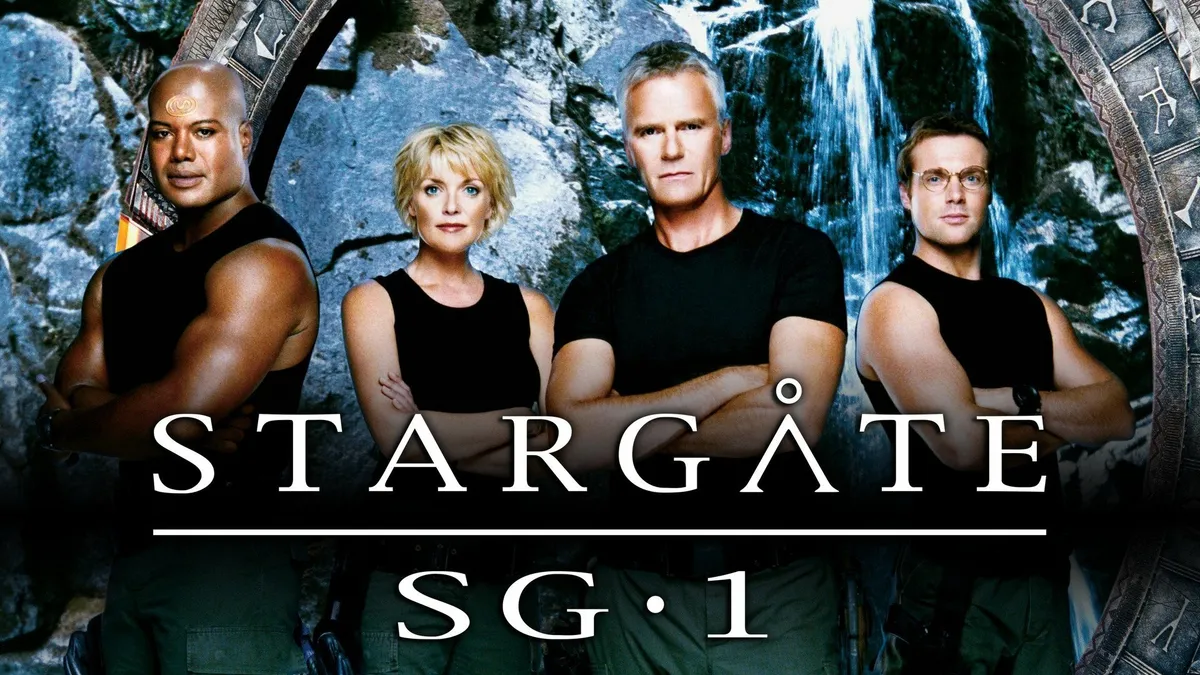
Stargate SG-1 cancelled, Atlantis renewed

Monday - August 21, 2006 | by Darren Sumner
The future of Stargate is in question today, as SCI FI Channel has cancelled the long-running Stargate SG-1, Multichannel News reported today and a GateWorld source has confirmed. The news regrettably follows the airing of the show's milestone two-hundredth episode on Friday.
Stargate Atlantis, meanwhile, has been renewed for a fourth season, with the network hoping to see that the spin-off series can stand alone, according to a source.
Source Gateworld
2032 Replies
·
183987 views


TWiT Tech Podcast Network
Time for another AWESOME video from the TWIT Network!
View: https://www.youtube.com/watch?v=beerzKBCSUo
Direct YouTube Link - Elon Musk's Wildest Demo Yet! Is It Real?
TWIT's Website
TWIT Live Feed
View: https://www.youtube.com/watch?v=beerzKBCSUo
Direct YouTube Link - Elon Musk's Wildest Demo Yet! Is It Real?
TWIT's Website
TWIT Live Feed
0 Replies
·
8 views
Supporting Founder
Lifetime Supporter
This is a thread that will keep you apprised of 4K events that will be showing on Dish channel 540. Keep looking here for information.
As of today, 9-27-17, there are no scheduled events posted for the next 2 weeks. That is subject to change on a daily basis.
As of today, 9-27-17, there are no scheduled events posted for the next 2 weeks. That is subject to change on a daily basis.
762 Replies
·
167224 views

 . Hated to see my dawgs go down but I still say being ranked #1 is a hex on you!

Season 2 order already in hand:
'Star Trek: Starfleet Academy' Renewed for Season 2, Tatiana Maslany to Guest Star in Season 1
I've not been optimistic about this show based on what I've read so far. Seems to be aimed at a younger audience. Interesting though that Tatiana Maslany will have some sort of role.
'Star Trek: Starfleet Academy' Renewed for Season 2, Tatiana Maslany to Guest Star in Season 1
I've not been optimistic about this show based on what I've read so far. Seems to be aimed at a younger audience. Interesting though that Tatiana Maslany will have some sort of role.
83 Replies
·
3300 views


Linus Tech Tips
Time for another AWESOME video from Linus Tech Tips!
View: https://www.youtube.com/watch?v=U-QiUAMda7Y
Direct YouTube Link - This video was pain and suffering
Linus on Facebook
The LTT Store
View: https://www.youtube.com/watch?v=U-QiUAMda7Y
Direct YouTube Link - This video was pain and suffering
Linus on Facebook
The LTT Store
0 Replies
·
18 views