

Social Feed
L
Supporting Founder
As the title says BHN Tampa Bay has finally replaced the HD Sporting Event channels on 718 and 719 with the full time networks.
718 is now Fox Sports Net Florida HD 24x7 feed.
719 is now SunSports HD 24x7 feed.
718 is now Fox Sports Net Florida HD 24x7 feed.
719 is now SunSports HD 24x7 feed.
2 Replies
·
2690 views

'Rockford Files' Reboot Gets NBC Pilot Order
I grow tired of all the reboots. Most I don't bother with but will depend on the actor chosen.
I grow tired of all the reboots. Most I don't bother with but will depend on the actor chosen.
18 Replies
·
721 views


Lifetime Supporter
Continuing the Kilauea thread in the Pub here. Perhaps the Iceland one too next time there's remarkable activity.
Currently there is precursory lava flowing into the crater, leading to the next episode that'll probably start within the next day.
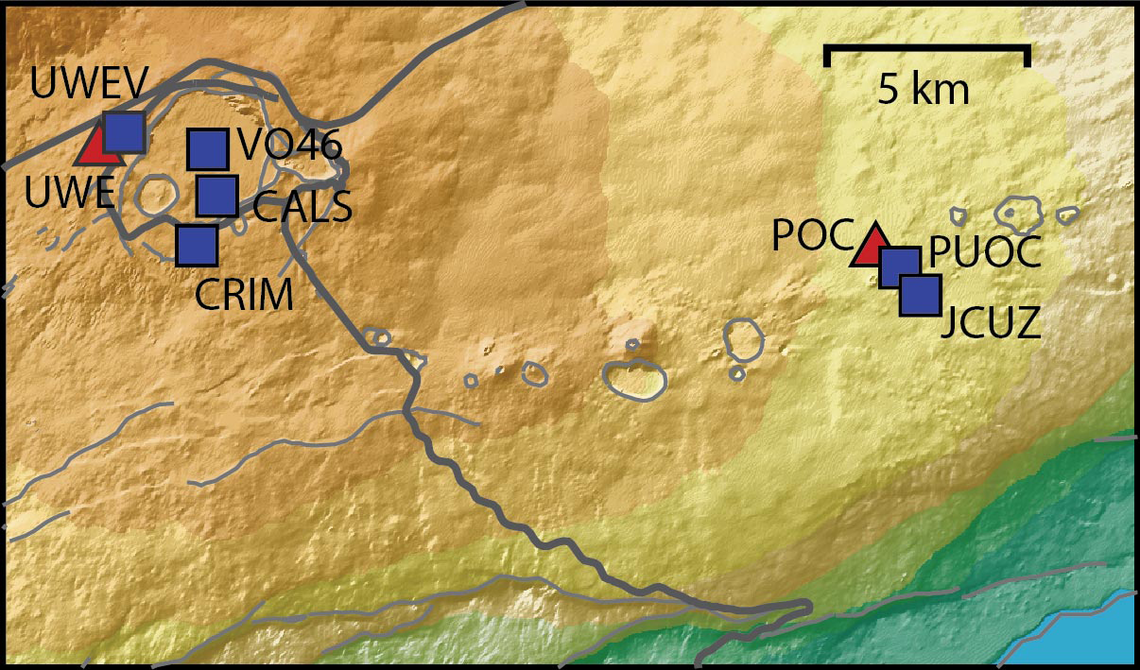
You can see the pace of inflation / deflation here. It serves as the primary predictor for when the expect the eruptions, which coincide w/ inflation turning into significant deflation and last for several hours on average with significant fountaining.
 www.usgs.gov
View: https://youtu.be/Uecu2seh4b4
Wife and I like the AfarTV feeds, for the discussion along w/ them, though they're otherwise just mirrors of the official USGS feeds.
View: https://youtu.be/iws3rh5vLAQ
Currently there is precursory lava flowing into the crater, leading to the next episode that'll probably start within the next day.
You can see the pace of inflation / deflation here. It serves as the primary predictor for when the expect the eruptions, which coincide w/ inflation turning into significant deflation and last for several hours on average with significant fountaining.
Monitoring Data for Kīlauea
For more information on how electronic tiltmeters and GPS receivers help monitor the deformation of Kīlauea volcano, see the HVO Deformation page.
View: https://youtu.be/Uecu2seh4b4
Wife and I like the AfarTV feeds, for the discussion along w/ them, though they're otherwise just mirrors of the official USGS feeds.
View: https://youtu.be/iws3rh5vLAQ
123 Replies
·
3657 views


Pub Member / Supporter
0 Replies
·
6 views
Pub Member / Supporter
0 Replies
·
12 views
I have Dish with Hopper3. I choose to get local channels OTA and had a "guide list" established at my previous home. Having moved a few miles away, I wanted to update the list by appending a couple new stations via a rescan. As many would know, some stations come in with the UHF/VHF antenna aimed in one direction, while others come in better with a different direction.
Unfortunately, when a scan is done (bringing in 25-30 stations for that particular antenna aim), the dialog screen does not present the established guide list; it presents an empty field to the right that the scanned stations may be selected one by one and added to the empty guide. But because of antenna aim, some stations originally saved are missing, and would have to be retrieved with a different antenna aim. But as I explain, if a 2nd scan is done with a different antenna aim, the stations saved from the first scan are lost.
It troubles me that Dish didn't develop software that would allow a user to simply append only 1 or 2 channels to the established list.
Any thought on this? Has anyone experienced this or heard of this from others?
15 Replies
·
495 views


Linus Tech Tips
Time for another AWESOME video from Linus Tech Tips!
View: https://www.youtube.com/shorts/spXuvLHTIs4
Direct YouTube Link - My F-You To Sam Altman
Linus on Facebook
The LTT Store
View: https://www.youtube.com/shorts/spXuvLHTIs4
Direct YouTube Link - My F-You To Sam Altman
Linus on Facebook
The LTT Store
0 Replies
·
11 views
TWiT Tech Podcast Network
Time for another AWESOME video from the TWIT Network!
View: https://www.youtube.com/shorts/MLSSmfls3w4
Direct YouTube Link - watchOS 27.3 Beta - Siri Recap and Live Rewind Coming!
TWIT's Website
TWIT Live Feed
View: https://www.youtube.com/shorts/MLSSmfls3w4
Direct YouTube Link - watchOS 27.3 Beta - Siri Recap and Live Rewind Coming!
TWIT's Website
TWIT Live Feed
0 Replies
·
8 views
Pub Member / Supporter
12 Replies
·
251 views
 since I did not read every Marvel Comic Book ever published. If I had, I might be comparing the comics' version of events compared to what's transpiring in "Visionquest". So, I am enjoying the series a lot, not weighed down by previous expectations, knowing only the Avengers MCU movies and the "Wandavision" / "Agatha All Along" TV series.


Staff member
HERE TO HELP YOU!
Cutting Edge
Sometimes a thread gets so many posts in it that is can cause issues for the server so that why today we introduce The Song Name Game Part 3!
So let the game continue!
The last song was added by Bobby who posted...
One Meat Ball - Andrews Sisters
CONTINUE ON AND HAVE FUN! WELCOME HOME TO SATELLITEGUYS.US!
Here are the original rules for the game as posted by WebbyDude back in 2006. http://www.satelliteguys.us/threads/68645-Song-Name-Game
Just name a song title and the band who performed it. The next person does the same thing, but needs to list a song title or band name which includes a word from the previous entry. Pick songs from any genre.
Example:
Long Live Rock and Roll -- Rainbow
Rainbow in the Dark -- Dio
Another example:
Ride the Lightning -- Metallica
Lightning Strikes -- Ozzy Osbourne
Get it?
An additional note: we all know that song titles, sometimes, use profane words. Because this is a family friendly website it is advised that you clean up that title up a bit. This is accomplished by using something like sh!t instead of the real word. Thanks....
68756 Replies
·
2684896 views


Staff member
HERE TO HELP YOU!
Cutting Edge
The following is from Reddit. -
View: https://www.reddit.com/r/DirectvStream/s/orzHBkmqQW

There appears to be a new DIRECTV Gemini OTT box, the C81KW-650.
The FCC listing is partially available, and a Geekbench entry confirms it uses an Amlogic S905X5, a solid SoC for a set-top box.
I also see 4GB of RAM, and the manufacturer is SEI Robotics.
DIRECTV C81KW OTT Box - Android TV Guide
Ok found a picture of the Box too on Reddit:
View: https://www.reddit.com/r/DirectvStream/comments/1twlex0/comment/opzeqi1/
View: https://www.reddit.com/r/DirectvStream/s/orzHBkmqQW
There appears to be a new DIRECTV Gemini OTT box, the C81KW-650.
The FCC listing is partially available, and a Geekbench entry confirms it uses an Amlogic S905X5, a solid SoC for a set-top box.
I also see 4GB of RAM, and the manufacturer is SEI Robotics.
DIRECTV C81KW OTT Box - Android TV Guide
Ok found a picture of the Box too on Reddit:
View: https://www.reddit.com/r/DirectvStream/comments/1twlex0/comment/opzeqi1/
25 Replies
·
1397 views


