

Social Feed

IIRC way back when, there was a combination dual C dual Ku prime focus lnbf available. Is anyone still making something like that? The related question, of course, is...does anyone have a bullseye feedhorn lying around that they want to part with. I have lots of lnb's, but I really hate to pop $400 for a new Chaparral Bullseye.
Unfortunately, it's a real PITA to run more than one receiver on either a C/Ku lnbf or a corotor. I'm just about ready to ditch my analog receiver and run the positioner with a GBox. The problem is dealing with band and polarity selection. None of the FTA receivers will run a corotor servo for polarity, so an lnbf or a bullseye is a better way to go. A 4 or 5 in multiswitch will easily handle the situation on a bullseye or a dual C dual Ku lnbf, but the readily available single C single Ku lnbfs just won't work in that situation.
Any helpful suggestions more than welcome. I guess the other question concerns the availability of a 14/18 to servo interface box. Easy enough to build, I guess. Any commercially available?
Thanks
Budfoot
Unfortunately, it's a real PITA to run more than one receiver on either a C/Ku lnbf or a corotor. I'm just about ready to ditch my analog receiver and run the positioner with a GBox. The problem is dealing with band and polarity selection. None of the FTA receivers will run a corotor servo for polarity, so an lnbf or a bullseye is a better way to go. A 4 or 5 in multiswitch will easily handle the situation on a bullseye or a dual C dual Ku lnbf, but the readily available single C single Ku lnbfs just won't work in that situation.
Any helpful suggestions more than welcome. I guess the other question concerns the availability of a 14/18 to servo interface box. Easy enough to build, I guess. Any commercially available?
Thanks
Budfoot
9 Replies
·
4045 views


Lifetime Supporter
Schedule drops tomorrow. Mandatory mini camps in June. Hall of Fame game August 6th.
115 Replies
·
1815 views





Staff member
HERE TO HELP YOU!
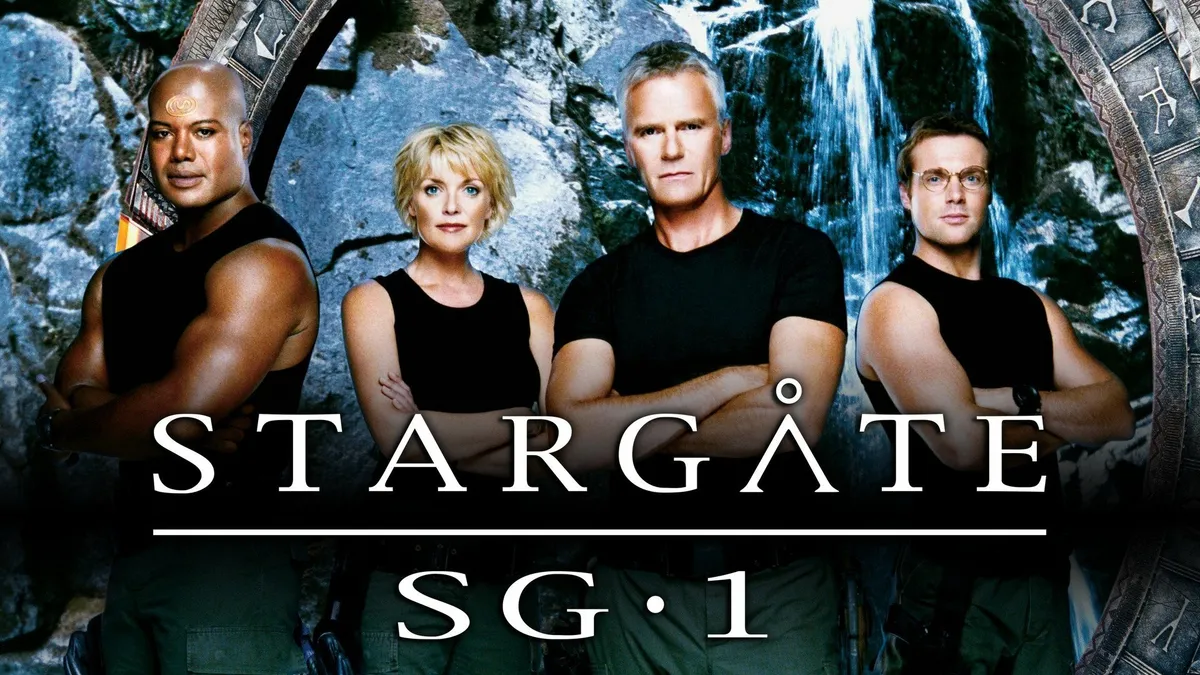
Stargate SG-1 cancelled, Atlantis renewed

Monday - August 21, 2006 | by Darren Sumner
The future of Stargate is in question today, as SCI FI Channel has cancelled the long-running Stargate SG-1, Multichannel News reported today and a GateWorld source has confirmed. The news regrettably follows the airing of the show's milestone two-hundredth episode on Friday.
Stargate Atlantis, meanwhile, has been renewed for a fourth season, with the network hoping to see that the spin-off series can stand alone, according to a source.
Source Gateworld
Monday - August 21, 2006 | by Darren Sumner
The future of Stargate is in question today, as SCI FI Channel has cancelled the long-running Stargate SG-1, Multichannel News reported today and a GateWorld source has confirmed. The news regrettably follows the airing of the show's milestone two-hundredth episode on Friday.
Stargate Atlantis, meanwhile, has been renewed for a fourth season, with the network hoping to see that the spin-off series can stand alone, according to a source.
Source Gateworld
2033 Replies
·
184125 views



Staff member
HERE TO HELP YOU!
Cutting Edge
Sometimes a thread gets so many posts in it that is can cause issues for the server so that why today we introduce The Song Name Game Part 3!
So let the game continue!
The last song was added by Bobby who posted...
One Meat Ball - Andrews Sisters
CONTINUE ON AND HAVE FUN! WELCOME HOME TO SATELLITEGUYS.US!
Here are the original rules for the game as posted by WebbyDude back in 2006. http://www.satelliteguys.us/threads/68645-Song-Name-Game
Just name a song title and the band who performed it. The next person does the same thing, but needs to list a song title or band name which includes a word from the previous entry. Pick songs from any genre.
Example:
Long Live Rock and Roll -- Rainbow
Rainbow in the Dark -- Dio
Another example:
Ride the Lightning -- Metallica
Lightning Strikes -- Ozzy Osbourne
Get it?
An additional note: we all know that song titles, sometimes, use profane words. Because this is a family friendly website it is advised that you clean up that title up a bit. This is accomplished by using something like sh!t instead of the real word. Thanks....
So let the game continue!
The last song was added by Bobby who posted...
One Meat Ball - Andrews Sisters
CONTINUE ON AND HAVE FUN! WELCOME HOME TO SATELLITEGUYS.US!
Here are the original rules for the game as posted by WebbyDude back in 2006. http://www.satelliteguys.us/threads/68645-Song-Name-Game
Just name a song title and the band who performed it. The next person does the same thing, but needs to list a song title or band name which includes a word from the previous entry. Pick songs from any genre.
Example:
Long Live Rock and Roll -- Rainbow
Rainbow in the Dark -- Dio
Another example:
Ride the Lightning -- Metallica
Lightning Strikes -- Ozzy Osbourne
Get it?
An additional note: we all know that song titles, sometimes, use profane words. Because this is a family friendly website it is advised that you clean up that title up a bit. This is accomplished by using something like sh!t instead of the real word. Thanks....
68535 Replies
·
2673383 views


TWiT Tech Podcast Network
Time for another AWESOME video from the TWIT Network!
View: https://www.youtube.com/shorts/wVdnjWsw2Uk
Direct YouTube Link - Defender on Linux: Microsoft's Big Security Move #shorts
TWIT's Website
TWIT Live Feed
View: https://www.youtube.com/shorts/wVdnjWsw2Uk
Direct YouTube Link - Defender on Linux: Microsoft's Big Security Move #shorts
TWIT's Website
TWIT Live Feed
0 Replies
·
6 views

Supporting Founder
Really excited for this season with Kentucky having a new coach and some really exciting recruits. Probably won't last long, but here's hoping this season is great.
152 Replies
·
1921 views
 . Hated to see my dawgs go down but I still say being ranked #1 is a hex on you!


TWiT Tech Podcast Network
Time for another AWESOME video from the TWIT Network!
View: https://www.youtube.com/shorts/PSGt6dUXdnI
Direct YouTube Link - RTX Spark: NVIDIA's AI PC Powerhouse Details! #shorts
TWIT's Website
TWIT Live Feed
View: https://www.youtube.com/shorts/PSGt6dUXdnI
Direct YouTube Link - RTX Spark: NVIDIA's AI PC Powerhouse Details! #shorts
TWIT's Website
TWIT Live Feed
0 Replies
·
12 views

Why are ViP922s So rare? like its crazy how ebay has none, i checked everywhere, also, i got a ViP222k now, which is actually activated!
7 Replies
·
218 views


TWiT Tech Podcast Network
Time for another AWESOME video from the TWIT Network!
View: https://www.youtube.com/shorts/A_V4A_ne8wE
Direct YouTube Link - "You Can See Everything" Is 1 of the Century's Best #shorts
TWIT's Website
TWIT Live Feed
View: https://www.youtube.com/shorts/A_V4A_ne8wE
Direct YouTube Link - "You Can See Everything" Is 1 of the Century's Best #shorts
TWIT's Website
TWIT Live Feed
0 Replies
·
19 views
Staff member
HERE TO HELP YOU!
We have a Breakfast and Dinner thread so... 
Continuing from the Breakfast thread, found Cornbread mix so ...
Yellow Cornbread Mix
2 Hatch Green Chiles -diced
1 Egg
2/3 cup of milk
add to greased pan
Bake for 400f 20-25 minutes(From instructions)
now to put together and try... this to go with pinto beans...
Continuing from the Breakfast thread, found Cornbread mix so ...
Yellow Cornbread Mix
2 Hatch Green Chiles -diced
1 Egg
2/3 cup of milk
add to greased pan
Bake for 400f 20-25 minutes(From instructions)
now to put together and try... this to go with pinto beans...
5446 Replies
·
335544 views

