

Social Feed

The last couple days, it has seemed to me that my C-band wasn't quite as good as it had been even a week ago, but I figured that I still wasn't quite in alignment.
Well yesterday, I tuned in G28, and watched my NFL game on an S2 channel, so it wasn't working TOO terribly.
Today, I tried locking a channel on AMC-6 that I had tuned on Saturday, but I got absolutely NOTHING. Tried 2 or 3 other transponders. NOTHING. Moved the dish back to G28, where I had been. Tried to tune in Huskervision and Pentagon. NOTHING. Moved the dish to G17, looking for the analog Classic Arts.... NOTHING. I also noticed that there seemed to be a strange analog signal on 3 channels, regardless of which sat I was on, something similar to what I had seen once before when one of my LNBs would go into oscillation.
I tried switching receivers. NOTHING on 4 different receivers.
I thought maybe the master receiver wasn't providing LNB voltage. Checked and found 18V coming out of the receiver.
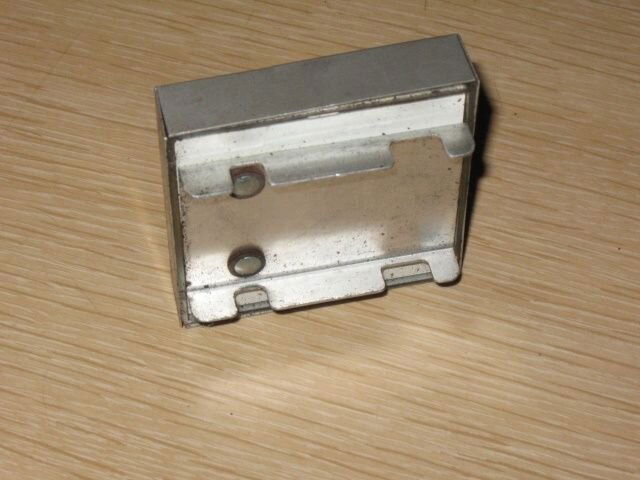
THEN, I hooked up my Channel Master meter, which has an AMP meter function, and it showed ZERO current going to the LNB! So I went out to the dish, pulled off the coax, and checked the voltage. Only 5V at the end of the coax!
I had checked the LNB voltage on Saturday, and it was 18V.
I looked around, and can find NO indication of any damage to the coax out at the dish.
Anyway, I switched C-band over to the Ku coax, and it's working again.
It just seemed really weird that my coax was OK yesterday, then all of a sudden today, it just stopped working.
Now, my problem is finding WHERE the coax is bad. It would be nice if it was just a bad connection out at the end, but I have a suspicion that I may have damaged the coax by pulling it through a tight space, right in the middle of the run.
Anyway, I have some troubleshooting to do here. Hopefully I won't need to run a whole new coax. I think in the meantime, I'll run the Ku over to an unused port on my diseqC switch at my Fortec dish.
Well yesterday, I tuned in G28, and watched my NFL game on an S2 channel, so it wasn't working TOO terribly.
Today, I tried locking a channel on AMC-6 that I had tuned on Saturday, but I got absolutely NOTHING. Tried 2 or 3 other transponders. NOTHING. Moved the dish back to G28, where I had been. Tried to tune in Huskervision and Pentagon. NOTHING. Moved the dish to G17, looking for the analog Classic Arts.... NOTHING. I also noticed that there seemed to be a strange analog signal on 3 channels, regardless of which sat I was on, something similar to what I had seen once before when one of my LNBs would go into oscillation.
I tried switching receivers. NOTHING on 4 different receivers.
I thought maybe the master receiver wasn't providing LNB voltage. Checked and found 18V coming out of the receiver.
THEN, I hooked up my Channel Master meter, which has an AMP meter function, and it showed ZERO current going to the LNB! So I went out to the dish, pulled off the coax, and checked the voltage. Only 5V at the end of the coax!
I had checked the LNB voltage on Saturday, and it was 18V.
I looked around, and can find NO indication of any damage to the coax out at the dish.
Anyway, I switched C-band over to the Ku coax, and it's working again.
It just seemed really weird that my coax was OK yesterday, then all of a sudden today, it just stopped working.
Now, my problem is finding WHERE the coax is bad. It would be nice if it was just a bad connection out at the end, but I have a suspicion that I may have damaged the coax by pulling it through a tight space, right in the middle of the run.
Anyway, I have some troubleshooting to do here. Hopefully I won't need to run a whole new coax. I think in the meantime, I'll run the Ku over to an unused port on my diseqC switch at my Fortec dish.
10 Replies
·
2157 views


 Pun intended.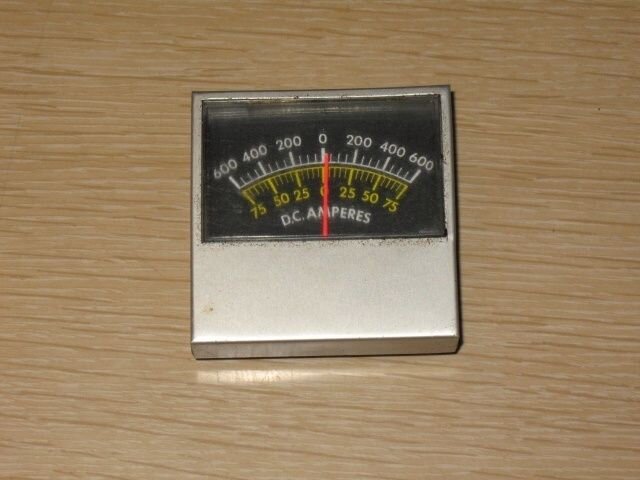


Staff member
HERE TO HELP YOU!
Cutting Edge
Due to security concerns and the fact that the Tapatalk Plugin for Xenforo is no longer being updated we have removed Tapatalk support from SatelliteGuys.
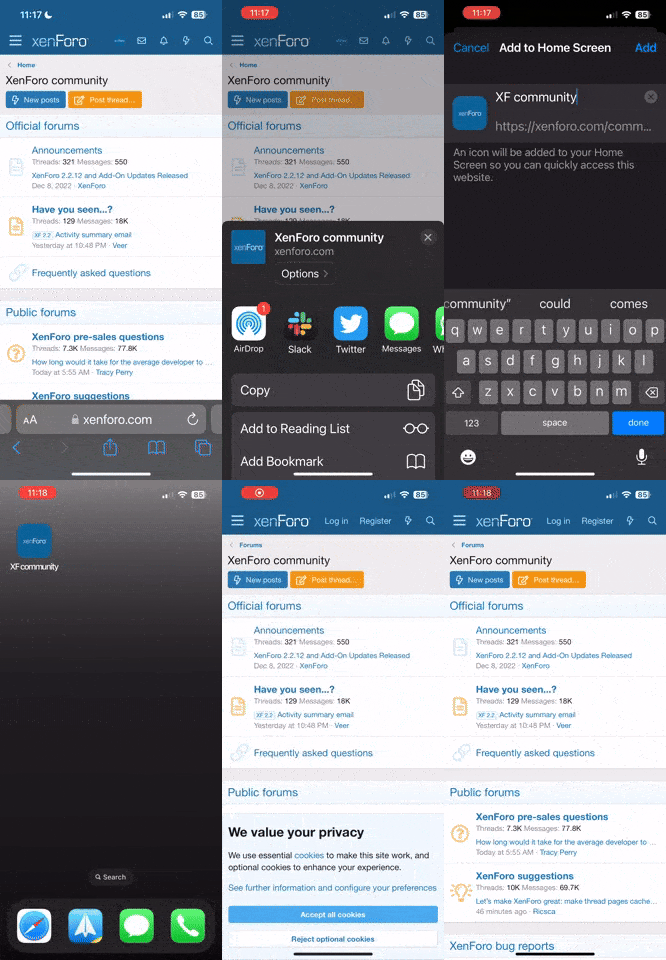
For those who were using it we recommend using our PWA App instead which is faster and does not have all the spam Tapatalk had. Below is a graphic showing how to add SatelliteGuys to your devices home screen. (While iOS is shown the process is mostly the same for Android.)
Thanks for your understanding.
For those who were using it we recommend using our PWA App instead which is faster and does not have all the spam Tapatalk had. Below is a graphic showing how to add SatelliteGuys to your devices home screen. (While iOS is shown the process is mostly the same for Android.)
Thanks for your understanding.
2 Replies
·
81 views


Supporting Founder
Since the Reds have there thread we should too!
Last watched Nine inch Nails
Next 3:10 to Yuma
Last watched Nine inch Nails
Next 3:10 to Yuma
5344 Replies
·
509240 views


TWiT Tech Podcast Network
Time for another AWESOME video from the TWIT Network!
View: https://www.youtube.com/watch?v=25hZtsi5420
Direct YouTube Link - XBOX's 2026 Game Plan & Console Comeback
TWIT's Website
TWIT Live Feed
View: https://www.youtube.com/watch?v=25hZtsi5420
Direct YouTube Link - XBOX's 2026 Game Plan & Console Comeback
TWIT's Website
TWIT Live Feed
0 Replies
·
2 views

Supporting Founder
Lifetime Supporter
I have had good experiences with Brave but lately I am frustrated with it.
Now when I launch the app it shows a box at the bottom asking if I want to go back to the last opened page. It is in conveniently located and I would prefer to eliminate it.
Does anyone know how to do this?
Please let's not sidetrack the discussion into an exploration of why I don't care for it or a lecture about all the wonderful aspects of the feature. I just do not care for it.
Now when I launch the app it shows a box at the bottom asking if I want to go back to the last opened page. It is in conveniently located and I would prefer to eliminate it.
Does anyone know how to do this?
Please let's not sidetrack the discussion into an exploration of why I don't care for it or a lecture about all the wonderful aspects of the feature. I just do not care for it.
2 Replies
·
32 views

Hello everyone.
I am new here and I done a search on MLB Extra Innings and DISH and it led me to this forum and so I signed up and hopefully someone can help me out with some issues.
First off, I am a DISH Outdoors customer and I signed up for service back in late October of 2025. I have a Wally HD Receiver and I am using the DISH Playmaker OS 2.1 as my Antenna that operates on 110 and 119 Western Arc and Alternative 61.5, 110, and 119 satellites. I signed up for MLB Extra Innings back in March before the season began. I was excited to be able to watch MLB Extra Innings because I love baseball and I use to have MLB Extra Innings on Satellite DIRECTV back in 2001-2004 and on Satellite DISH back in 2016 and 2017.
I was a bit disappointed when I found out that it is actually MLB.TV Simulcasted to DISH Satellite (More on that later) Anyways I have been watching faithfully almost every night however about a week ago there was a problem. When I went to go to the game to watch a game the game wouldn't come in an I would send a refresh signal to my receiver and then I could watch the programming and when I went to switch games at that games appointed time slot my Wally HD Receiver who lockup where I couldn't change any channels or view the guide and it would reboot. The next night when I turned to a game at game start it still had the background it shows before the game started and again send a refresh signal and went though this same thing over and over. I added a movie channel to my lineup and had issues with showing up my Dish Wally HD Receiver.
With an investigation after several calls with DISH Support it was determined that by going to the diagnostics screen that I had a issue with my Tuner because any changes that I made to my programming these changes would not take affect on the Wally HD Receiver. In other words that Wally HD Receiver was toast!
I too had reported MLB Extra Innings issue to DISH and they created a ticket for it and said that someone would investigate the issue. I too took notice that under MyDISH account under MLB Extra Innings always before it would show that I was subscribed and on auto-renew. Now it shows nothing and even after logging out and deleting my User Name and Password so that I can see it in guest mode it too doesn't even list a price and option for purchase as does the now WNBA League Pass.
After my DISH Receiver was ruined I had to buy a new Wally HD Receiver. I took advantage an bought 2 HD Wally's and added them both to my account. I called back to remove the old box off of the account and was told it was linked to MLB Extra Innings and the advanced technical support team said there was a glitch with MLB Extra Innings and hope to have a resolution in a couple of days and I could call back in to then to remove the box. But both the 2 new Wally HD Receivers are activated on my account. I asked them what the problem was with MLB Extra Innings and how long it would be and I was told there was a glitch as I asked to specify what they meant and got no answer. I again went and checked the MyDISH account page under the MLB Extra Innings page and it still doesn't list me as subscribed and after logging out and deleting my User Name and Password so I could it see it as a guest mode and it still doesn't list the price and option for purchase as it does for the WNBA League Pass.
I am afraid to boot up these boxes and go through the activation screen process because of the issues with the MLB Extra Innings in fear it will do the same or mess up my boxes from being able to receive MLB Extra Inning because or any other programing because I was told that MLB Extra Innings wouldn't come in on those new box because it was activated with the Wally that is ruined and it needs removed first.
Now I have no DISH service going on a week and miss my MLB Extra Innings when the races are just heating up and now with two boxes activated I can't boot up because I am afraid it will mess them up and I will be out the $180.00 or so dollars I made in purchase on the receivers.
Is anyone else experiencing issues with their MLB Extra Innings and does anyone really know what this so called glitch actually is? I can't seem to get a clear answer from anybody and don't even know if it will even be fixed or anyone really understands it.
Now to my previous statement on how I was disappointed that MLB Extra Innings is actually MLB.TV in simulcast. When I had MLB Extra Innings before with DIRECTV in 2001-2004 and with DISH form 2016 and 2017. They would always show the commercials for every teams broadcast from their local market and all games would be authentic just as if you were watching in their home market. After I quit DISH I went to streaming for awhile and I done MLB.TV and I hated their features because of the no commercials, the delayed times of getting back after the commercial break, and not being able to listen to what studios had to say when they would cut into the studios, and always looking at the screen during commercial breaks with a screen that says commercial break in progress and a silhouette background of MLB Players doing baseball things and the their crazy commercial breaks sound. I was excited to go back to DISH thinking I escaped the horrors of MLB.TV. Well its actually the same thing. I compared them side by side and actually MLB.TV is ahead by just a few seconds. So actually MLB Extra Innings on Satellite is delayed from time period wise from actually watching MLB.TV which shows it is simulcasted. My question is when did this start? And is this legal? This isn't what I know MLB Extra Innings to be. I too had signed up for NHL Center Ice this past winter and thank goodness its authentic! They still have the commercials and its like watching it as you were in their home network and its the way it oughta be even if you only do get one feed of NHL Center Ice per team on DISH and don't know which feed it is every night.
Looking forward to your responses. So far happy with DISH but unhappy with this last week and the ruining of a Wally HD Receiver.
I hope I can be of some contribution here as well.
Sincerely,
RJ T.
From Illinois
I am new here and I done a search on MLB Extra Innings and DISH and it led me to this forum and so I signed up and hopefully someone can help me out with some issues.
First off, I am a DISH Outdoors customer and I signed up for service back in late October of 2025. I have a Wally HD Receiver and I am using the DISH Playmaker OS 2.1 as my Antenna that operates on 110 and 119 Western Arc and Alternative 61.5, 110, and 119 satellites. I signed up for MLB Extra Innings back in March before the season began. I was excited to be able to watch MLB Extra Innings because I love baseball and I use to have MLB Extra Innings on Satellite DIRECTV back in 2001-2004 and on Satellite DISH back in 2016 and 2017.
I was a bit disappointed when I found out that it is actually MLB.TV Simulcasted to DISH Satellite (More on that later) Anyways I have been watching faithfully almost every night however about a week ago there was a problem. When I went to go to the game to watch a game the game wouldn't come in an I would send a refresh signal to my receiver and then I could watch the programming and when I went to switch games at that games appointed time slot my Wally HD Receiver who lockup where I couldn't change any channels or view the guide and it would reboot. The next night when I turned to a game at game start it still had the background it shows before the game started and again send a refresh signal and went though this same thing over and over. I added a movie channel to my lineup and had issues with showing up my Dish Wally HD Receiver.
With an investigation after several calls with DISH Support it was determined that by going to the diagnostics screen that I had a issue with my Tuner because any changes that I made to my programming these changes would not take affect on the Wally HD Receiver. In other words that Wally HD Receiver was toast!
I too had reported MLB Extra Innings issue to DISH and they created a ticket for it and said that someone would investigate the issue. I too took notice that under MyDISH account under MLB Extra Innings always before it would show that I was subscribed and on auto-renew. Now it shows nothing and even after logging out and deleting my User Name and Password so that I can see it in guest mode it too doesn't even list a price and option for purchase as does the now WNBA League Pass.
After my DISH Receiver was ruined I had to buy a new Wally HD Receiver. I took advantage an bought 2 HD Wally's and added them both to my account. I called back to remove the old box off of the account and was told it was linked to MLB Extra Innings and the advanced technical support team said there was a glitch with MLB Extra Innings and hope to have a resolution in a couple of days and I could call back in to then to remove the box. But both the 2 new Wally HD Receivers are activated on my account. I asked them what the problem was with MLB Extra Innings and how long it would be and I was told there was a glitch as I asked to specify what they meant and got no answer. I again went and checked the MyDISH account page under the MLB Extra Innings page and it still doesn't list me as subscribed and after logging out and deleting my User Name and Password so I could it see it as a guest mode and it still doesn't list the price and option for purchase as it does for the WNBA League Pass.
I am afraid to boot up these boxes and go through the activation screen process because of the issues with the MLB Extra Innings in fear it will do the same or mess up my boxes from being able to receive MLB Extra Inning because or any other programing because I was told that MLB Extra Innings wouldn't come in on those new box because it was activated with the Wally that is ruined and it needs removed first.
Now I have no DISH service going on a week and miss my MLB Extra Innings when the races are just heating up and now with two boxes activated I can't boot up because I am afraid it will mess them up and I will be out the $180.00 or so dollars I made in purchase on the receivers.
Is anyone else experiencing issues with their MLB Extra Innings and does anyone really know what this so called glitch actually is? I can't seem to get a clear answer from anybody and don't even know if it will even be fixed or anyone really understands it.
Now to my previous statement on how I was disappointed that MLB Extra Innings is actually MLB.TV in simulcast. When I had MLB Extra Innings before with DIRECTV in 2001-2004 and with DISH form 2016 and 2017. They would always show the commercials for every teams broadcast from their local market and all games would be authentic just as if you were watching in their home market. After I quit DISH I went to streaming for awhile and I done MLB.TV and I hated their features because of the no commercials, the delayed times of getting back after the commercial break, and not being able to listen to what studios had to say when they would cut into the studios, and always looking at the screen during commercial breaks with a screen that says commercial break in progress and a silhouette background of MLB Players doing baseball things and the their crazy commercial breaks sound. I was excited to go back to DISH thinking I escaped the horrors of MLB.TV. Well its actually the same thing. I compared them side by side and actually MLB.TV is ahead by just a few seconds. So actually MLB Extra Innings on Satellite is delayed from time period wise from actually watching MLB.TV which shows it is simulcasted. My question is when did this start? And is this legal? This isn't what I know MLB Extra Innings to be. I too had signed up for NHL Center Ice this past winter and thank goodness its authentic! They still have the commercials and its like watching it as you were in their home network and its the way it oughta be even if you only do get one feed of NHL Center Ice per team on DISH and don't know which feed it is every night.
Looking forward to your responses. So far happy with DISH but unhappy with this last week and the ruining of a Wally HD Receiver.
I hope I can be of some contribution here as well.
Sincerely,
RJ T.
From Illinois
8 Replies
·
277 views


Staff member
HERE TO HELP YOU!
Cutting Edge
Sometimes a thread gets so many posts in it that is can cause issues for the server so that why today we introduce The Song Name Game Part 3!
So let the game continue!
The last song was added by Bobby who posted...
One Meat Ball - Andrews Sisters
CONTINUE ON AND HAVE FUN! WELCOME HOME TO SATELLITEGUYS.US!
Here are the original rules for the game as posted by WebbyDude back in 2006. http://www.satelliteguys.us/threads/68645-Song-Name-Game
Just name a song title and the band who performed it. The next person does the same thing, but needs to list a song title or band name which includes a word from the previous entry. Pick songs from any genre.
Example:
Long Live Rock and Roll -- Rainbow
Rainbow in the Dark -- Dio
Another example:
Ride the Lightning -- Metallica
Lightning Strikes -- Ozzy Osbourne
Get it?
An additional note: we all know that song titles, sometimes, use profane words. Because this is a family friendly website it is advised that you clean up that title up a bit. This is accomplished by using something like sh!t instead of the real word. Thanks....
So let the game continue!
The last song was added by Bobby who posted...
One Meat Ball - Andrews Sisters
CONTINUE ON AND HAVE FUN! WELCOME HOME TO SATELLITEGUYS.US!
Here are the original rules for the game as posted by WebbyDude back in 2006. http://www.satelliteguys.us/threads/68645-Song-Name-Game
Just name a song title and the band who performed it. The next person does the same thing, but needs to list a song title or band name which includes a word from the previous entry. Pick songs from any genre.
Example:
Long Live Rock and Roll -- Rainbow
Rainbow in the Dark -- Dio
Another example:
Ride the Lightning -- Metallica
Lightning Strikes -- Ozzy Osbourne
Get it?
An additional note: we all know that song titles, sometimes, use profane words. Because this is a family friendly website it is advised that you clean up that title up a bit. This is accomplished by using something like sh!t instead of the real word. Thanks....
67100 Replies
·
2662102 views


iJustine
Time for another AWESOME video from iJustine!
View: https://www.youtube.com/shorts/fGLCGahxnA4
Direct YouTube Link - Surprising photo editing feature in iOS 27
The official iJustine Website's Website
Buy her book!
View: https://www.youtube.com/shorts/fGLCGahxnA4
Direct YouTube Link - Surprising photo editing feature in iOS 27
The official iJustine Website's Website
Buy her book!
0 Replies
·
7 views
I was bewildered with all the new DISH TV "Bonus View" channels, so I put together a web page table with all the info I could find. It's at:
https://anythingpeaceful.org/dishtv/DISH_TV_Bonus_View_Channels.html
Here's a partial screenshot of the table, as sorted by Channel Name. (You can click on a column header to sort.)

If you have any corrections or suggestions, please post here.
https://anythingpeaceful.org/dishtv/DISH_TV_Bonus_View_Channels.html
Here's a partial screenshot of the table, as sorted by Channel Name. (You can click on a column header to sort.)
If you have any corrections or suggestions, please post here.
32 Replies
·
4659 views


TWiT Tech Podcast Network
Time for another AWESOME video from the TWIT Network!
View: https://www.youtube.com/watch?v=63D71jRU_6I
Direct YouTube Link - Intelligent Machines 874
TWIT's Website
TWIT Live Feed
View: https://www.youtube.com/watch?v=63D71jRU_6I
Direct YouTube Link - Intelligent Machines 874
TWIT's Website
TWIT Live Feed
0 Replies
·
10 views
New low power station has been granted by the FCC and the new call leter is K33OB-D on RF ch. 33.
Will run at 15 KW ERP, this one runs from the Westside same location as KWPL-LD a HC2 owned station.
It's going to be aimed at eastern part of Albuquerque, so it's tightly focused beam pattern.
This new station is owned by Digital Network and what kind of programmings is unkown at this time.
Will run at 15 KW ERP, this one runs from the Westside same location as KWPL-LD a HC2 owned station.
It's going to be aimed at eastern part of Albuquerque, so it's tightly focused beam pattern.
This new station is owned by Digital Network and what kind of programmings is unkown at this time.
8 Replies
·
92 views


