Social Feed

Just one day after having the weird coax failure on my BUD, I decided to go on to my next project, which was to move my 90CM Fortec / SG2100 up to the roof of my garage, where it will have a better view of the sky. I had already installed the pipe I was going to mount it on, so I figured, that I'd just detach the motor from the pole in the ground, and put it on the pole on the roof, then turn the whole thing on the pole until the channel I had been watching popped in. Simple. Yeah... right.
Well, I moved the motor/dish assembly up onto the roof as planned, but I had a really hard time finding any sat. After fighting with the thing for about 3 hours, I finally found a couple sats in the tuning page of my receiver, but when I switched back to the TV page to view the channel, I lost lock. This was sort of why I was having problems finding lock, because the signal seemed to be coming and going. But THEN, I lost ALL signal, not only on the Fortec dish, but also on my fixed Primestar dish, which is fed through the same diseqC switch. Signal was ZERO, not even any baseline noise signal. Normally this happens when my diseqC switch dies, so I put in another switch. Same thing. Put in yet another switch. Same thing. Then I bypassed the switch altogether. Same thing, zero signal. THEN, I bypassed the SG2100 motor..... SIGNAL. So somehow the motor had stopped passing through the signal. I started to pull off the short coax that goes from the motor to the diseqC switch, and I noticed that the connector on the motor was loose. FOOEY, I thought.
This had happened to me once before, and is apparently a well known problem with the SG2100. Before, I was able to take the thing apart, and found that all I needed to do was unscrew the threaded part of the connector, back off the nut, then screw it in tightly, then tighten up the nut, that I could fix the problem, because there was really no wire to break off in there, it was just a contact connection. So I went out this morning in the rain, up on the roof with an umbrella, took the dish off the motor, and the motor off the pole, brought it inside, took it apart, fixed the connection, back out in the rain. Put the motor/dish back up. Came inside. ZERO signal!@$%#^@*)@*
I thought FOOEY, I should have checked to make sure it worked before I put it back. So back up the ladder in the rain. Dish off motor, motor off pole, brought it inside. Took it apart. Checked conductivity... checked out ok ????? Connected an 18V power source (Channel Master Meter), and the motor lit up, and the power was getting through to the LNB connector. So I hooked it up inside, receiver to the motor, and the LNB connection of the motor to the LNB on my fixed Primestar.
When I touched the center conductor of the coax to the LNB connector, I instantly got a lock on the receiver, however when I pushed the coax completely in, so that the ground made contact, then I LOST lock. No S/Q. HOWEVER, when I put on another coax to the LNB connector, and then connected the other end of THAT coax to the coax to the LNB via a barrel connector, THEN, I got a good lock, and I could make the motor move from position to position via the receiver while it was sitting on my lap.
It seems clear that I have a loose connection somewhere, but now that it's working, I can wiggle every connection and never lose signal. Everything seems solid.
I hate to have to move that thing back up on the roof, and find that it doesn't work again, but the darn thing works fine here in the house. This is really confusing.
Also, in the process of taking this motor apart several times, I realized that I think I have been completely wrong about how this darn motor works, and am confused about some other things relating to the motor, but I'll make a separate post about that. Right now, I'm just trying to figure out where the intermittant connection is on this motor. \
13 Replies
·
2992 views


TWiT Tech Podcast Network
Time for another AWESOME video from the TWIT Network!
View: https://www.youtube.com/shorts/wVdnjWsw2Uk
Direct YouTube Link - Defender on Linux: Microsoft's Big Security Move #shorts
TWIT's Website
TWIT Live Feed
View: https://www.youtube.com/shorts/wVdnjWsw2Uk
Direct YouTube Link - Defender on Linux: Microsoft's Big Security Move #shorts
TWIT's Website
TWIT Live Feed
0 Replies
·
0 views

Supporting Founder
Really excited for this season with Kentucky having a new coach and some really exciting recruits. Probably won't last long, but here's hoping this season is great.
152 Replies
·
1897 views


 . Hated to see my dawgs go down but I still say being ranked #1 is a hex on you!


Lifetime Supporter
Schedule drops tomorrow. Mandatory mini camps in June. Hall of Fame game August 6th.
113 Replies
·
1795 views







TWiT Tech Podcast Network
Time for another AWESOME video from the TWIT Network!
View: https://www.youtube.com/shorts/PSGt6dUXdnI
Direct YouTube Link - RTX Spark: NVIDIA's AI PC Powerhouse Details! #shorts
TWIT's Website
TWIT Live Feed
View: https://www.youtube.com/shorts/PSGt6dUXdnI
Direct YouTube Link - RTX Spark: NVIDIA's AI PC Powerhouse Details! #shorts
TWIT's Website
TWIT Live Feed
0 Replies
·
6 views

Why are ViP922s So rare? like its crazy how ebay has none, i checked everywhere, also, i got a ViP222k now, which is actually activated!
7 Replies
·
197 views


Staff member
HERE TO HELP YOU!
Cutting Edge
Sometimes a thread gets so many posts in it that is can cause issues for the server so that why today we introduce The Song Name Game Part 3!
So let the game continue!
The last song was added by Bobby who posted...
One Meat Ball - Andrews Sisters
CONTINUE ON AND HAVE FUN! WELCOME HOME TO SATELLITEGUYS.US!
Here are the original rules for the game as posted by WebbyDude back in 2006. http://www.satelliteguys.us/threads/68645-Song-Name-Game
Just name a song title and the band who performed it. The next person does the same thing, but needs to list a song title or band name which includes a word from the previous entry. Pick songs from any genre.
Example:
Long Live Rock and Roll -- Rainbow
Rainbow in the Dark -- Dio
Another example:
Ride the Lightning -- Metallica
Lightning Strikes -- Ozzy Osbourne
Get it?
An additional note: we all know that song titles, sometimes, use profane words. Because this is a family friendly website it is advised that you clean up that title up a bit. This is accomplished by using something like sh!t instead of the real word. Thanks....
68534 Replies
·
2673281 views


TWiT Tech Podcast Network
Time for another AWESOME video from the TWIT Network!
View: https://www.youtube.com/shorts/A_V4A_ne8wE
Direct YouTube Link - "You Can See Everything" Is 1 of the Century's Best #shorts
TWIT's Website
TWIT Live Feed
View: https://www.youtube.com/shorts/A_V4A_ne8wE
Direct YouTube Link - "You Can See Everything" Is 1 of the Century's Best #shorts
TWIT's Website
TWIT Live Feed
0 Replies
·
12 views

Staff member
HERE TO HELP YOU!
We have a Breakfast and Dinner thread so... 
Continuing from the Breakfast thread, found Cornbread mix so ...
Yellow Cornbread Mix
2 Hatch Green Chiles -diced
1 Egg
2/3 cup of milk
add to greased pan
Bake for 400f 20-25 minutes(From instructions)
now to put together and try... this to go with pinto beans...
Continuing from the Breakfast thread, found Cornbread mix so ...
Yellow Cornbread Mix
2 Hatch Green Chiles -diced
1 Egg
2/3 cup of milk
add to greased pan
Bake for 400f 20-25 minutes(From instructions)
now to put together and try... this to go with pinto beans...
5446 Replies
·
335531 views


Staff member
HERE TO HELP YOU!
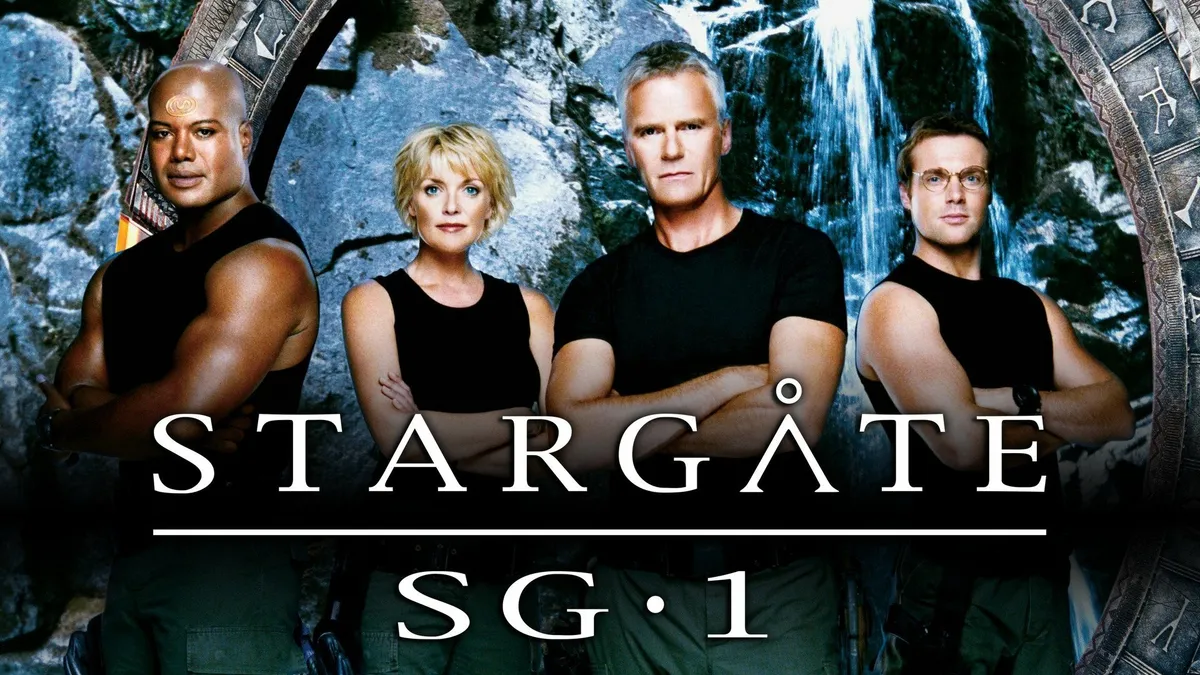
Stargate SG-1 cancelled, Atlantis renewed

Monday - August 21, 2006 | by Darren Sumner
The future of Stargate is in question today, as SCI FI Channel has cancelled the long-running Stargate SG-1, Multichannel News reported today and a GateWorld source has confirmed. The news regrettably follows the airing of the show's milestone two-hundredth episode on Friday.
Stargate Atlantis, meanwhile, has been renewed for a fourth season, with the network hoping to see that the spin-off series can stand alone, according to a source.
Source Gateworld
2032 Replies
·
184102 views