

Social Feed
W
Supporting Founder
You think all satellite products are the same quality? You may think different after reading this article. Read on, you may be surprised at what you'll find out!
As you know the economy is not at its best right now, and the satellite industry is no different than any other industry. Material suppliers, manufacturers, distributors, & dealers have seen a drop in business. Competition is at its peak on all channels. As business owners, we always have to come up with ways to stimulate business and increase sales in order to remain in business and keep our customers from going to the competition. We have a few choices when it comes to lowering prices to our customers without lowering our profit margins in hopes that we continue selling more products and keep our customers. Any company & business person knows that you can't drop your profit margin past a certain level by wanting to offer lower prices if you want to remain in business. So when we decide to lower our prices we also have to lower our cost on our products to still keep a comfortable profit margin. At this point we have a few options. Most common options to lower our cost is:
1. Lowering cost by using tier "B" material & supplies in products we manufacture. If you don't know what tier "B" materials are, read below for an explanation.
or
2. Continue using tier "A" material & try to negotiate with material suppliers to lower cost on the same material and not take away from the integrity and quality of our products.
Tier "A" materials are materials that have passed quality control and have been tested to perform to higher standard and are of a higher quality. Tier "B" materials are materials that have failed the quality control testing process of performing to a higher standard required for continuous and reliable performance, but still perform for a short period of time after use.
Unfortunately, in addition to selling tier A material, suppliers, specially overseas suppliers, also sell tier B material in order to minimize loss. Tier "B" material is usually sold at a reduced price of +/- 50% to the factories & manufacturers.
The most common & easiest option to a manufacturer or distributor is option #1 above. It does not take much work. Unfortunately when this happens, the consumer and dealer alike, have to be stuck with inferior product that they need to support for their customers.
When you see a dramatic drop in prices from a distributor, you have to ask yourself how is the distributor able to all of the sudden drop their prices, permanently cut their profit margin and still be able to offer a quality product. Something just does not add up.
We have recently received many complaints from new customers who have switched to us for better quality products stating that they were glad to see prices drop from their previous distributors, but the quality of the products and performance is not what it used to be. They have issues with their customers who demand good quality. They say that they are not able to get warranty service on the product, and having to hassle with their own distributor over the quality of product the distributor offers.
WS International only uses tier A material in our WS International line of satellite products.
I'm sure you have seen reviews of WS International products done by actual customers and hobbyists on many knowledgeable and honest discussion forums like SatelliteGuys.us and LegalFreeToAir.com. You have seen time after time that our products outperform and smoke the competition. Unlike some of our competitors, we don't ask our dealers and resellers to do bias product reviews because the fact that they sell our products would make them obviously bias. This would be very unfair to the end-user and provide one-sided information. We ask end-users who use the products on a daily basis to review our products and give us their most honest opinion. You can see these honest opinions and reviews on many trusted & largest online discussion forums like the ones named above.
Now you know why WS International products offer a 2-year warranty. We take pride in providing customers with quality products and only use tier A material and negotiate with our material suppliers for lower cost based on our buying power. We don't believe in cutting corners & sacrificing quality in order to offer lower prices. We offer low prices based on our ability to purchase in larger quantities. WS International manufactures the highest quality satellite receivers, Ku band and C band LNB and LNBFs while offering unbeatable prices for the quality of products we manufacture.
If you want cheap & inferior products and don't care about quality and performance, I suggest you continue purchasing equipment from other distributors that offering this. However, if you want reliability, quality, and performance, with less headaches, rely on genuine WS International brand of products.
While others try to compete based on price alone, we compete based on price, reliable quality, and reliable service. This is why WS International is the only company in North America that offers an entire 2-year warranty on our WS International brand of LNB, LNBFs, and LEXIUM line of satellite receivers and meters.
Thanks for taking the time to read this article & becoming more aware of the satellite equipment you purchase. I hope this helps you become more aware of the quality of products offered by us.
Robby Dosetareh
CEO, WS International
For those of you who have not seen our behind the scenes video of our LNB / LNBF, Signal Finder, and Switch factory, I have included a couple of them below also. Enjoy and for more videos, please visit our YouTube page
YouTube - WS International LNBF Factory - Final Inspection step
YouTube - LNB LNBF Testing At WS International Factory
62 Replies
·
8954 views


Pub Member / Supporter
Lifetime Supporter
I've always been super interested in things space related so this is a pretty cool event coming up. Nov 18, 2026 early in the morning, Voyager 1 will reach the distance of one full light day from Earth. Took almost 50 yrs. I was 13 when it launched.
View: https://www.youtube.com/shorts/gjHK3clOwIw?feature=share
View: https://www.youtube.com/shorts/gjHK3clOwIw?feature=share
4 Replies
·
84 views


Pub Member / Supporter
Lifetime Supporter
I'm surprised Walmart hasn't banned this guy from all of their stores. He has been on their CASE the past few months.
View: https://www.youtube.com/shorts/f3zr37ekgKM?feature=share
View: https://www.youtube.com/shorts/f3zr37ekgKM?feature=share
55 Replies
·
536 views


Looks like DTV made a deal. I'm now getting it on ch 650. The tv promise slate is gone.
1 Replies
·
16 views

Lifetime Supporter
I know HipKat said that they were working on conversions but we got the official news yesterday right from Dish that starting next month all DMA's will be on the western arc, and all customers will be assigned to that. That's gonna mean a lot of customers around here aren't gonna get Dish unless there are exceptions. Too many mountains and trees.
151 Replies
·
3907 views


Pub Member / Supporter
Now that I'm retired, obviously I have different health care insurance. I take 2 prescriptions. With my old insurance I didn't have to pay for either of them, now I do. It's not a huge amount but it led me to dig a little into the cost of prescription medications. I have been using Walgreens for the longest time. But what I found was that Walgreens price is 4.8 times more for one of my prescriptions and the other is 2.3 percent more compared to the lowest price pharmacy. If you pay for prescription medications you might want to have a look at trumprx and see if you can get a lower price.


15 Replies
·
191 views


Supporting Founder
Lifetime Supporter
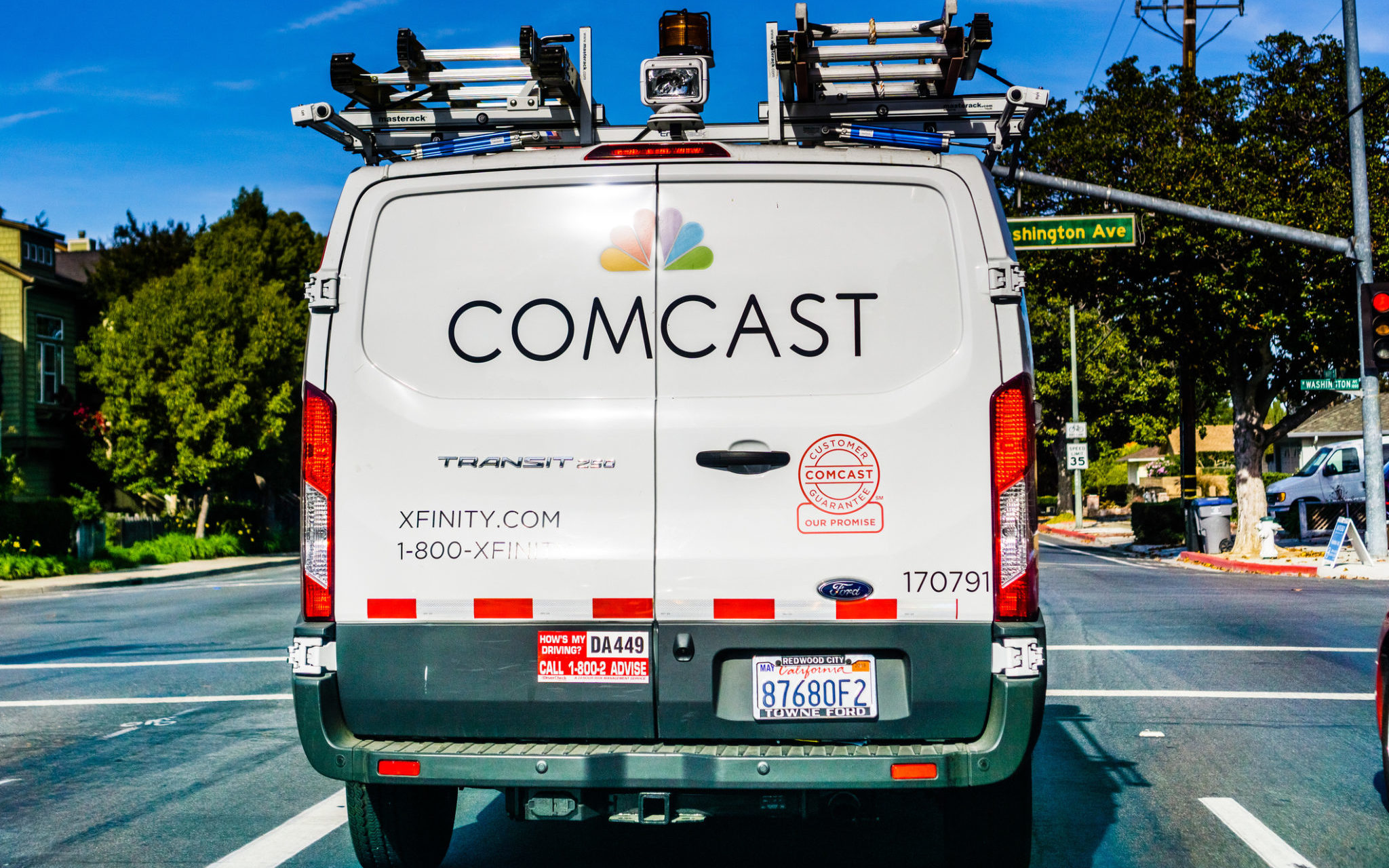
Comcast is the first to report, with a massive 274,000 loss in video subscribers.
In the 3Q of 2016, Comcast had 21.42 million video subscribers and was the #1 provider, now at 10.39 million and is the #3 Provider, YTTV is #2 ( who also surpassed DirecTV-8 Million and Dish-under 5 Million), Charter/Spectrum is #1.
 cordcuttersnews.com
In the 3Q of 2016, Comcast had 21.42 million video subscribers and was the #1 provider, now at 10.39 million and is the #3 Provider, YTTV is #2 ( who also surpassed DirecTV-8 Million and Dish-under 5 Million), Charter/Spectrum is #1.
Comcast Just Lost 274,000 TV Customers & 144,000 Internet Customers In Just Three Months | Cord Cutters News
Comcast Corporation reported its third-quarter 2026 results on October 22, showing continued erosion in its domestic residential broadband internet and video customer bases as competitive pressures intensified across the connectivity market. The company recorded a net loss of 144,000 domestic...
cordcuttersnews.com
5 Replies
·
162 views


Staff member
HERE TO HELP YOU!
Cutting Edge
The following is from Reddit. -
View: https://www.reddit.com/r/DirectvStream/s/orzHBkmqQW

There appears to be a new DIRECTV Gemini OTT box, the C81KW-650.
The FCC listing is partially available, and a Geekbench entry confirms it uses an Amlogic S905X5, a solid SoC for a set-top box.
I also see 4GB of RAM, and the manufacturer is SEI Robotics.
DIRECTV C81KW OTT Box - Android TV Guide
Ok found a picture of the Box too on Reddit:
View: https://www.reddit.com/r/DirectvStream/comments/1twlex0/comment/opzeqi1/
View: https://www.reddit.com/r/DirectvStream/s/orzHBkmqQW
There appears to be a new DIRECTV Gemini OTT box, the C81KW-650.
The FCC listing is partially available, and a Geekbench entry confirms it uses an Amlogic S905X5, a solid SoC for a set-top box.
I also see 4GB of RAM, and the manufacturer is SEI Robotics.
DIRECTV C81KW OTT Box - Android TV Guide
Ok found a picture of the Box too on Reddit:
View: https://www.reddit.com/r/DirectvStream/comments/1twlex0/comment/opzeqi1/
23 Replies
·
961 views

Staff member
HERE TO HELP YOU!
Cutting Edge
Sometimes a thread gets so many posts in it that is can cause issues for the server so that why today we introduce The Song Name Game Part 3!
So let the game continue!
The last song was added by Bobby who posted...
One Meat Ball - Andrews Sisters
CONTINUE ON AND HAVE FUN! WELCOME HOME TO SATELLITEGUYS.US!
Here are the original rules for the game as posted by WebbyDude back in 2006. http://www.satelliteguys.us/threads/68645-Song-Name-Game
Just name a song title and the band who performed it. The next person does the same thing, but needs to list a song title or band name which includes a word from the previous entry. Pick songs from any genre.
Example:
Long Live Rock and Roll -- Rainbow
Rainbow in the Dark -- Dio
Another example:
Ride the Lightning -- Metallica
Lightning Strikes -- Ozzy Osbourne
Get it?
An additional note: we all know that song titles, sometimes, use profane words. Because this is a family friendly website it is advised that you clean up that title up a bit. This is accomplished by using something like sh!t instead of the real word. Thanks....
68590 Replies
·
2676962 views

Supporting Founder
Lifetime Supporter
This thread is a place to discuss the 4K events that appear on channel 540. We are getting, at this point, one college football game a week. Let's hope there is more coming.
1936 Replies
·
299671 views


Staff member
HERE TO HELP YOU!
So...DirecTV advertises the Choice package with 95+ bonus channels for Satellite customers. You don't want 90+ of the 95...
Excluding PPV, premium networks, infomercial, shopping, religion, and non-English programming, there are 7 channels on satellite that are not on streaming:
NFL Network, MavTV, FE TV, Free Speech, NASA, INSP, and Pursuit. I'm pretty sure a couple of those are public interest that they have to carry to meet an FCC quota on satellite.
I hope they get called out for this advertising because that is ridiculous. One big network, NFL, will probably get added to streaming when their next agreement comes up, and the rest are likely very low viewership.
What about streaming, what do you get extra with the Choice package that isn't on Satellite:
Two stations - one of which is an internet TV - Fox Weather, and Heros & Icons (a diginet). Nothing special here to look at either.
If they cleaned up a couple of their agreements, added a few public interest stations to streaming, they could probably have their lineups match. It's close now, if you take out all the garbage on satellite that they earn money on. If they can sell infomercials on satellite, why can't they on streaming, seems like a miss. A bigger miss, including those stations in the "bonus channels just for satellite customers." Pretty sad marketing right there.

Attached is a comparison sheet of satellite vs streaming for the three main packages if anyone is interested.
MOD EDIT: See Post #3 for an up to date list of what channels are available on sat but not on streaming/internet, see Post #21 for an up to date list of what's available in the app for streaming customers, but not for sat customers.
Excluding PPV, premium networks, infomercial, shopping, religion, and non-English programming, there are 7 channels on satellite that are not on streaming:
NFL Network, MavTV, FE TV, Free Speech, NASA, INSP, and Pursuit. I'm pretty sure a couple of those are public interest that they have to carry to meet an FCC quota on satellite.
I hope they get called out for this advertising because that is ridiculous. One big network, NFL, will probably get added to streaming when their next agreement comes up, and the rest are likely very low viewership.
What about streaming, what do you get extra with the Choice package that isn't on Satellite:
Two stations - one of which is an internet TV - Fox Weather, and Heros & Icons (a diginet). Nothing special here to look at either.
If they cleaned up a couple of their agreements, added a few public interest stations to streaming, they could probably have their lineups match. It's close now, if you take out all the garbage on satellite that they earn money on. If they can sell infomercials on satellite, why can't they on streaming, seems like a miss. A bigger miss, including those stations in the "bonus channels just for satellite customers." Pretty sad marketing right there.
Attached is a comparison sheet of satellite vs streaming for the three main packages if anyone is interested.
MOD EDIT: See Post #3 for an up to date list of what channels are available on sat but not on streaming/internet, see Post #21 for an up to date list of what's available in the app for streaming customers, but not for sat customers.
241 Replies
·
31768 views