

Social Feed

Alphabet delivers wireless Internet over light beams from 20km away
Wireless network in Kenya to use light beams, like fiber but without the cables.
Jon Brodkin, arsTechnica - 11/10/2020, 1:29 PM

Piloting Taara's wireless optical communication links in Kenya.
Like fiber, without cables

Illustration of a Project Taara terminal delivering Internet access from a tall building to a remote area.
Wireless network in Kenya to use light beams, like fiber but without the cables.
Jon Brodkin, arsTechnica - 11/10/2020, 1:29 PM
Piloting Taara's wireless optical communication links in Kenya.
Like fiber, without cables
Illustration of a Project Taara terminal delivering Internet access from a tall building to a remote area.
1 Replies
·
1474 views


Pub Member / Supporter
Lifetime Supporter
Just finished S2. Watching Gary Oldman as deshvilved, dejected MI-6 agent, Jackson Lamb, is one of the best things streaming right now. Already 2 more seasons in the works. HIGHLY recommended. And yes, Mick Jagger sings the theme.
67 Replies
·
6784 views


Pub Member / Supporter
Lifetime Supporter
I'm surprised Walmart hasn't banned this guy from all of their stores. He has been on their CASE the past few months.
View: https://www.youtube.com/shorts/f3zr37ekgKM?feature=share
View: https://www.youtube.com/shorts/f3zr37ekgKM?feature=share
67 Replies
·
629 views


Season 2 order already in hand:
'Star Trek: Starfleet Academy' Renewed for Season 2, Tatiana Maslany to Guest Star in Season 1
I've not been optimistic about this show based on what I've read so far. Seems to be aimed at a younger audience. Interesting though that Tatiana Maslany will have some sort of role.
'Star Trek: Starfleet Academy' Renewed for Season 2, Tatiana Maslany to Guest Star in Season 1
I've not been optimistic about this show based on what I've read so far. Seems to be aimed at a younger audience. Interesting though that Tatiana Maslany will have some sort of role.
87 Replies
·
3543 views


Staff member
HERE TO HELP YOU!
Cutting Edge
Sometimes a thread gets so many posts in it that is can cause issues for the server so that why today we introduce The Song Name Game Part 3!
So let the game continue!
The last song was added by Bobby who posted...
One Meat Ball - Andrews Sisters
CONTINUE ON AND HAVE FUN! WELCOME HOME TO SATELLITEGUYS.US!
Here are the original rules for the game as posted by WebbyDude back in 2006. http://www.satelliteguys.us/threads/68645-Song-Name-Game
Just name a song title and the band who performed it. The next person does the same thing, but needs to list a song title or band name which includes a word from the previous entry. Pick songs from any genre.
Example:
Long Live Rock and Roll -- Rainbow
Rainbow in the Dark -- Dio
Another example:
Ride the Lightning -- Metallica
Lightning Strikes -- Ozzy Osbourne
Get it?
An additional note: we all know that song titles, sometimes, use profane words. Because this is a family friendly website it is advised that you clean up that title up a bit. This is accomplished by using something like sh!t instead of the real word. Thanks....
So let the game continue!
The last song was added by Bobby who posted...
One Meat Ball - Andrews Sisters
CONTINUE ON AND HAVE FUN! WELCOME HOME TO SATELLITEGUYS.US!
Here are the original rules for the game as posted by WebbyDude back in 2006. http://www.satelliteguys.us/threads/68645-Song-Name-Game
Just name a song title and the band who performed it. The next person does the same thing, but needs to list a song title or band name which includes a word from the previous entry. Pick songs from any genre.
Example:
Long Live Rock and Roll -- Rainbow
Rainbow in the Dark -- Dio
Another example:
Ride the Lightning -- Metallica
Lightning Strikes -- Ozzy Osbourne
Get it?
An additional note: we all know that song titles, sometimes, use profane words. Because this is a family friendly website it is advised that you clean up that title up a bit. This is accomplished by using something like sh!t instead of the real word. Thanks....
68594 Replies
·
2677151 views


Supporting Founder
Lifetime Supporter
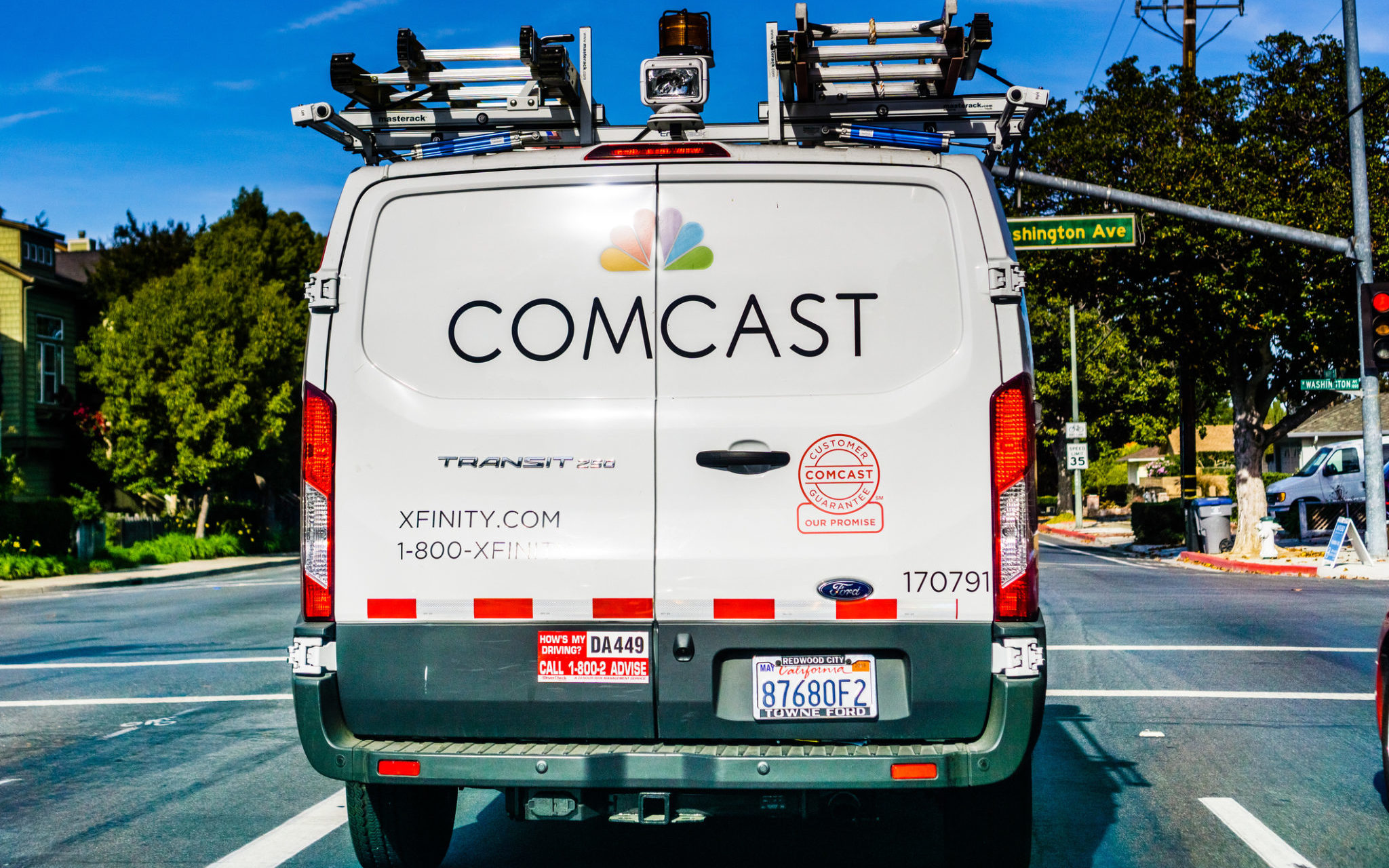
Comcast is the first to report, with a massive 274,000 loss in video subscribers.
In the 3Q of 2016, Comcast had 21.42 million video subscribers and was the #1 provider, now at 10.39 million and is the #3 Provider, YTTV is #2 ( who also surpassed DirecTV-8 Million and Dish-under 5 Million), Charter/Spectrum is #1.
 cordcuttersnews.com
In the 3Q of 2016, Comcast had 21.42 million video subscribers and was the #1 provider, now at 10.39 million and is the #3 Provider, YTTV is #2 ( who also surpassed DirecTV-8 Million and Dish-under 5 Million), Charter/Spectrum is #1.
Comcast Just Lost 274,000 TV Customers & 144,000 Internet Customers In Just Three Months | Cord Cutters News
Comcast Corporation reported its third-quarter 2026 results on October 22, showing continued erosion in its domestic residential broadband internet and video customer bases as competitive pressures intensified across the connectivity market. The company recorded a net loss of 144,000 domestic...
cordcuttersnews.com
9 Replies
·
220 views


Looks like DTV made a deal. I'm now getting it on ch 650. The tv promise slate is gone.
4 Replies
·
68 views
Supporting Founder
Lifetime Supporter
I was reading this article

 thehill.com
That said this-
Last summer, for the first time, streaming services like Netflix and Amazon Prime claimed the largest share of the television viewing audience, surpassing both cable and broadcast TV. Streaming captured 34.8 percent of July viewers, according to Nielsen data, compared to 34.4 percent for cable and 21.6 percent for broadcast.
And then, sometime in the second half of 2022, cord-cutters became the majority. The share of cable and satellite television subscribers dipped to 48 percent, according to a report from Samba TV, a television technology company.
Now I do not consider those with YTTV and the likes, Cord Cutters, but they still do not have Traditional Cable/Satellite delivered Live TV, so I decided to do the math.
There are, now, 129 Million Households in the United States.
In 2015, there were 100 Million Cable/Sat Subscribers , no streaming Live TV Service.
Today, there are 66 Million Live TV subscribers, including Cable, Satellite and Streaming.
Roughly, Streaming Live TV has 14 Million subs including all of them.
So that means, Cable/Satellite now has, roughly, 51 Million Households
So in just 8 years, lost 49% of their subscribers and by the end of this year, expected sub count to be, roughly, 45 million households.
That means a total loss of 55% since 2015 at the end of 2023.
But out of 129 Million households, 45 million will mean only 35% will get Cable/Satellite Delivered Live TV by the end of 2023.
Imagine what 2024 will be like.
Cable TV ‘cord-cutters’ became the majority in 2022
The steady decline of cable and broadcast television, and the rise of streaming services, reached a sort of inflection point over the past year. Last summer, for the first time, streaming ser…
thehill.com
That said this-
Last summer, for the first time, streaming services like Netflix and Amazon Prime claimed the largest share of the television viewing audience, surpassing both cable and broadcast TV. Streaming captured 34.8 percent of July viewers, according to Nielsen data, compared to 34.4 percent for cable and 21.6 percent for broadcast.
And then, sometime in the second half of 2022, cord-cutters became the majority. The share of cable and satellite television subscribers dipped to 48 percent, according to a report from Samba TV, a television technology company.
Now I do not consider those with YTTV and the likes, Cord Cutters, but they still do not have Traditional Cable/Satellite delivered Live TV, so I decided to do the math.
There are, now, 129 Million Households in the United States.
In 2015, there were 100 Million Cable/Sat Subscribers , no streaming Live TV Service.
Today, there are 66 Million Live TV subscribers, including Cable, Satellite and Streaming.
Roughly, Streaming Live TV has 14 Million subs including all of them.
So that means, Cable/Satellite now has, roughly, 51 Million Households
So in just 8 years, lost 49% of their subscribers and by the end of this year, expected sub count to be, roughly, 45 million households.
That means a total loss of 55% since 2015 at the end of 2023.
But out of 129 Million households, 45 million will mean only 35% will get Cable/Satellite Delivered Live TV by the end of 2023.
Imagine what 2024 will be like.
895 Replies
·
71746 views

TWiT Tech Podcast Network
Time for another AWESOME video from the TWIT Network!
View: https://www.youtube.com/shorts/PAhrLR-6dec
Direct YouTube Link - Xbox Rumored Game Pass Overhaul
TWIT's Website
TWIT Live Feed
View: https://www.youtube.com/shorts/PAhrLR-6dec
Direct YouTube Link - Xbox Rumored Game Pass Overhaul
TWIT's Website
TWIT Live Feed
0 Replies
·
7 views

Pub Member / Supporter
I set up a music server for my brother a few years ago. It's basically a small headless computer but it needs to have a DHCP IP address reserved for it in the router settings. This was easy to do in his DSL router. He's switching to Starlink now and I was wondering if these setting are easily accessible in the Starlink router. I'm pretty sure he will be getting the latest V5 router.
1 Replies
·
24 views

Linus Tech Tips
Time for another AWESOME video from Linus Tech Tips!
View: https://www.youtube.com/watch?v=DN953UW8iJ8
Direct YouTube Link - dbrand Forced me to do This Review
Linus on Facebook
The LTT Store
View: https://www.youtube.com/watch?v=DN953UW8iJ8
Direct YouTube Link - dbrand Forced me to do This Review
Linus on Facebook
The LTT Store
0 Replies
·
11 views