

Social Feed

Pub Member / Supporter
A few months ago I found interesting article by John Legon, mostly known as a mathematician researching Egyptian Pyramids.
John also is involved in satellite reception and devised some equations for finding parameters of unknown dishes.
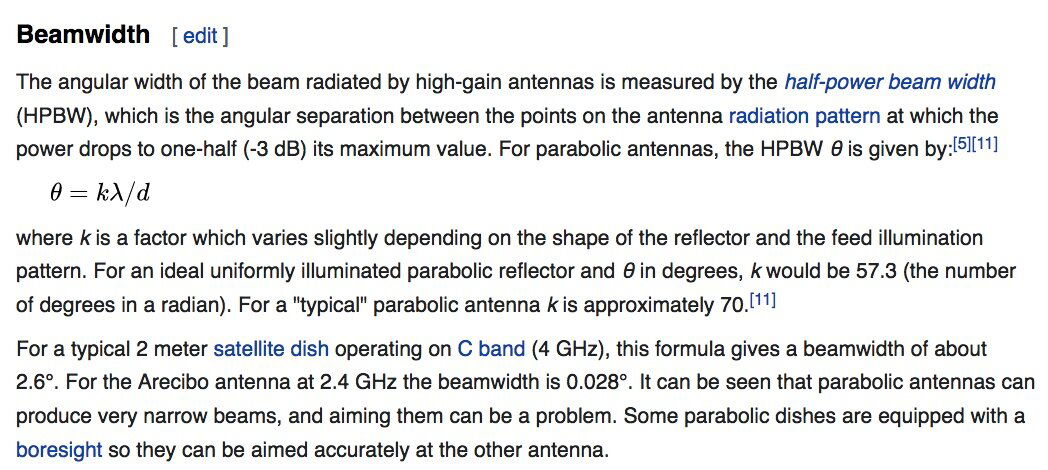
I took a screenshot of part of his article.
What is puzzling for me is his statement that the left and right sides of a dish whose top and bottom were "truncated" for
making its shape more "modern" - that these sides enhance the dish's selectivity for receiving adjacent satellites.
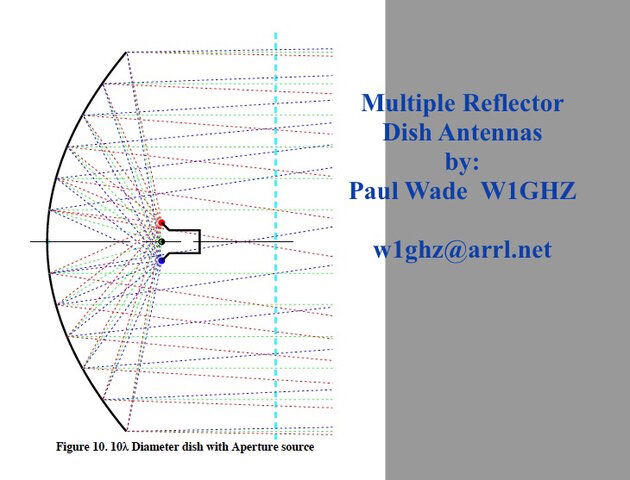
I think that the only factor which determines the angle of a cone what the dish "sees" - is its focal length.
If the dish's focal length is relatively long, it will "see" just one bird. If its focal length is short, it will be vulnerable to adjacent satellites.
I am curious what other Members think about it?
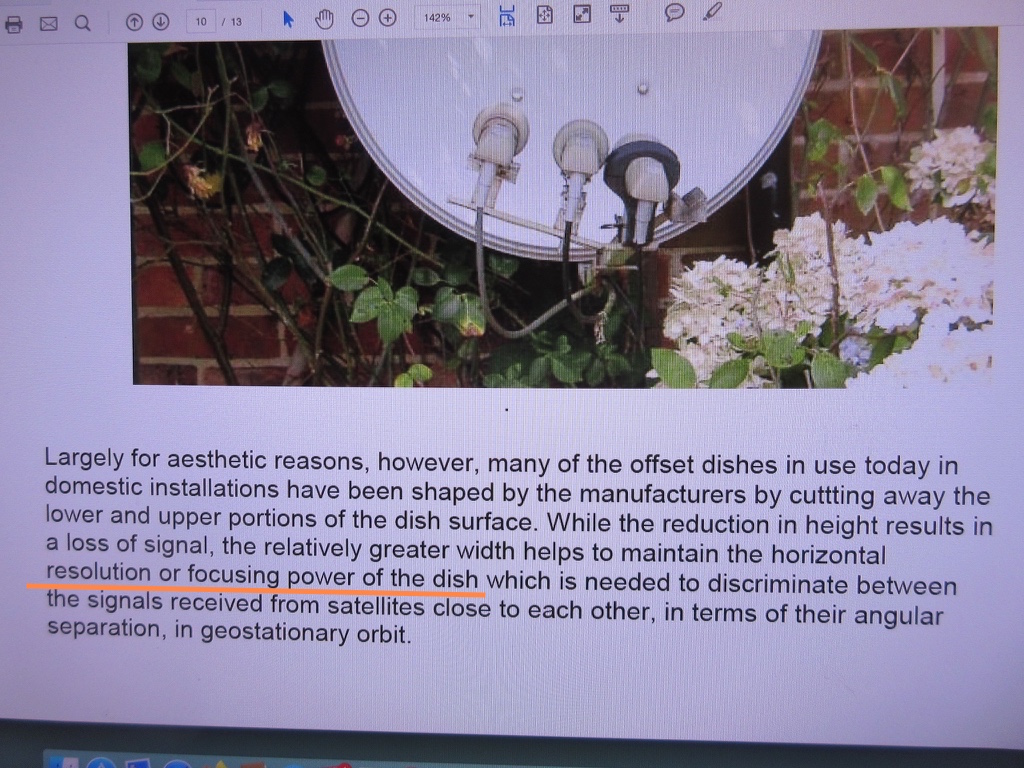
John also is involved in satellite reception and devised some equations for finding parameters of unknown dishes.
I took a screenshot of part of his article.
What is puzzling for me is his statement that the left and right sides of a dish whose top and bottom were "truncated" for
making its shape more "modern" - that these sides enhance the dish's selectivity for receiving adjacent satellites.
I think that the only factor which determines the angle of a cone what the dish "sees" - is its focal length.
If the dish's focal length is relatively long, it will "see" just one bird. If its focal length is short, it will be vulnerable to adjacent satellites.
I am curious what other Members think about it?
16 Replies
·
3537 views


TWiT Tech Podcast Network
Time for another AWESOME video from the TWIT Network!
View: https://www.youtube.com/shorts/oRVxjGm0qtE
Direct YouTube Link - Tim Cook, Elton John & King Charles: A Royal Tech Event
TWIT's Website
TWIT Live Feed
View: https://www.youtube.com/shorts/oRVxjGm0qtE
Direct YouTube Link - Tim Cook, Elton John & King Charles: A Royal Tech Event
TWIT's Website
TWIT Live Feed
0 Replies
·
1 views
TFLEV
Time for another AWESOME video from TFL Electric Vehicles!
View: https://www.youtube.com/watch?v=MyF_RH1m0mc
Direct YouTube Link - Watch the New Tesla Roadster Jump, Fly and Barrel-Roll in Mid-Air!
View: https://www.youtube.com/watch?v=MyF_RH1m0mc
Direct YouTube Link - Watch the New Tesla Roadster Jump, Fly and Barrel-Roll in Mid-Air!
0 Replies
·
7 views
TWiT Tech Podcast Network
Time for another AWESOME video from the TWIT Network!
View: https://www.youtube.com/shorts/0k5iT-OlpdE
Direct YouTube Link - The Apple HomeView
TWIT's Website
TWIT Live Feed
View: https://www.youtube.com/shorts/0k5iT-OlpdE
Direct YouTube Link - The Apple HomeView
TWIT's Website
TWIT Live Feed
0 Replies
·
2 views

Pub Member / Supporter
2 Replies
·
56 views


I thought I would come here and find lots of complaints about the update to the dish anywhere mobile app, but am not seeing any. It used to look just like the desktop webpage. Now you can no longer filter by sports channels or movie channels. Plus that they made it look like a big button telephone and you see fewer channels in the screen which requires more scrolling. Yes I realize you can look at sports then select which sport you want to look at, I just liked being able to see all sporting events in the guide with all other channels being filtered out. Am I alone in the wilderness on this?
3 Replies
·
57 views


Anyone else watch this show? Any guesses as to what was in the box Gibbs gave to Abby that was on her desk? It look liked it was glowing.
I also heard that someone was leaving the show at the end of this season. Any guesses as to who thats going to be?
I also heard that someone was leaving the show at the end of this season. Any guesses as to who thats going to be?
2132 Replies
·
214685 views


 Tony is not serious enough for me. Parker is too close to the team and Tim is too young to take over IMO.
Pub Member / Supporter
Lifetime Supporter
Might be worth a watch when it comes out. Looks like typical big corp against the little guy movie BUT....there is a reason this plot type is so oft repeated, it draws audiences.
View: https://www.youtube.com/watch?v=_-f9OGsKHd4
View: https://www.youtube.com/watch?v=_-f9OGsKHd4
1 Replies
·
11 views

Lifetime Supporter
If you're going try to read / listen to the book (can't recommend the audio book enough) before this comes out, I'd avoid trailers.
Trailer below, spoiling it to make sure you read the above bold message first. The book / audio book are fantastic. Go into this blind if you can IMO!
Kind of disappointed at how much they show. A lot still to see, but man, some good reveals in the book that are just served up here.
Trailer below, spoiling it to make sure you read the above bold message first. The book / audio book are fantastic. Go into this blind if you can IMO!
Kind of disappointed at how much they show. A lot still to see, but man, some good reveals in the book that are just served up here.
21 Replies
·
715 views


Lifetime Supporter
Schedule drops tomorrow. Mandatory mini camps in June. Hall of Fame game August 6th.
110 Replies
·
1619 views




Pub Member / Supporter
Lifetime Supporter
I had quit watching this show years ago because I ended up more annoyed than entertained. Well......I'm STILL more annoyed than entertained. I DO find it interesting to see how things work behind the scenes at many businesses. What annoys me is how utterly out of touch CEOs are with the companies they run. At the end of almost every episode the head of the company is amazed at how hard the employees have to work and many times have to work around impossible guidelines set forth from headquarters.
I found this one interesting because the new CEO had big plans for this company, Muscle Maker Grill, and it looked like the stores were all pretty busy. Recent history hasn't been good to this company however. I bet the covid lockdowns were the real killer.
View: https://www.youtube.com/watch?v=yIhZm0qkz0o
I found this one interesting because the new CEO had big plans for this company, Muscle Maker Grill, and it looked like the stores were all pretty busy. Recent history hasn't been good to this company however. I bet the covid lockdowns were the real killer.
View: https://www.youtube.com/watch?v=yIhZm0qkz0o
0 Replies
·
9 views