Social Feed

S
Last reply · posted in Old VOOM "In Your Area" Forum Archive
Is this one of the options as a replacement OTA for the Stealth. My Voom is being installed tomorrow and I asked the installer about the bringing a back up antenna incase the steath didn't work out. He said sure it's not a prob and he'll bring a winegard.....I think he says it stands pretty tall which would lead me to believe its no the square shooter. Do they carry the square shooter? Also, can I ask for a larger dish like the 30 right of the bat? My townhome's backside points dead south and behind me is open protected wet lands, so I'm assuming the dish could get slammed pretty hard by the elements. ???

Just wanted to say that I have been lurking for a while and this forum really help me make my decision.....Great Place!
9 Replies · 2764 views
jgantert
I'm supposed to be upgraded to the SS next week. I started with the stealth, with poor results. Then I upgraded to a Winegard 8800, which was much worse for me. So, now I'm in for the SS.

Its supposed to help multi-path problems. I live in suburbia, with lots of very tall trees. Any idea if trees can cause multi-path problems?

-John
P
Hi,

IMO. The square shooter is not better then the Stealth. I can't get ABC and CBS where I am located. I had the voom installer bring out another antenna. To my disappointment, he brought the square shooter. He could not get any OTA channels at all. ZERO. Another wasted morning trying to get ABC and CBS. :mad:

In addition it runs around $129, this means you will have to pay for 70 buck extra with the 60 voom would apply for a new attenna. A

I recall looking for info on the SS on the web. It's for winabagos.
O
Trees

Trees = big time problems
I have that problem now that the leaves are starting to come out. If I watch the signal it swings up and down from 90 to 0 and back, especially when it's windy. I'm going to try an 8-bay instead of the stealth this weekend. I think a chainsaw may be the best alternative.... :D
M
PBHDinSD said:
Hi,

It's for winabagos.

LMAO...too funny. Actually with the optional amp which I have I get my stations that are about 30 miles away perfectly.

The SqS has gotten exemplary reviews, but again it was primarily designed for urban environments.
P
Yeah maybe it has great reviews. Unless my installer hooked it up wrong or it was a bad antenna, it could not get any OTA stations where I am located. The installer was perplexed, because he just installed one just an install before he did mine.
ewindowman
Lifetime Supporter
Last reply · posted in DISH Network Support Forum
Looks like dish is Bankrupt. Filling tomorrow Tuesday June 30th
525 Replies · 19747 views
JSheridan
AT&T runs First Net which was set up so first responders have a signal almost everywhere, which is the case around here and up and down the east coast when I've been traveling. In my experience T-Mobile has the fastest network but patchy coverage while Verizon has a slow network and also patchy coverage as well. We also have a iPhone on T-Mobile and one on Mobile-X which uses the Verizon network, so comparison is easy.
EarDemon
AT&T runs First Net which was set up so first responders have a signal almost everywhere, which is the case around here and up and down the east coast when I've been traveling. In my experience T-Mobile has the fastest network but patchy coverage while Verizon has a slow network and also patchy coverage as well. We also have a iPhone on T-Mobile and one on Mobile-X which uses the Verizon network, so comparison is easy.
I did a 2500 mile round trip road trip a few weeks ago, there were a handful of places where Verizon had service and I had nothing on FirstNet. Most notably in the backwoods of Kentucky and Tennessee. Those same places I had no service on T-Mobile either. In populated areas, like the Lexington metro and Knoxville metro AT&T not only had great coverage, better than Verizon and T-Mobile generally, they have n77 everywhere. I hit 1.2 Gbps or higher pretty much everywhere, beating out the other two. That is the exact opposite here back in Western NY. Very little n77 on AT&T here and T-Mobile always rockets to 1.5 Gbps or higher.

As far as I know, there is no AT&T tower in my town. The tower I connect to when I'm outside, no service indoors, is one about 4.5 miles north of me in a different town, I can barley latch on to band 12, not 14. It's LTE only but when near that tower I exceed 200 Mbps which is phenomenal for low band LTE, but T-Mobile and Verizon have mid band on the same tower, and i'm well over a gig.

I'm looking forward to the n14 conversion and deployment of n79/4.9 GHz. Since AT&T can't sell their home internet service in NY State, I don't expect big things from them besides the enhancements to FirstNet.
JSheridan
... Since AT&T can't sell their home internet service in NY State, I don't expect big things from them besides the enhancements to FirstNet.
We're in NY and we can now. We're an AT&T retailer and have been selling AT&T Internet Air for a few months. It's $35 a month if you're an AT&T post paid subscriber, $55 a month if you're not a subscriber.
Almighty1
We're in NY and we can now. We're an AT&T retailer and have been selling AT&T Internet Air for a few months. It's $35 a month if you're an AT&T post paid subscriber, $55 a month if you're not a subscriber.
The AT&T Internet that everyone has access to is AT&T WorldNet aka att.com which is the same backbone created in 1994 that is a joke. AT&T has 3 Internet tier 1 backbones. AT&T Global Network Services formerly IBM Global Network Services (prserv.net) and AT&T Emerging Network Services, formerly (CERFNet (California Educational and Research Foundation Network) that was part of NSFNet (National Science Foundation Network). AT&T WorldNet has always been a inferior and not the same quality as the other two which are highly respected.
  • Like
Reactions: charlesrshell
comfortably_numb
The AT&T Internet that everyone has access to is AT&T WorldNet aka att.com which is the same backbone created in 1994 that is a joke

JSheridan is referring to ATT's (relatively) new 5G cellular home internet.
Juan
JSheridan is referring to ATT's (relatively) new 5G cellular home internet.
Which connects to a backbone network
  • Like
Reactions: charlesrshell
comfortably_numb
Which connects to a backbone network

Fun fact.. the backhaul to the tower in Drexel, MO for both VZW and ATT is provided by CenturyLink
Juan
Fun fact.. the backhaul to the tower in Drexel, MO for both VZW and ATT is provided by CenturyLink
Backhaul only connects to the backbone...any cell phone tower in the verizon region ( core)..has to connect to the verizon backbone in some fashion..same with att..no matter what provider you use...the actual network ( routers and such) are owned by the cell phone company determine the speed of your cell phone connection
  • Like
Reactions: charlesrshell
comfortably_numb
Backhaul only connects to the backbone...any cell phone tower in the verizon region ( core)..has to connect to the verizon backbone in some fashion..same with att..no matter what provider you use...the actual network ( routers and such) are owned by the cell phone company determine the speed of your cell phone connection

And yet the fiber to that tower is still provided by CenturyLink... so my point still stands, no?
EarDemon
We're in NY and we can now. We're an AT&T retailer and have been selling AT&T Internet Air for a few months. It's $35 a month if you're an AT&T post paid subscriber, $55 a month if you're not a subscriber.
Wow when did that happen? I'm guessing AT&T caved and started offering a $15/month low income tier for those who qualify.

Hopefully this causes AT&T to blanket the state with DoD and cband. They are by far the slowest and have the highest latency generally speaking in Western NY.
Almighty1
And yet the fiber to that tower is still provided by CenturyLink... so my point still stands, no?
No, Fiber to the towers is not CenturyLink for Drexel, MO because it can be either ILEC (Incumbent Local Exchange Carrier) or it can be CLEC (Competitive Local Exchange Carrier).
CenturyLink which has been known as Lumen Technologies is not the incumbent carrier in Drexel. In the Drexel, Missouri wire center and surrounding Cass/Bates county lines, alternative fiber and Competitive Local Exchange Carriers (CLECs) with active transport infrastructure include:
  • Peoples Telecommunications (Peoples Services): Operates extensive localized fiber facilities directly in the Drexel and Louisburg area, functioning as the primary regional CLEC/independent carrier on the ground.
  • MoKan Communications (MoKan Dial): Maintains contiguous fiber routes right along the Missouri–Kansas border surrounding Drexel, often interconnecting or leasing dark fiber to neighboring towers.
  • Conexon Connect: Builds and operates middle-mile and last-mile fiber networks across Cass County in partnership with local electric cooperatives, providing modern fiber transport paths through rural pockets around Drexel.
  • Craw-Kan Telephone Cooperative: Holds an adjacent fiber footprint on the southern/Kansas edge of the Drexel exchange area that supports regional carrier transport.
(Note: While Consolidated Communications—which operates retail services under the Fidium brand—is the historical wireline incumbent in Drexel itself rather than CenturyLink, wireless carriers frequently bypass the ILEC copper plant by pulling backhaul from Peoples or Conexon's fiber rings.)

So when it comes to connecting to the internet, you are really dealing with up to 3 companies whether it's AT&T or Verizon.

With AT&T, it can be up to 3 companies.

The first company is AT&T Wireless or AT&T California (ILEC) which provides the wireless connection or wired circuit to you.
The second company which applies only to physical circuits and not wireless service is AT&T Advanced Solutions Inc better known as ASI as a CLEC who provides the data transport between you and the ISP. If this was wireless, then it would be second company being the ISP. AT&T WorldNet being the ISP.
The third company would be the ISP itself which would be AT&T WorldNet if this was a wired connection.

As far as the Verizon backbone is concerned which is what was known as UUNet aka AlterNet (AS 701) as BBNPlanet (AS 1) later known as GTE Internetworking/Genuity has been sold to Level 3 and then CenturyLink which rebranded to Lumen Technologies.

While it will connect to Verizon's backbone which highly depends on the Access Point Name (APN) as using San Francisco where I am located for example,
a direct Verizon mobile customer will connect to Verizon's backbone in San Francisco. A Comcast/XfinityMobile customer which uses Verizon's towers will not as the first hop as seen in traceroutes can be in Houston, Chicago or Atlanta so to reach someone who uses Verizon across the street, the data packet will travel to one of those first and then travel back to San Francisco using Verizon. In both cases, you will always see Verizon Wireless as the first few hops before it will reach Verizon's Internet Backbone. MVNOs do not use the default APN and usually has their own gateways which in the case for Xfinity Mobile is COMCAST.RSLR.VZWENTP which is read just like internet domain names, in reverse order, Verizon Enterprise-Reseller-Comcast. XfinityMobile originally had high latency because of this reason which I and many others complained about but XfinityMobile ignored the issue until I filed a complaint with the FCC that finally pushed it to Xfinity Mobile's Engineering department which finally made it connect to Verizon Wireless's IP network in San Francisco and connected to Verizon's backbone locally.

So basically the APN is the invisible network you will not see in the traceroutes due to:

Mobile Access Point Names (APNs) – Cellular Networks

A cellular APN (the gateway connecting a mobile device to the carrier's packet data network):
• Carrier-Grade NAT (CGNAT) and Tunneling: Cellular data traffic is typically encapsulated inside tunnels (such as GTP - GPRS Tunneling Protocol) and routed through massive carrier gateways.
• ICMP Filtering and Rate Limiting: Mobile carriers and core network routers frequently block, drop, or rate-limit ICMP/traceroute responses (TTL Expired messages) for security, privacy, and to reduce router processing overhead.
• Hidden Hops: Carrier-grade firewalls and internal routers may be configured not to reply to probes or decrement TTL in ways that expose their internal architecture.

The backbone one connects to is only one part of the equation as it depends a lot on what sites one frequently connects to and what backbones those destinations are connected with that determines the quickest path between the source and the destination. Some destination sites only are connected to one backbone and some are connected to multiple backbones for redundancy. That is why it matters to choose the ISP that works the best for the sites one connects to if you want the best performance possible as the lowest latency and the speed is the objective of reaching the sites you most frequent. While there are many tier 1 backbones, the ones that carry 90% of the traffic worldwide are the ones that hopefully whatever ISP one chooses is directly connected to. There are also private peering points and public peering points locally so it does not always have to travel to a backbone provided that there is a peering agreement between the networks. All of this is done using BGP4 (Border Gateway Protocol version 4) which is how routes are announced as the path is determined by ASN (Autonomous System Numbers) so the routing table for different IPv4 or IPv6 can route a different way which all depends on the BGP4 announcements that the destination networks announced so like some sites may be just AS 701 100% of the way while other sites may be AS 701 to AS 1 or more and if there is peering, it may not even touch AS 701 at all and just connect directly between ones own AS drectly the the others AS (Autonomous System). AS has nothing to do with physical distance but just the shortest path of getting there.

This is better explained here:

As I own and run a ISP, a lot of sites are actually local on the network as it's all on Akamai Technologies CDN (Content Delivery Network) servers which are physically hosted at our location so if one was visiting Apple, Microsoft, etc, the content is already on the Akamai server so it usually does not even need to travel the entire internet to get to it.

But on my home connection which is Comcast, it does travel all the way on Comcast before it hands off to Akamai's network in San Jose, CA before it reaches the Akamai server in Los Angeles which is probably located at One Wilshire Blvd in LA.

tracert www.apple.com

Tracing route to e6858.dsce9.akamaiedge.net [23.199.1.26]
over a maximum of 30 hops:

1 1 ms 1 ms <1 ms 192.168.2.1
2 4 ms 6 ms 4 ms 10.0.0.1
3 15 ms 19 ms 20 ms 10.22.121.18
4 21 ms 19 ms 28 ms po-54-rur01.sfmission.ca.sfba.comcast.net [162.151.1.129]
5 16 ms 9 ms 11 ms po-100-xar01.sfmission.ca.sfba.comcast.net [68.85.57.245]
6 26 ms 10 ms 10 ms po-2-xar02.sfmission.ca.sfba.comcast.net [96.216.230.178]
7 22 ms 21 ms 16 ms ae-246-rar01.hayward.ca.sfba.comcast.net [96.216.231.69]
8 17 ms 18 ms 18 ms be-399-ar01.hayward.ca.sfba.comcast.net [68.86.143.89]
9 18 ms 13 ms 17 ms be-36321-cs02.9greatoaks.ca.ibone.comcast.net [68.86.93.133]
10 32 ms 34 ms 22 ms be-2211-pe11.9greatoaks.ca.ibone.comcast.net [96.110.32.246]
11 * * * Request timed out.
12 12 ms 13 ms 11 ms ae11.r02.sjc01.icn.netarch.akamai.com [23.207.232.38]
13 25 ms 19 ms 22 ms ae7.r23.lax01.icn.netarch.akamai.com [23.193.113.12]
14 28 ms 34 ms 26 ms ae0.r22.lax01.mag.netarch.akamai.com [23.192.3.66]
15 28 ms 28 ms 26 ms ae1.r22.lax01.ien.netarch.akamai.com [23.192.3.99]
16 25 ms 25 ms 26 ms ae22.r04.border101.lax01.fab.netarch.akamai.com [23.203.155.29]
17 * * * Request timed out.
18 * * * Request timed out.
19 * * * Request timed out.
20 22 ms 21 ms 20 ms a23-199-1-26.deploy.static.akamaitechnologies.com [23.199.1.26]

Yet to reach Charles Schwab compared to Apple, it will actually use a Akamai server locally in the Silicon Valley on Akamai's network.

tracert www.schwab.com

Tracing route to e245857.x.akamaiedge.net [23.11.207.235]
over a maximum of 30 hops:

1 1 ms 2 ms 15 ms 192.168.2.1
2 5 ms 4 ms 6 ms 10.0.0.1
3 14 ms 14 ms 16 ms 10.22.121.18
4 14 ms 9 ms 10 ms po-54-rur01.sfmission.ca.sfba.comcast.net [162.151.1.129]
5 14 ms 11 ms 11 ms po-100-xar01.sfmission.ca.sfba.comcast.net [68.85.57.245]
6 15 ms 24 ms 13 ms ae-246-rar01.santaclara.ca.sfba.comcast.net [69.139.199.149]
7 17 ms 19 ms 21 ms be-299-ar01.santaclara.ca.sfba.comcast.net [68.86.143.93]
8 50 ms 48 ms 53 ms 50.219.153.14
9 * * * Request timed out.
10 * * * Request timed out.
11 11 ms 10 ms 20 ms a23-11-207-235.deploy.static.akamaitechnologies.com [23.11.207.235]

The *'s just means that ICMP ping packets are blocked or ignored as long as the latency looks normal. If it's some high number, then it means there is packet loss.
  • Like
Reactions: charlesrshell
JSheridan
Wow when did that happen? I'm guessing AT&T caved and started offering a $15/month low income tier for those who qualify.

Hopefully this causes AT&T to blanket the state with DoD and cband. They are by far the slowest and have the highest latency generally speaking in Western NY.
It happened just recently, I think about four months ago.

We're in eastern upstate NY and AT&T is pretty good, for the most part it's 5G+. T-Mobile is definitely the fastest but not the best coverage, AT&T is next fastest with the best overall coverage and Verizon is the slowest with the worst coverage.

We're also looking forward to the new bands coming online.
comfortably_numb
No, Fiber to the towers is not CenturyLink for Drexel, MO because it can be either ILEC (Incumbent Local Exchange Carrier) or it can be CLEC (Competitive Local Exchange Carrier).
CenturyLink which has been known as Lumen Technologies is not the incumbent carrier in Drexel. In the Drexel, Missouri wire center and surrounding Cass/Bates county lines, alternative fiber and Competitive Local Exchange Carriers (CLECs) with active transport infrastructure include:
  • Peoples Telecommunications (Peoples Services): Operates extensive localized fiber facilities directly in the Drexel and Louisburg area, functioning as the primary regional CLEC/independent carrier on the ground.
  • MoKan Communications (MoKan Dial): Maintains contiguous fiber routes right along the Missouri–Kansas border surrounding Drexel, often interconnecting or leasing dark fiber to neighboring towers.
  • Conexon Connect: Builds and operates middle-mile and last-mile fiber networks across Cass County in partnership with local electric cooperatives, providing modern fiber transport paths through rural pockets around Drexel.
  • Craw-Kan Telephone Cooperative: Holds an adjacent fiber footprint on the southern/Kansas edge of the Drexel exchange area that supports regional carrier transport.
(Note: While Consolidated Communications—which operates retail services under the Fidium brand—is the historical wireline incumbent in Drexel itself rather than CenturyLink, wireless carriers frequently bypass the ILEC copper plant by pulling backhaul from Peoples or Conexon's fiber rings.)

So when it comes to connecting to the internet, you are really dealing with up to 3 companies whether it's AT&T or Verizon.

With AT&T, it can be up to 3 companies.

The first company is AT&T Wireless or AT&T California (ILEC) which provides the wireless connection or wired circuit to you.
The second company which applies only to physical circuits and not wireless service is AT&T Advanced Solutions Inc better known as ASI as a CLEC who provides the data transport between you and the ISP. If this was wireless, then it would be second company being the ISP. AT&T WorldNet being the ISP.
The third company would be the ISP itself which would be AT&T WorldNet if this was a wired connection.

As far as the Verizon backbone is concerned which is what was known as UUNet aka AlterNet (AS 701) as BBNPlanet (AS 1) later known as GTE Internetworking/Genuity has been sold to Level 3 and then CenturyLink which rebranded to Lumen Technologies.

While it will connect to Verizon's backbone which highly depends on the Access Point Name (APN) as using San Francisco where I am located for example,
a direct Verizon mobile customer will connect to Verizon's backbone in San Francisco. A Comcast/XfinityMobile customer which uses Verizon's towers will not as the first hop as seen in traceroutes can be in Houston, Chicago or Atlanta so to reach someone who uses Verizon across the street, the data packet will travel to one of those first and then travel back to San Francisco using Verizon. In both cases, you will always see Verizon Wireless as the first few hops before it will reach Verizon's Internet Backbone. MVNOs do not use the default APN and usually has their own gateways which in the case for Xfinity Mobile is COMCAST.RSLR.VZWENTP which is read just like internet domain names, in reverse order, Verizon Enterprise-Reseller-Comcast. XfinityMobile originally had high latency because of this reason which I and many others complained about but XfinityMobile ignored the issue until I filed a complaint with the FCC that finally pushed it to Xfinity Mobile's Engineering department which finally made it connect to Verizon Wireless's IP network in San Francisco and connected to Verizon's backbone locally.

So basically the APN is the invisible network you will not see in the traceroutes due to:

Mobile Access Point Names (APNs) – Cellular Networks

A cellular APN (the gateway connecting a mobile device to the carrier's packet data network):
• Carrier-Grade NAT (CGNAT) and Tunneling: Cellular data traffic is typically encapsulated inside tunnels (such as GTP - GPRS Tunneling Protocol) and routed through massive carrier gateways.
• ICMP Filtering and Rate Limiting: Mobile carriers and core network routers frequently block, drop, or rate-limit ICMP/traceroute responses (TTL Expired messages) for security, privacy, and to reduce router processing overhead.
• Hidden Hops: Carrier-grade firewalls and internal routers may be configured not to reply to probes or decrement TTL in ways that expose their internal architecture.

The backbone one connects to is only one part of the equation as it depends a lot on what sites one frequently connects to and what backbones those destinations are connected with that determines the quickest path between the source and the destination. Some destination sites only are connected to one backbone and some are connected to multiple backbones for redundancy. That is why it matters to choose the ISP that works the best for the sites one connects to if you want the best performance possible as the lowest latency and the speed is the objective of reaching the sites you most frequent. While there are many tier 1 backbones, the ones that carry 90% of the traffic worldwide are the ones that hopefully whatever ISP one chooses is directly connected to. There are also private peering points and public peering points locally so it does not always have to travel to a backbone provided that there is a peering agreement between the networks. All of this is done using BGP4 (Border Gateway Protocol version 4) which is how routes are announced as the path is determined by ASN (Autonomous System Numbers) so the routing table for different IPv4 or IPv6 can route a different way which all depends on the BGP4 announcements that the destination networks announced so like some sites may be just AS 701 100% of the way while other sites may be AS 701 to AS 1 or more and if there is peering, it may not even touch AS 701 at all and just connect directly between ones own AS drectly the the others AS (Autonomous System). AS has nothing to do with physical distance but just the shortest path of getting there.

This is better explained here:

As I own and run a ISP, a lot of sites are actually local on the network as it's all on Akamai Technologies CDN (Content Delivery Network) servers which are physically hosted at our location so if one was visiting Apple, Microsoft, etc, the content is already on the Akamai server so it usually does not even need to travel the entire internet to get to it.

But on my home connection which is Comcast, it does travel all the way on Comcast before it hands off to Akamai's network in San Jose, CA before it reaches the Akamai server in Los Angeles which is probably located at One Wilshire Blvd in LA.

tracert www.apple.com

Tracing route to e6858.dsce9.akamaiedge.net [23.199.1.26]
over a maximum of 30 hops:

1 1 ms 1 ms <1 ms 192.168.2.1
2 4 ms 6 ms 4 ms 10.0.0.1
3 15 ms 19 ms 20 ms 10.22.121.18
4 21 ms 19 ms 28 ms po-54-rur01.sfmission.ca.sfba.comcast.net [162.151.1.129]
5 16 ms 9 ms 11 ms po-100-xar01.sfmission.ca.sfba.comcast.net [68.85.57.245]
6 26 ms 10 ms 10 ms po-2-xar02.sfmission.ca.sfba.comcast.net [96.216.230.178]
7 22 ms 21 ms 16 ms ae-246-rar01.hayward.ca.sfba.comcast.net [96.216.231.69]
8 17 ms 18 ms 18 ms be-399-ar01.hayward.ca.sfba.comcast.net [68.86.143.89]
9 18 ms 13 ms 17 ms be-36321-cs02.9greatoaks.ca.ibone.comcast.net [68.86.93.133]
10 32 ms 34 ms 22 ms be-2211-pe11.9greatoaks.ca.ibone.comcast.net [96.110.32.246]
11 * * * Request timed out.
12 12 ms 13 ms 11 ms ae11.r02.sjc01.icn.netarch.akamai.com [23.207.232.38]
13 25 ms 19 ms 22 ms ae7.r23.lax01.icn.netarch.akamai.com [23.193.113.12]
14 28 ms 34 ms 26 ms ae0.r22.lax01.mag.netarch.akamai.com [23.192.3.66]
15 28 ms 28 ms 26 ms ae1.r22.lax01.ien.netarch.akamai.com [23.192.3.99]
16 25 ms 25 ms 26 ms ae22.r04.border101.lax01.fab.netarch.akamai.com [23.203.155.29]
17 * * * Request timed out.
18 * * * Request timed out.
19 * * * Request timed out.
20 22 ms 21 ms 20 ms a23-199-1-26.deploy.static.akamaitechnologies.com [23.199.1.26]

Yet to reach Charles Schwab compared to Apple, it will actually use a Akamai server locally in the Silicon Valley on Akamai's network.

tracert www.schwab.com

Tracing route to e245857.x.akamaiedge.net [23.11.207.235]
over a maximum of 30 hops:

1 1 ms 2 ms 15 ms 192.168.2.1
2 5 ms 4 ms 6 ms 10.0.0.1
3 14 ms 14 ms 16 ms 10.22.121.18
4 14 ms 9 ms 10 ms po-54-rur01.sfmission.ca.sfba.comcast.net [162.151.1.129]
5 14 ms 11 ms 11 ms po-100-xar01.sfmission.ca.sfba.comcast.net [68.85.57.245]
6 15 ms 24 ms 13 ms ae-246-rar01.santaclara.ca.sfba.comcast.net [69.139.199.149]
7 17 ms 19 ms 21 ms be-299-ar01.santaclara.ca.sfba.comcast.net [68.86.143.93]
8 50 ms 48 ms 53 ms 50.219.153.14
9 * * * Request timed out.
10 * * * Request timed out.
11 11 ms 10 ms 20 ms a23-11-207-235.deploy.static.akamaitechnologies.com [23.11.207.235]

The *'s just means that ICMP ping packets are blocked or ignored as long as the latency looks normal. If it's some high number, then it means there is packet loss.

Sorry, I meant Consolidated. That's who provided my DSL when I lived there and the tech who installed it told me they provide the backhaul to that tower. People's has only been in town for two years, maybe less.
MikeD-C05
lily tomlin GIF


Wow ,who would of thought there was this much to talk about when it came to phone companies?
comfortably_numb
lily tomlin GIF


Wow ,who would of thought there was this much to talk about when it came to phone companies?

One ringy dingy, two ringy dingies...
S
lily tomlin GIF


Wow ,who would of thought there was this much to talk about when it came to phone companies?
there's a forum called howard forums. It's all about phone companies ;)
rvvaquero
there's a forum called howard forums. It's all about phone companies ;)
I agree that's where this phone company discussion probably should be. I've been visiting howardforums twice a day for over 20 years, discovered lot's of really good deals and info there. However, whereas they used to have hundreds of contributors daily, it's now down to less than a dozen regulars and a couple of negative moderators. The site is on it's last legs. I think most participants have moved to reddit.

Just saying.
EarDemon
It happened just recently, I think about four months ago.

We're in eastern upstate NY and AT&T is pretty good, for the most part it's 5G+. T-Mobile is definitely the fastest but not the best coverage, AT&T is next fastest with the best overall coverage and Verizon is the slowest with the worst coverage.

We're also looking forward to the new bands coming online.
Well that is good news! Around here AT&T mid-band is only in the big suburbs and what I would call 'rural cities', a small city in a rural county that is usually the county seat. There are many rural towers I'm seeing 1.5 - 2 Gbps on with T-Mobile where AT&T is LTE only. And Verizon is humming along at 1 Gbps or a little higher on c-band.

I know I've said this many times, but my ultimate plan one day is to get a commercial grade 5G router that supports dual SIM and have T-Mobile and FirstNet SIMs activated. I want to wait until their are units that can support n14 and n79. I can't see spending well over $1000 on something that will be gimped in a couple of years.
EarDemon
lily tomlin GIF


Wow ,who would of thought there was this much to talk about when it came to phone companies?
There's a ton to talk about. It's just most people are ignorant when it comes to their hopeless addiction to their phones and spend a lot of time on them but have no idea how the signal gets from point A to B thinking they work on magic, wishes and unicorn farts. They only care when they are at an event with thousands of other people and can't do their tick tocks and Snapgrams and their $1500 shiny toys are useless, I really don't give a damn about phones themselves but I have a tremendous interest in the underlying technology.

I always have Signal Check Pro and Network Cell Info open, looking to see what I'm connected to and watch the levels fluctuate as I move around as environmental variables change.

On my FirstNet line, Signal Check Pro would only show the indepth info for the LTE anchor bands when on 5G on my Pixel Fold 9 & 10. On the Pixel Fold 11 it shows everything. Not sure why the change, it has nothing to do with SA v NSA. When I saw that, it was like Christmas morning for me.

I'm not perfect, but I'm getting pretty good where I can drive by a tower and know which provider(s) is on it and can pick out each provider by the rack.
Almighty1
Sorry, I meant Consolidated. That's who provided my DSL when I lived there and the tech who installed it told me they provide the backhaul to that tower. People's has only been in town for two years, maybe less.
DSL is a different animal as it depends which ISP you used as there was also Northpoint, Rythms and Covad as many others who acted as data CLECs depending on the flavor of DSL and if it was symmetrical or asymmetrical. Even with backhauls, there can be more than one backhaul which may or may not using different transport providers so Consolidated could have just been one of the many for redundancy in case one had issues like a fiber cut. We have fiber cabinets from what was GTE Hawaiiantel, Time Warner Telecom Hawaii and GST Hawaii.
  • Like
Reactions: charlesrshell
Almighty1
One ringy dingy, two ringy dingies...
And then there is the "Thank you for using AT&T where we reach out and touch someone!"
  • Haha
Reactions: charlesrshell
L
· posted in DIRECTV General Forum
cant find anywhere t get replacement order meter from ebay would power up or charge sent it back
0 Replies · 11 views
Scott Greczkowski
Staff member HERE TO HELP YOU! Cutting Edge
Last reply · posted in The Chit Chat Club
Sometimes a thread gets so many posts in it that is can cause issues for the server so that why today we introduce The Song Name Game Part 3!

So let the game continue!

The last song was added by Bobby who posted...

One Meat Ball - Andrews Sisters

CONTINUE ON AND HAVE FUN! WELCOME HOME TO SATELLITEGUYS.US!

Here are the original rules for the game as posted by WebbyDude back in 2006. http://www.satelliteguys.us/threads/68645-Song-Name-Game

Just name a song title and the band who performed it. The next person does the same thing, but needs to list a song title or band name which includes a word from the previous entry. Pick songs from any genre.

Example:

Long Live Rock and Roll -- Rainbow

Rainbow in the Dark -- Dio

Another example:

Ride the Lightning -- Metallica

Lightning Strikes -- Ozzy Osbourne


Get it?


An additional note: we all know that song titles, sometimes, use profane words. Because this is a family friendly website it is advised that you clean up that title up a bit. This is accomplished by using something like sh!t instead of the real word. Thanks....
68846 Replies · 2693355 views
  • Like
Reactions: c-spand
Bobby
Great Balls Of Fire - Jerry Lee Lewis
gms49ers
The Great Gig in the Sky - Pink Floyd
  • Like
Reactions: long_time_Dish
long_time_Dish
Across The Great Divide - The Band
  • Like
Reactions: gms49ers
sdfntx
The Divide - Grace Potter & the Nocturnals
gms49ers
The Weight - The Band
nelson61
Lifetime Supporter
Last reply · posted in DISH Network Support Forum
EchoStar 11 is at 110W operating at an inclined orbit as a backup.

They have filed to extend it's license through 2027 and expect it likely run out of fuel and require deorbiting sometime in mid year 2027.

1 Replies · 87 views
  • Like
Reactions: Bobby and JSheridan
MikeD-C05
EchoStar 11 is at 110W operating at an inclined orbit as a backup.

They have filed to extend it's license through 2027 and expect it likely run out of fuel and require deorbiting sometime in mid year 2027.

Space 1999 Explosion GIF by GerryAndersonTV
;)
Ramy
Supporting Founder
Last reply · posted in The Sports Section
Really excited for this season with Kentucky having a new coach and some really exciting recruits. Probably won't last long, but here's hoping this season is great.
204 Replies · 5960 views
  • Haha
Reactions: Mike0616
cp2k
Honestly, I would rather see an expanded bracketed playoff system than the current Conference Championship Game + playoff model we're using right now. The Conference Championships essentially allow two teams to beat up on each other, and then both typically are going to end up in the playoffs anyway unless it is one of the weaker or smaller conferences. Let them play it out on the field against others.
  • Like
Reactions: AZ.
Jimbo
Honestly, I would rather see an expanded bracketed playoff system than the current Conference Championship Game + playoff model we're using right now. The Conference Championships essentially allow two teams to beat up on each other, and then both typically are going to end up in the playoffs anyway unless it is one of the weaker or smaller conferences. Let them play it out on the field against others.
Until the Big Ten changed thier alignment, (a couple years ago) ... it was not like that at all, the East side won most years the west side represented the Big Ten, but they may have been the team with the 4th best record ...
They finally changed that, to a single conference ... but yes, in most cases, both teams will get in ... now, its a certain both will get in ...

The biggest issue with the Conference Now is the Number of TEAMS .... WAY to Many.
It would take 2-3 YEARS to do a round robin where everyone would play one another ... How do you know how good a team is when teams don't play the same teams ?
  • Haha
Reactions: meStevo
meStevo
They finally changed that, to a single conference ... but yes, in most cases, both teams will get in ... now, its a certain both will get in ...

Surprised you haven't made this claim yet.


View: https://x.com/RedditCFB/status/2119843536439005342?a=pI0NYBONwLj4vjRrQWo&s=20
  • Haha
  • Wow
Reactions: Foxbat and Yespage
Y

That'd be more than the FA Cup! Over 700 teams. It is also the most glorious tournament in the world.

Maybe it is time to get rid of the College Football season and just go to a tournament. 128 teams, fill in the bottom end with the lower division. Random draw (except the top 10 teams are in one bucket to draw from in the first and second rounds to avoid OSU v Alabama in the first round), go from 128 to 8. 4 games. Then the 8 remaining teams play 7 games against each other. Then the top two play for the title.
  • Sad
Reactions: Jimbo
osu1991
So OU gets screwed and has to move the game under threat of forfeiture, because Ole Miss didn't want to take a 7hr bus ride or find another crew for a chartered flight. When did the crew time out? A 10pm flight cancellation should have had the crew flight ready again around 8am and in Norman by 10am. Everyone else figured this out. The sec better be reimbursing OU for this BS. The weather will be 15 degrees colder in the high 30's low 40's and raining Sunday, I'm sure Ole Miss will be complaining about that too.


View: https://x.com/Oklahoma_AD/status/2121486368454885445?a=T5DkBYl8kG2ZSFPMQb8&s=20


View: https://x.com/SEC/status/2121486292131131575?a=fKBQ6EmOls8OPct7UcE&s=20
  • Like
Reactions: dfergie and AZ.
cp2k
If I were OU I'd have called their bluff and said OK, we forfeit. OU isn't going to the SEC Championship game or College Football Playoffs so it really wouldn't have mattered in the grand scheme of things.
  • Like
Reactions: dfergie and osu1991
Linus Tech Tips
· posted in Linus Tech Tips
0 Replies · 25 views
osu1991
Pub Member / Supporter
Last reply · posted in The Chit Chat Club

The number-one US state for EV growth, according to the June 22 Yardi report?
Oklahoma.


:eek


It has no ZEV mandates and "minimal" incentives, Yardi says, but also has cheap electricity, high multi-car household rates (so, for example, a non-Lightning Ford F-150 pulls their trailers), and a consumer base willing to switch.
126 Replies · 1516 views
osu1991


EV owners could face a new $130 annual federal fee as soon as December.

  • Congress is considering a new annual fee for electric vehicle owners to help fund road maintenance.
  • The proposed fee would start at $130 for EVs and $35 for plug-in hybrids, potentially increasing over time.
  • This fee aims to have EV drivers contribute to the Highway Trust Fund, which is primarily funded by gasoline taxes.
T
The truck is today's cadillac or buick
Foxbat
Never attempt to buy shrimp at a lumbago stand.
osu1991
  • Like
Reactions: meStevo and Foxbat
Foxbat
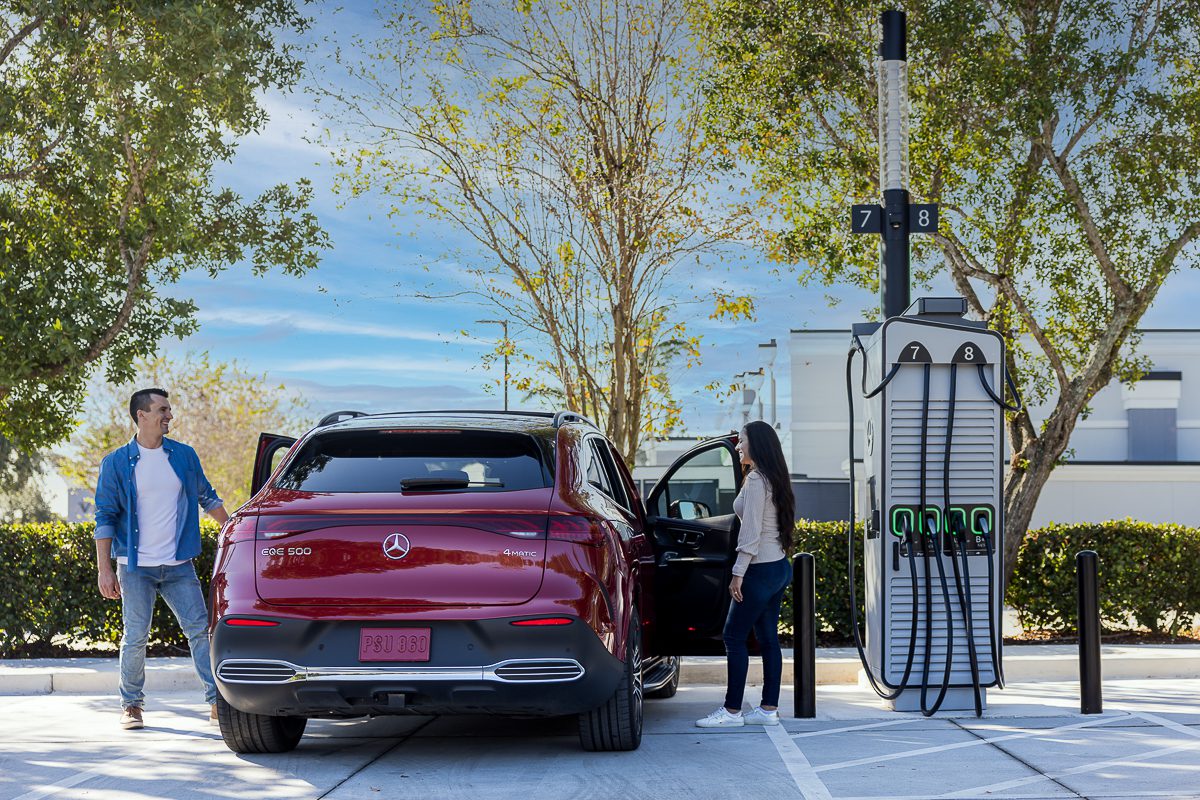
I posted over in the Pub about the Birthday promotion that Mercedes Benz has at their charging locations this weekend (11/14-15). Half-off their normal charging rates. There is a QR code to scan that needs to entered into their web page to get the special rate, though.
  • Like
Reactions: osu1991