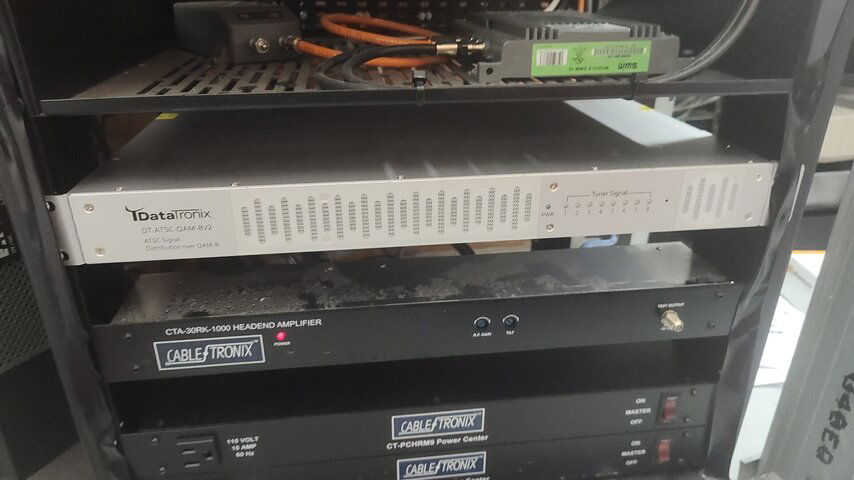
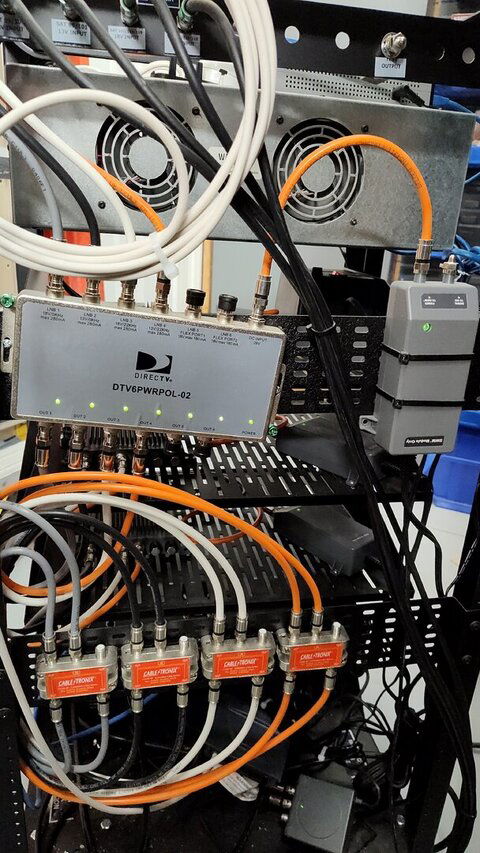
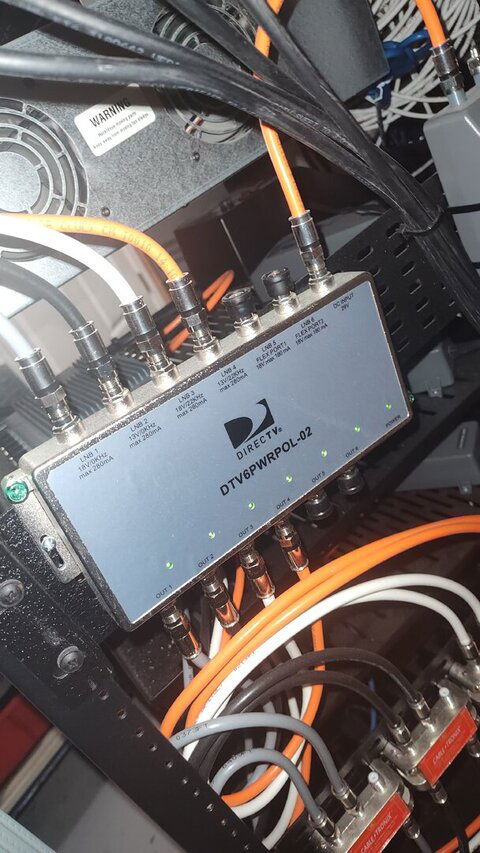
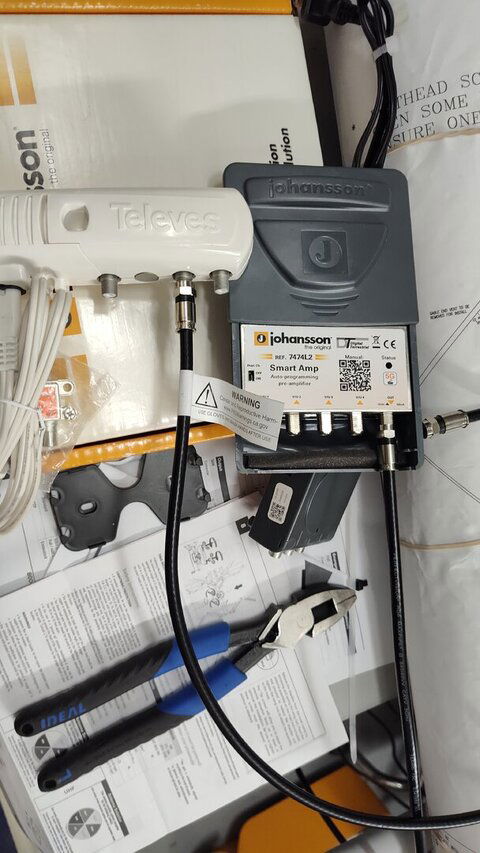
Help with channel insertion on headend.

stopdrpnro

New Member
Original poster
Jun 16, 2024
1
0
North Carolina
Took this job after multiple techs declined it... finding out exactly why. Dealing with a huge list of issues but attempting to take care of the customer. Have a tech to help with qam tuner software/programming but want to make sure I'm doing things right.
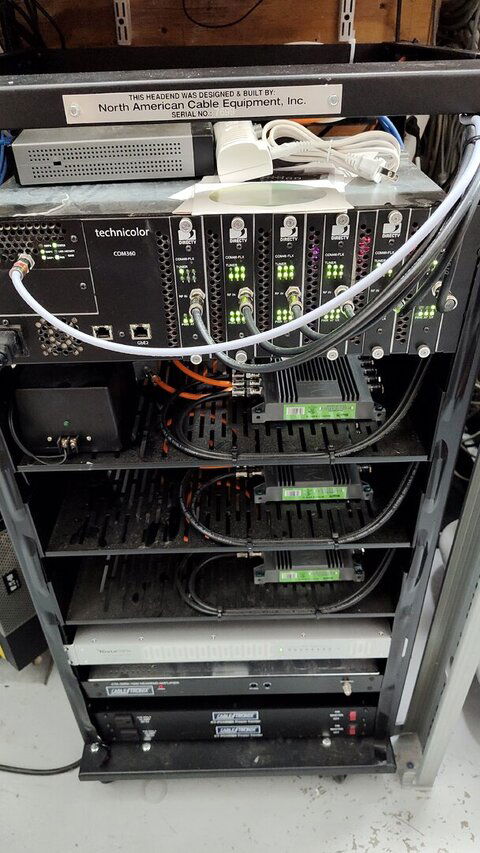
Antenna>televes amp> smart amp>qam tuner>flex port of dtv6
Do I simply connect the qam tuner output into the flex port of the dtv6 and do channel scan?

Thanks in advance
 

Attachments

  • IMG_20240614_114516908.jpg
    IMG_20240614_114516908.jpg
    237.6 KB · Views: 176
  • IMG_20240614_164805975.jpg
    IMG_20240614_164805975.jpg
    181.8 KB · Views: 167
  • IMG_20240614_113606850.jpg
    IMG_20240614_113606850.jpg
    142.7 KB · Views: 170
  • IMG_20240614_150325170.jpg
    IMG_20240614_150325170.jpg
    116 KB · Views: 161
  • IMG_20240614_114530262.jpg
    IMG_20240614_114530262.jpg
    64.9 KB · Views: 155
  • IMG_20240614_164846096.jpg
    IMG_20240614_164846096.jpg
    155.8 KB · Views: 169
My first feeling is that you should not need to double amplify. Both Televés and Johansson make great products but chances are that the only thing you're doing is decreasing SNR by having an extra component.

The only reason to connect through the flex port of the polarity locker is to keep cable lengths equal for all the things coming from the roof. You'll save a little bit of noise by going straight to the ATSC tuner.

Generally speaking all you'll need to do is connect to the tuner and the take the QAM output and combine it with the QAM output from the COM1000. A cheap splitter like the Skywalker or Perfect Vision 23-302 will do it if you hook it up backwards.

You'll need to make sure the channel assignments don't interfere, which should be easy if you have web access to the COM1000.
 
Last edited:
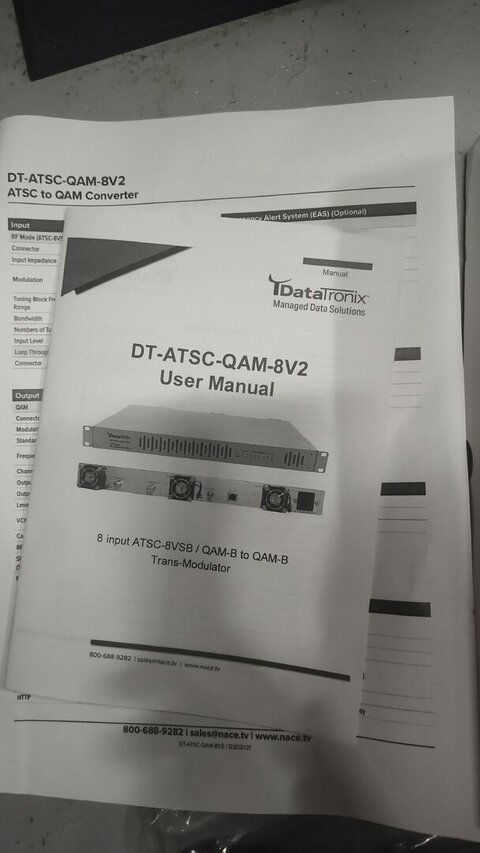
For that particular OTA transcoder you would go from antenna, to the Televes AMP, to the ATSC Transcoder. Some of those NACE transcoders have 1 input for OTA, others have 8 OTA inputs so you could connect a separate antenna for certain locals if they are in an opposite direction. If you have 8 inputs, you will need an 8 way splitter from the Televes Amp

From there, find out what channel is output on the COM2000 and set your channels on the ATSC transcoder so its on a different channel assignment than the QAM 2000. If the QAM on the Com2000 starts at 23 and ends at 41, you would start the channel output on RF channel 43. You should leave a guard band when combining sources from 2 different outputs. Combine the output from the ATSC transcoder and the Com2000 with a reversed 5-2050 High freq splitter, and then to a 30 DB launch amp.

The ATSC transcoder should output about 25 DB. You may need to adjust this with a QAM meter. The output of the Com2000 is usually around 20/25 DB output

Here is something you probably didn't know. If you use OTA locals for a Com2000, you can import the OTA guide data on your Com2000 guide. Use the following code replacing the channel numbers with your local OTA major channel assignments...

13-0 13-65535-sd -1 -1
26-0 26-65535-sd -1 -1
31-0 31-65535-sd -1 -1
42-0 42-65535-sd -1 -1

The -1 -1 will disable the PSIP data and when the televisions scan, it will pick up the PSIP data from the ATSC Transcoder.

The above table would include OTA data for channels 13, 26, 31, and 42

The Com2000 will be able to pull in the Local DMA guide data, even if your not subscribed locals from directv. If your in Washington DC for example, you can only pull in locals from Washington DC. You would not pull in guide data from an adjacent DMA, even if you can pick up the adjacent DMA over the air

 

DIRECTV Transponder Map ~ Data 12/24/2025