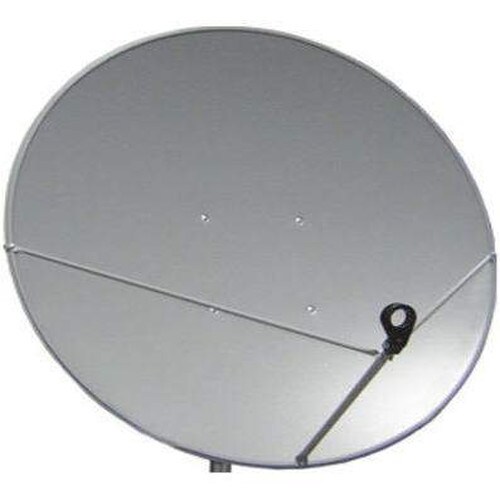
Purchase 1.2m elliptical dish

Advertisements
Because there's only one Shaw Direct satellite remaining, Anik G1, I don't imagine the shape of the dish will come into play.
Makes sense for the dish itself but what about positioning my LNBF, Model: Shaw75E-G1, on the arm that would come with the dish. Not sure I'd be able to attach it to the arm, without any modification, and expect it to work. Any advice on thst?
 
Not sure I'd be able to attach it to the arm, without any modification, and expect it to work.
As I said in one of your previous threads on this subject, fitting a DBS LNB assembly to an FTA dish is absolutely not for the faint of heart.

This also assumes that your LNB assembly isn't somehow compromised.
 
I remember reading a post about a Dish or Direc dish for the Alaska region. I think it was mentioned that they are larger than standard CONUS dishes. How much bigger? Dunno. I did a web search but so far, no dice.
It might make adapting the Shaw lnbf easier. Looking at the Shaw specs I see they are voltage polarity switched and 22 kHz band switches or something like that. Linear or circular polarization? Foggy on that too.
 
Looking at the Shaw specs I see they are voltage polarity switched and 22 kHz band switches or something like that. Linear or circular polarization? Foggy on that too.
Linear polarization, 22kHz switch between the two LNBs, on for the LNB that is on-centre (which is not in use, as there isn't a satellite there now) and off for the off-centre xKu LNB. The xKu LNB has a LO of 10075 MHz which means he can't use a regular LNB in place of it, otherwise he could use a normal oval dish. I'm not aware of any xKu LNBs (LO of 10075) available on the market.
 
Linear polarization, 22kHz switch between the two LNBs, on for the LNB that is on-centre (which is not in use, as there isn't a satellite there now) and off for the off-centre xKu LNB. The xKu LNB has a LO of 10075 MHz which means he can't use a regular LNB in place of it, otherwise he could use a normal oval dish. I'm not aware of any xKu LNBs (LO of 10075) available on the market.
Thanks to Keith Brannen for the comprehensive information!

The local oscillating frequency is the showstopper preventing the use of a conventional FTA setup.
Thanks to Keith Brannen for the comprehensive information!

The local oscillating frequency is the showstopper preventing the use of a conventional FTA setup.
Keith, Can I ask you to post a link to the Shaw Specs? I've been relying on Google Gemini for my info and they're not always correct. It listed the LO as 10200. Either way, you're correct that a regular LNB would not work.

Told my wife the other day that I never expected to become a satellite dish technician when she moved here. Fortunately, our dish is on a pole in our yard with no obstructions. No climbing ladders and working on a rooftop! Back in 2006 when the dish was 1st installed our signal was great (> 90). Now, 60 to 70 on good weather days. < 60 and the picture starts to fade. Didn't know it at the time but it's all related to Rogers (Shaw) going to one satellite, Anik G1.

Here's my take on what I need. A 1.2m elliptical dish with an arm (perhaps purchased separately) that allows me to slide my
Shaw specific LNB up or down, as needed to lock in a signal. Just can't seem to find one.

I do appreciate everyone's input. Thanks, again.
 
Keith, Can I ask you to post a link to the Shaw Specs? I've been relying on Google Gemini for my info and they're not always correct. It listed the LO as 10200. Either way, you're correct that a regular LNB would not work.
The xKu LNB was introduced around 2012, and I don't remember where I got the specs from or have a link to them. As I use my 75E dish for free to air satellites (currently 87w/91w, but that will change) the LO has to be setup in the free to air receivers that I have (unlike the Shaw Direct receiver that has all that information in its software). 10075 is what works to have the transponders I view have the correct transponder numbers as posted on such sites as lyngsat.com. That is for the off-centre LNB (the xKu LNB). The on-centre LNB (not in use anymore) has a LO of 10750 which is a standard LO for most linear LNBs.
 
The xKu LNB was introduced around 2012, and I don't remember where I got the specs from or have a link to them. As I use my 75E dish for free to air satellites (currently 87w/91w, but that will change) the LO has to be setup in the free to air receivers that I have (unlike the Shaw Direct receiver that has all that information in its software). 10075 is what works to have the transponders I view have the correct transponder numbers as posted on such sites as lyngsat.com. That is for the off-centre LNB (the xKu LNB). The on-centre LNB (not in use anymore) has a LO of 10750 which is a standard LO for most linear LNBs.

Further to Keith's post and to summarize:

The boresight satellite has a LO of 10750 and the 22 kHz signal needs to be ON.
The offset points to a satellite 4 degrees to the east, has a LO of 10075, and the 22 kHz signal needs to be OFF.

In Shaw's 60E and 75E installation manuals, there are references to Satellite A (107.3W) and Satellite B (111.1W). Satellite A is Anik G1 and is running the Extended Ku transponders, hence it is received by the offset aperture and the local oscillator needs to be lower (= 10075).

Everyone else's mileage may vary.
 
I remember reading a post about a Dish or Direc dish for the Alaska region. I think it was mentioned that they are larger than standard CONUS dishes. How much bigger? Dunno. I did a web search but so far, no dice.
It might make adapting the Shaw lnbf easier. Looking at the Shaw specs I see they are voltage polarity switched and 22 kHz band switches or something like that. Linear or circular polarization? Foggy on that too.
and everything is an extra on the alaska dishes. it gets expensive fast!
 
  • Like
Reactions: arlo
If you want new then Solid Signal is probably the best if they have it in stock, especially since they are somewhat near you. I got mine at SatelliteAV, but I was lucky as they are local to me so didn't have to pay shipping. Otherwise you might want to check Craigslist or Facebook marketplace for used ones.

Where you are at I would think a 1.2m dish would do quite well, I am about 225 miles south of the lowest signal signal line on this map and did get a signal but it was not usable, just in the 30-50 range.

As for the LNB, I think KU Sat is the only one who made one for a KU dish. If money isn't a problem I would buy 2 as I have had to replace it once and while they ship quickly, you never know how long customs will take.


Shaw Direct Signal in Az