

Social Feed

U-Verse Launching in Oklahoma - Oklahoma City, Edmond, Moore and Norman, specifically - dslreports.com
Oklahoma City, Edmond, Moore and Norman, specifically
11:34AM Monday Aug 06 2007 by Karl
tags: TVIP telco dsl business
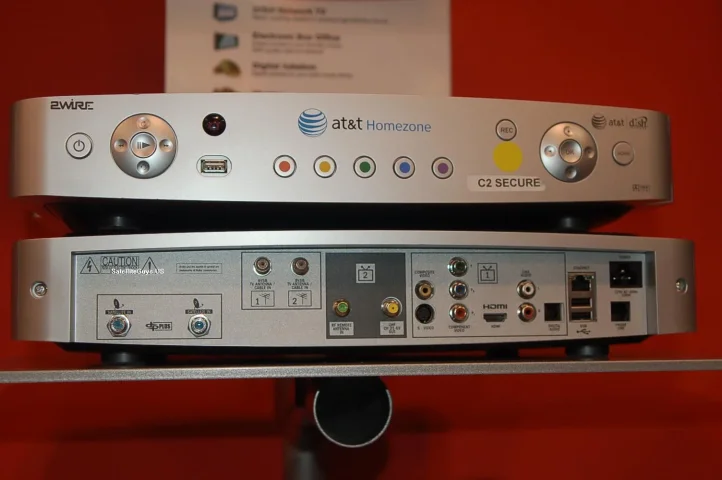
AT&T is launching their VDSL & IPTV service U-Verse in portions of Oklahoma today, according to several user emails. The service will first be operational in parts of Oklahoma City, Edmond, Moore and Norman. A simplified pricing, speed and channel lineup refresher:
Broadband speeds:
Elite: 6Mbps/1Mbps
Pro: 3Mbps/1Mbps
Express: 1.5Mbps/1Mbps
Channel lineups:
U-Family: 50 channels, $44
U100: 100 channels, $44
U200: 190 channels, $59
U300: 240 channels, 34 premium channels, $79
U400: 300 channels, 49 premium channels, $99
Bundles (Express/Pro/Elite per month):
U-family: $59/$64/$74
U100: $59/$64/$74
U200: $74/$79/$89
U300: $94/$99/$109
U400: $114/$119/$129
A leaked launch schedule we've been following continues to be accurate. According to the schedule, U-Verse should launch next in Sacramento on August 20, St. Louis on November 5, Austin on November 19 and Columbus right around Christmas.
Additional detail on DVR rentals, their channel lineup and AT&T's qualification tool are available at the U-Verse website. As always, your questions about the service can be answered by the helpful folks in our U-Verse forum.
1 Replies
·
1777 views


Pub Member / Supporter
Lifetime Supporter
I've always been super interested in things space related so this is a pretty cool event coming up. Nov 18, 2026 early in the morning, Voyager 1 will reach the distance of one full light day from Earth. Took almost 50 yrs. I was 13 when it launched.
View: https://www.youtube.com/shorts/gjHK3clOwIw?feature=share
View: https://www.youtube.com/shorts/gjHK3clOwIw?feature=share
1 Replies
·
46 views


Supporting Founder
Lifetime Supporter
This thread is a place to discuss the 4K events that appear on channel 540. We are getting, at this point, one college football game a week. Let's hope there is more coming.
1936 Replies
·
299603 views


Staff member
HERE TO HELP YOU!
So...DirecTV advertises the Choice package with 95+ bonus channels for Satellite customers. You don't want 90+ of the 95...
Excluding PPV, premium networks, infomercial, shopping, religion, and non-English programming, there are 7 channels on satellite that are not on streaming:
NFL Network, MavTV, FE TV, Free Speech, NASA, INSP, and Pursuit. I'm pretty sure a couple of those are public interest that they have to carry to meet an FCC quota on satellite.
I hope they get called out for this advertising because that is ridiculous. One big network, NFL, will probably get added to streaming when their next agreement comes up, and the rest are likely very low viewership.
What about streaming, what do you get extra with the Choice package that isn't on Satellite:
Two stations - one of which is an internet TV - Fox Weather, and Heros & Icons (a diginet). Nothing special here to look at either.
If they cleaned up a couple of their agreements, added a few public interest stations to streaming, they could probably have their lineups match. It's close now, if you take out all the garbage on satellite that they earn money on. If they can sell infomercials on satellite, why can't they on streaming, seems like a miss. A bigger miss, including those stations in the "bonus channels just for satellite customers." Pretty sad marketing right there.

Attached is a comparison sheet of satellite vs streaming for the three main packages if anyone is interested.
MOD EDIT: See Post #3 for an up to date list of what channels are available on sat but not on streaming/internet, see Post #21 for an up to date list of what's available in the app for streaming customers, but not for sat customers.
Excluding PPV, premium networks, infomercial, shopping, religion, and non-English programming, there are 7 channels on satellite that are not on streaming:
NFL Network, MavTV, FE TV, Free Speech, NASA, INSP, and Pursuit. I'm pretty sure a couple of those are public interest that they have to carry to meet an FCC quota on satellite.
I hope they get called out for this advertising because that is ridiculous. One big network, NFL, will probably get added to streaming when their next agreement comes up, and the rest are likely very low viewership.
What about streaming, what do you get extra with the Choice package that isn't on Satellite:
Two stations - one of which is an internet TV - Fox Weather, and Heros & Icons (a diginet). Nothing special here to look at either.
If they cleaned up a couple of their agreements, added a few public interest stations to streaming, they could probably have their lineups match. It's close now, if you take out all the garbage on satellite that they earn money on. If they can sell infomercials on satellite, why can't they on streaming, seems like a miss. A bigger miss, including those stations in the "bonus channels just for satellite customers." Pretty sad marketing right there.
Attached is a comparison sheet of satellite vs streaming for the three main packages if anyone is interested.
MOD EDIT: See Post #3 for an up to date list of what channels are available on sat but not on streaming/internet, see Post #21 for an up to date list of what's available in the app for streaming customers, but not for sat customers.
241 Replies
·
31722 views
My OTA is not working anymore. This started after the latest update. I have the OTA dongle with a OTA antenna that I've been using for years. My hopper does not recognize the dongle anymore and when I go to the OTA setting, it has a screen that says to plug a dongle into the USB. I tried unplugging and plugging back, in the same usb port and other ports. The Hopper does not recognize it. Anyone have same issue?
203 Replies
·
5381 views


Lifetime Supporter
I know HipKat said that they were working on conversions but we got the official news yesterday right from Dish that starting next month all DMA's will be on the western arc, and all customers will be assigned to that. That's gonna mean a lot of customers around here aren't gonna get Dish unless there are exceptions. Too many mountains and trees.
148 Replies
·
3816 views


Pub Member / Supporter
Lifetime Supporter
I'm surprised Walmart hasn't banned this guy from all of their stores. He has been on their CASE the past few months.
View: https://www.youtube.com/shorts/f3zr37ekgKM?feature=share
View: https://www.youtube.com/shorts/f3zr37ekgKM?feature=share
50 Replies
·
468 views






Staff member
HERE TO HELP YOU!
Cutting Edge
Sometimes a thread gets so many posts in it that is can cause issues for the server so that why today we introduce The Song Name Game Part 3!
So let the game continue!
The last song was added by Bobby who posted...
One Meat Ball - Andrews Sisters
CONTINUE ON AND HAVE FUN! WELCOME HOME TO SATELLITEGUYS.US!
Here are the original rules for the game as posted by WebbyDude back in 2006. http://www.satelliteguys.us/threads/68645-Song-Name-Game
Just name a song title and the band who performed it. The next person does the same thing, but needs to list a song title or band name which includes a word from the previous entry. Pick songs from any genre.
Example:
Long Live Rock and Roll -- Rainbow
Rainbow in the Dark -- Dio
Another example:
Ride the Lightning -- Metallica
Lightning Strikes -- Ozzy Osbourne
Get it?
An additional note: we all know that song titles, sometimes, use profane words. Because this is a family friendly website it is advised that you clean up that title up a bit. This is accomplished by using something like sh!t instead of the real word. Thanks....
68588 Replies
·
2676643 views


TWiT Tech Podcast Network
Time for another AWESOME video from the TWIT Network!
View: https://www.youtube.com/shorts/kBKUeLHP3zY
Direct YouTube Link - Foursquare's Hidden Location Data Became a Game #shorts
TWIT's Website
TWIT Live Feed
View: https://www.youtube.com/shorts/kBKUeLHP3zY
Direct YouTube Link - Foursquare's Hidden Location Data Became a Game #shorts
TWIT's Website
TWIT Live Feed
0 Replies
·
8 views
Hi guys, is anyone getting any quality on transponder 4135 L 30000 I'm not getting any quality few weeks now.
0 Replies
·
23 views