

Social Feed

Hi guys .
well i like to see which will get better quality signal a regular sadoun 6 footer dish or a 6 footer offset dish ( channel master ) i know that i got to do a madification for the lnb but my reason is that i can get these dishes easy i some car dealers done just buy the regulars 6 footer from Sadoun, and if i get a 6 footer offset dish the LNB where it will be install same as the ku band lnb or in the middle like the regular c band dish.
I really thank u 4 ur cmmments.
well i like to see which will get better quality signal a regular sadoun 6 footer dish or a 6 footer offset dish ( channel master ) i know that i got to do a madification for the lnb but my reason is that i can get these dishes easy i some car dealers done just buy the regulars 6 footer from Sadoun, and if i get a 6 footer offset dish the LNB where it will be install same as the ku band lnb or in the middle like the regular c band dish.
I really thank u 4 ur cmmments.
6 Replies
·
1600 views


Supporting Founder
Lifetime Supporter
Thanks to Fitch Ratings ( who gives the ratings on Credit and debt, as approved by the SEC, so they have accurate numbers) we have the totals.
DIRECTV's video subscriber base is the third-largest traditional multi-channel video programming distributor (MVPD) in the U.S. with about 8.2 million subscribers at the end of 1Q26.
The last time it was reported, it was 8.8M at the end of 2Q25, so only a 600,000 loss for 3 quarters, which is a major improvement, since for many years before that, it was losing 500,000 a quarter, 2 Million a year.
It is now losing less than Dish/Sling combined, I believe the Genre Packs are helping to retain and get subscribers.
DIRECTV's video subscriber base is the third-largest traditional multi-channel video programming distributor (MVPD) in the U.S. with about 8.2 million subscribers at the end of 1Q26.
The last time it was reported, it was 8.8M at the end of 2Q25, so only a 600,000 loss for 3 quarters, which is a major improvement, since for many years before that, it was losing 500,000 a quarter, 2 Million a year.
It is now losing less than Dish/Sling combined, I believe the Genre Packs are helping to retain and get subscribers.
6 Replies
·
367 views


Recently came back to DirectTV Satellite service and have two boxes, Gemini and a main HR54.
DirecTV is charging me two "TV access fees" of $10 each, but can only watch TV on the one without the server. Is there anything I can do to fix this?
DirecTV is charging me two "TV access fees" of $10 each, but can only watch TV on the one without the server. Is there anything I can do to fix this?
24 Replies
·
942 views


Staff member
HERE TO HELP YOU!
Cutting Edge
Sometimes a thread gets so many posts in it that is can cause issues for the server so that why today we introduce The Song Name Game Part 3!
So let the game continue!
The last song was added by Bobby who posted...
One Meat Ball - Andrews Sisters
CONTINUE ON AND HAVE FUN! WELCOME HOME TO SATELLITEGUYS.US!
Here are the original rules for the game as posted by WebbyDude back in 2006. http://www.satelliteguys.us/threads/68645-Song-Name-Game
Just name a song title and the band who performed it. The next person does the same thing, but needs to list a song title or band name which includes a word from the previous entry. Pick songs from any genre.
Example:
Long Live Rock and Roll -- Rainbow
Rainbow in the Dark -- Dio
Another example:
Ride the Lightning -- Metallica
Lightning Strikes -- Ozzy Osbourne
Get it?
An additional note: we all know that song titles, sometimes, use profane words. Because this is a family friendly website it is advised that you clean up that title up a bit. This is accomplished by using something like sh!t instead of the real word. Thanks....
So let the game continue!
The last song was added by Bobby who posted...
One Meat Ball - Andrews Sisters
CONTINUE ON AND HAVE FUN! WELCOME HOME TO SATELLITEGUYS.US!
Here are the original rules for the game as posted by WebbyDude back in 2006. http://www.satelliteguys.us/threads/68645-Song-Name-Game
Just name a song title and the band who performed it. The next person does the same thing, but needs to list a song title or band name which includes a word from the previous entry. Pick songs from any genre.
Example:
Long Live Rock and Roll -- Rainbow
Rainbow in the Dark -- Dio
Another example:
Ride the Lightning -- Metallica
Lightning Strikes -- Ozzy Osbourne
Get it?
An additional note: we all know that song titles, sometimes, use profane words. Because this is a family friendly website it is advised that you clean up that title up a bit. This is accomplished by using something like sh!t instead of the real word. Thanks....
67110 Replies
·
2662382 views


Pub Member / Supporter
Lifetime Supporter
I feel like this was discussed in another thread, but I can't find it. I have T-Mobile and my last iPhone upgrade was in 2020. I want to get a new iPhone, but what is the best way to go about doing it? Should I order the iPhone from T-Mobile directly, or should I buy from the Apple Store? I feel like there are pros/cons to each option.
2 Replies
·
35 views


I have a Hopper with Sling. (Don't know exact model.) A couple nights ago, I went into the DVR screen, and noted that it was recording three programs. Yet I was able to view live TV (that was not one of the channels being recorded.) Did something change? In the past, it would only let me watch one of the channels being recorded, or any recording in the DVR menu. Maybe it was streaming, although there was no indication of that?
Apologies if this has been covered; I searched and didn't find anything.
Thanks.
Apologies if this has been covered; I searched and didn't find anything.
Thanks.
9 Replies
·
355 views

iJustine
Time for another AWESOME video from iJustine!
View: https://www.youtube.com/shorts/YJjxjYvmQ8s
Direct YouTube Link - Good Bye, Tim! Last WWDC
The official iJustine Website's Website
Buy her book!
View: https://www.youtube.com/shorts/YJjxjYvmQ8s
Direct YouTube Link - Good Bye, Tim! Last WWDC
The official iJustine Website's Website
Buy her book!
0 Replies
·
10 views

Pub Member / Supporter
Cutting Edge
WANTED DirecTV LCC
Anyone have a DirecTV Local Channel Connector that you'd like to get rid of at a reasonable price? DirecTV is currently in a contract dispute with owner of my local ABC affiliate.
12 Replies
·
308 views


Pub Member / Supporter
Lifetime Supporter
Did anyone have a price increase today on their equipment? I own my VIP211k's, and they have been $5.00. My bill that I received last week shows the "add-ons" as being $5.00. However, I just logged into my Dish account, and my "add-ons" are now $10.00. Did the additional receivers go up by $5.00 recently?
As I mentioned, my last bill shows $5.00 and under the notes, nothing is mentioned about a price increase.
As I mentioned, my last bill shows $5.00 and under the notes, nothing is mentioned about a price increase.
11 Replies
·
203 views
Hello everyone, new guy here. I'm trying to solve problem I'm having with Dish bonus view channels. When I'm watching the bonus view channels then I switch back to regular dish channels, after few minutes the screen flips to black and after 30 seconds flips back to regular channels and continues to flip back and forth until I turn off TV. After I wait 30 minutes and turn back on , I can use regular channels again. So, its after I switch from bonus view channels to regular dish channels the problem starts. Been trying to fix this for a month, but no luck
Here what I've done.
i contacted Dish support and they sent me a new Joey3, but no help. Switched to a different HDMI input on TV, no help. Used different HDMI cable , no help. Used different electrical wall plug, no help.
Finally got a Dish tech to check it. He ran all systems check and was OK. Finally he brought in a small TV and plugged in the HDMI out from the Joey to the small TV. He could not get the problem to occur on his small TV, so the new Joey was working OK. So, then the problem must be myTV. He made some phone calls and came back with the answer that there must be a problem with the analog to digital switch in my TV. Has anyone ever heard of a problem like this, or is it time to be looking for a new TV? My tv LG OLED65C8PUA. TV has been trouble free til now. Thanks
Here what I've done.
i contacted Dish support and they sent me a new Joey3, but no help. Switched to a different HDMI input on TV, no help. Used different HDMI cable , no help. Used different electrical wall plug, no help.
Finally got a Dish tech to check it. He ran all systems check and was OK. Finally he brought in a small TV and plugged in the HDMI out from the Joey to the small TV. He could not get the problem to occur on his small TV, so the new Joey was working OK. So, then the problem must be myTV. He made some phone calls and came back with the answer that there must be a problem with the analog to digital switch in my TV. Has anyone ever heard of a problem like this, or is it time to be looking for a new TV? My tv LG OLED65C8PUA. TV has been trouble free til now. Thanks
6 Replies
·
103 views


Staff member
HERE TO HELP YOU!
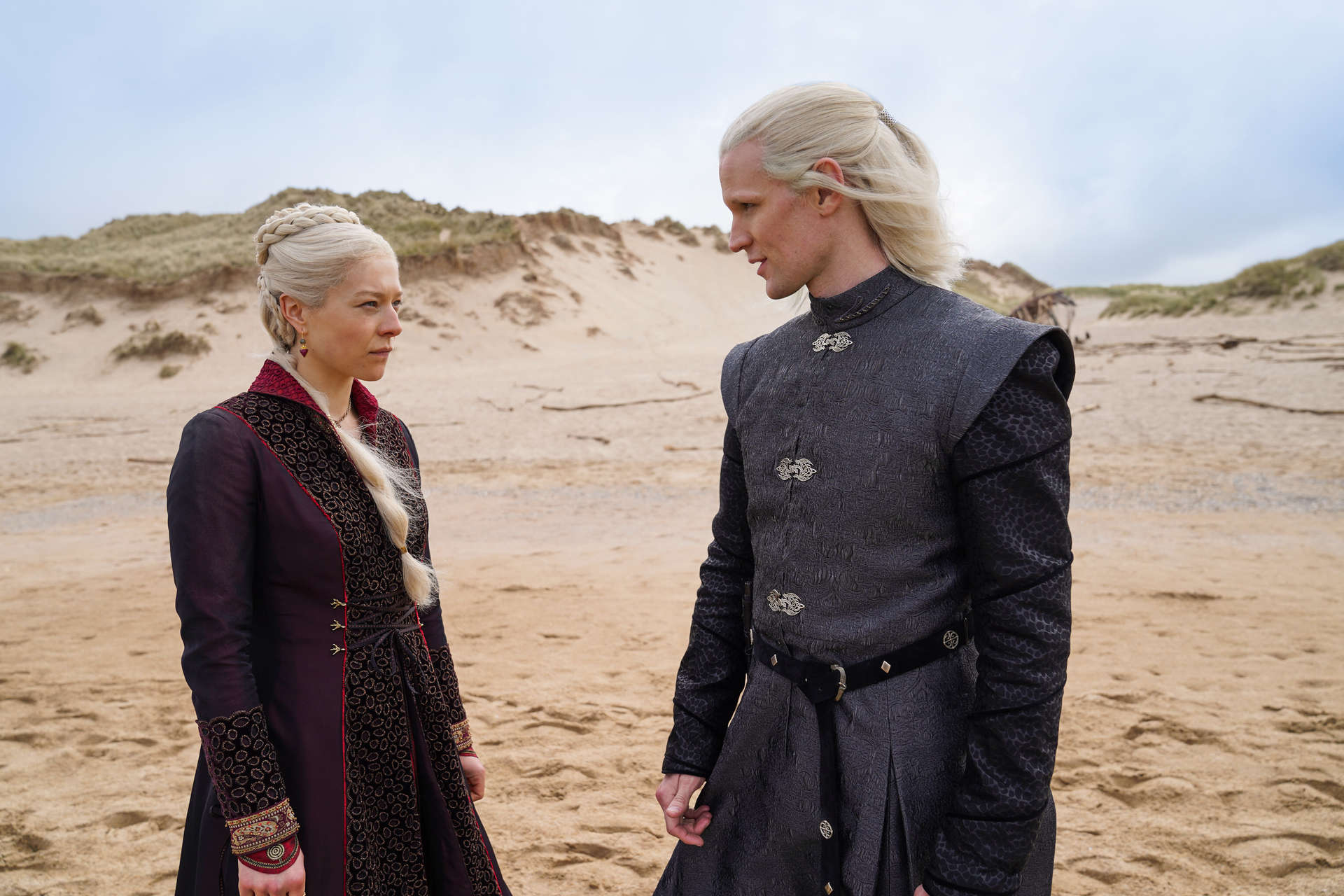
House of the Dragon, the prequel to Game of Thrones, premieres on HBO Max on 8/21. I will be warching
 www.syfy.com
View: https://youtu.be/fNwwt25mheo
S~
'Game of Thrones' spinoff 'House of the Dragon' fires up release date at HBO, drops new character pics
The wait’s felt a little like watching for a dragon egg to hatch, but HBO’s hugely anticipated Game of Thrones prequel series finally has a release date. House of the Dragon will debut the first of its initial 10-episode season this summer, the network revealed today in a series of tweets that...
View: https://youtu.be/fNwwt25mheo
S~
39 Replies
·
5649 views


