

Social Feed

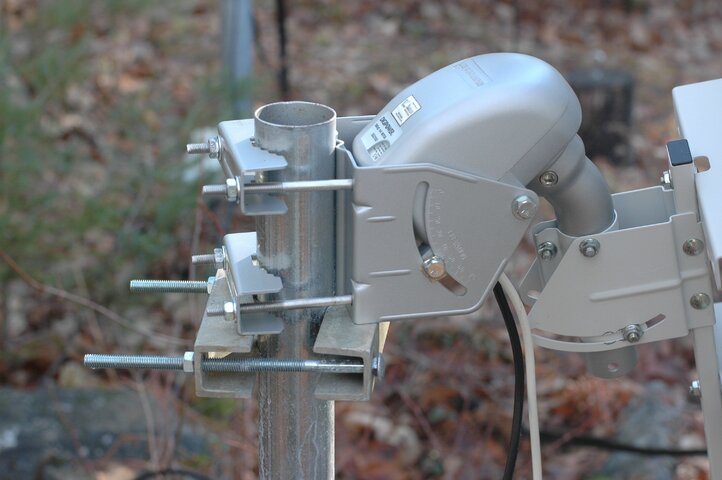
Thank you AcWxRadar for your excellent explanation of how to get a motorized dish to exactly follow the arc (in Dee Ann's new thread). I think to make this happen you not only have to have the mounting post perfectly plum but you have to have the motor exactly level. Right now my setup is totally out to lunch on 30W because it isn't level enough, I think.
How do you measure a Ku motor to see if it's level?
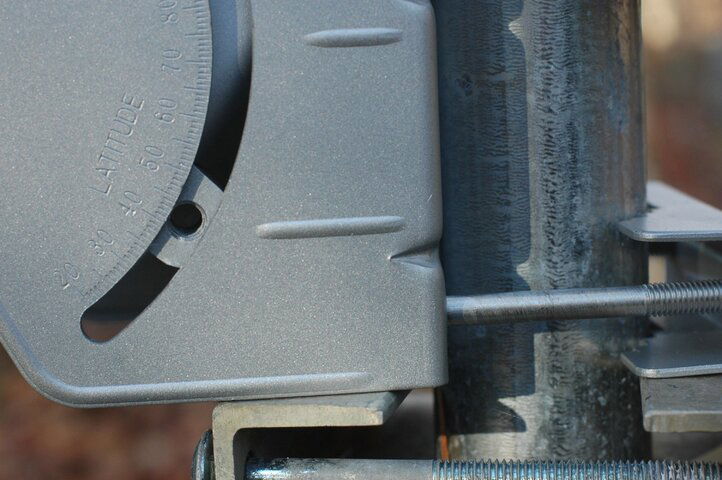
I have an SG2100 motor and it's a wonderful collection of curves, not a straight edge on it! Besides, what really matters is that the shaft is aligned right but how can you know and how can you measure? The shaft is not only on an angle to the ground, it's bent!
Checking the mounting post for plum is easy. Just lay a level on it at two locations ninety degrees from each other. Checking a motor for level is another matter. Any ideas?
How do you measure a Ku motor to see if it's level?
I have an SG2100 motor and it's a wonderful collection of curves, not a straight edge on it! Besides, what really matters is that the shaft is aligned right but how can you know and how can you measure? The shaft is not only on an angle to the ground, it's bent!
Checking the mounting post for plum is easy. Just lay a level on it at two locations ninety degrees from each other. Checking a motor for level is another matter. Any ideas?
20 Replies
·
3683 views




Staff member
HERE TO HELP YOU!
Cutting Edge
Sometimes a thread gets so many posts in it that is can cause issues for the server so that why today we introduce The Song Name Game Part 3!
So let the game continue!
The last song was added by Bobby who posted...
One Meat Ball - Andrews Sisters
CONTINUE ON AND HAVE FUN! WELCOME HOME TO SATELLITEGUYS.US!
Here are the original rules for the game as posted by WebbyDude back in 2006. http://www.satelliteguys.us/threads/68645-Song-Name-Game
Just name a song title and the band who performed it. The next person does the same thing, but needs to list a song title or band name which includes a word from the previous entry. Pick songs from any genre.
Example:
Long Live Rock and Roll -- Rainbow
Rainbow in the Dark -- Dio
Another example:
Ride the Lightning -- Metallica
Lightning Strikes -- Ozzy Osbourne
Get it?
An additional note: we all know that song titles, sometimes, use profane words. Because this is a family friendly website it is advised that you clean up that title up a bit. This is accomplished by using something like sh!t instead of the real word. Thanks....
So let the game continue!
The last song was added by Bobby who posted...
One Meat Ball - Andrews Sisters
CONTINUE ON AND HAVE FUN! WELCOME HOME TO SATELLITEGUYS.US!
Here are the original rules for the game as posted by WebbyDude back in 2006. http://www.satelliteguys.us/threads/68645-Song-Name-Game
Just name a song title and the band who performed it. The next person does the same thing, but needs to list a song title or band name which includes a word from the previous entry. Pick songs from any genre.
Example:
Long Live Rock and Roll -- Rainbow
Rainbow in the Dark -- Dio
Another example:
Ride the Lightning -- Metallica
Lightning Strikes -- Ozzy Osbourne
Get it?
An additional note: we all know that song titles, sometimes, use profane words. Because this is a family friendly website it is advised that you clean up that title up a bit. This is accomplished by using something like sh!t instead of the real word. Thanks....
68509 Replies
·
2671537 views


Lifetime Supporter
Continuing the Kilauea thread in the Pub here. Perhaps the Iceland one too next time there's remarkable activity.
Currently there is precursory lava flowing into the crater, leading to the next episode that'll probably start within the next day.
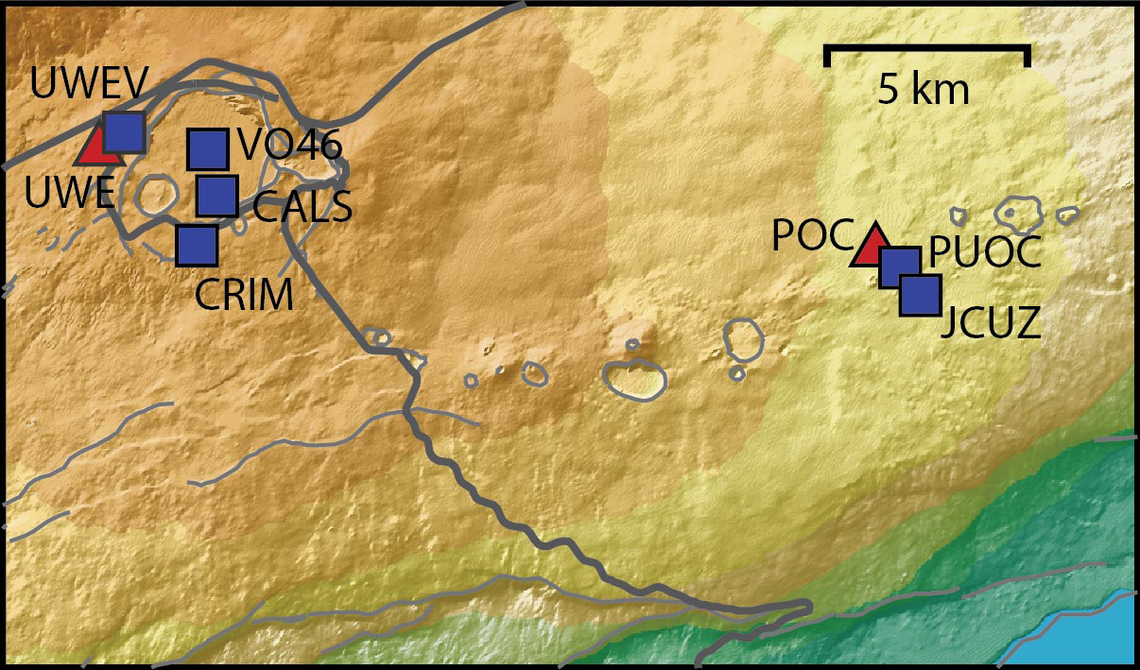
You can see the pace of inflation / deflation here. It serves as the primary predictor for when the expect the eruptions, which coincide w/ inflation turning into significant deflation and last for several hours on average with significant fountaining.
 www.usgs.gov
View: https://youtu.be/Uecu2seh4b4
Wife and I like the AfarTV feeds, for the discussion along w/ them, though they're otherwise just mirrors of the official USGS feeds.
View: https://youtu.be/iws3rh5vLAQ
Currently there is precursory lava flowing into the crater, leading to the next episode that'll probably start within the next day.
You can see the pace of inflation / deflation here. It serves as the primary predictor for when the expect the eruptions, which coincide w/ inflation turning into significant deflation and last for several hours on average with significant fountaining.
Monitoring Data for Kīlauea
For more information on how electronic tiltmeters and GPS receivers help monitor the deformation of Kīlauea volcano, see the HVO Deformation page.
View: https://youtu.be/Uecu2seh4b4
Wife and I like the AfarTV feeds, for the discussion along w/ them, though they're otherwise just mirrors of the official USGS feeds.
View: https://youtu.be/iws3rh5vLAQ
119 Replies
·
3227 views


Supporting Founder
Since the Reds have there thread we should too!
Last watched Nine inch Nails
Next 3:10 to Yuma
Last watched Nine inch Nails
Next 3:10 to Yuma
5390 Replies
·
510330 views


Ham Radio 2.0
Time for another AWESOME video from Ham Radio 2.0!
View: https://www.youtube.com/shorts/4zC_3Blkjus
Direct YouTube Link - Military grade antenna for your off-grid setup #hamradio #satcom #offgrid
Ham Radio 2.0 Website
Ham Radio 2.0 on Facebook
View: https://www.youtube.com/shorts/4zC_3Blkjus
Direct YouTube Link - Military grade antenna for your off-grid setup #hamradio #satcom #offgrid
Ham Radio 2.0 Website
Ham Radio 2.0 on Facebook
0 Replies
·
7 views

Who says dinner or lunch has to be the only good meals of the day?
Honey butter grits with scrambled eggs and grilled boneless pork ribs on flakey biscuits washed down with cranberry juice.
Honey butter grits with scrambled eggs and grilled boneless pork ribs on flakey biscuits washed down with cranberry juice.
6629 Replies
·
379363 views


Staff member
HERE TO HELP YOU!
Anyone making their own breakfast sausage? I've recently been trying different recipes, found some I like, some I've modified...
38 Replies
·
3559 views


TWiT Tech Podcast Network
Time for another AWESOME video from the TWIT Network!
View: https://www.youtube.com/shorts/dw_V2FYKRUk
Direct YouTube Link - AI Model Poisoned: Uncovering Hidden Dangers #shorts
TWIT's Website
TWIT Live Feed
View: https://www.youtube.com/shorts/dw_V2FYKRUk
Direct YouTube Link - AI Model Poisoned: Uncovering Hidden Dangers #shorts
TWIT's Website
TWIT Live Feed
0 Replies
·
5 views
TWiT Tech Podcast Network
Time for another AWESOME video from the TWIT Network!
View: https://www.youtube.com/watch?v=Y1R9ZVnuUpw
Direct YouTube Link - Club TWiT: Mikah's Crafting Corner #25 - Ray Gun Papercraft Part 6
TWIT's Website
TWIT Live Feed
View: https://www.youtube.com/watch?v=Y1R9ZVnuUpw
Direct YouTube Link - Club TWiT: Mikah's Crafting Corner #25 - Ray Gun Papercraft Part 6
TWIT's Website
TWIT Live Feed
0 Replies
·
5 views

Anyone else watch this show? Any guesses as to what was in the box Gibbs gave to Abby that was on her desk? It look liked it was glowing.
I also heard that someone was leaving the show at the end of this season. Any guesses as to who thats going to be?
I also heard that someone was leaving the show at the end of this season. Any guesses as to who thats going to be?
2134 Replies
·
214756 views


 Tony is not serious enough for me. Parker is too close to the team and Tim is too young to take over IMO.

TWiT Tech Podcast Network
Time for another AWESOME video from the TWIT Network!
View: https://www.youtube.com/watch?v=n43A0sNukCg
Direct YouTube Link - SpaceX Seeks to Conduct 450 Starship Launches a Year in Texas!
TWIT's Website
TWIT Live Feed
View: https://www.youtube.com/watch?v=n43A0sNukCg
Direct YouTube Link - SpaceX Seeks to Conduct 450 Starship Launches a Year in Texas!
TWIT's Website
TWIT Live Feed
0 Replies
·
24 views