Social Feed
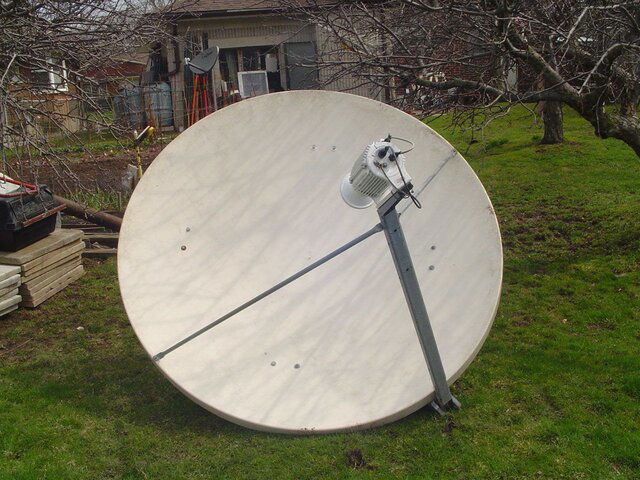
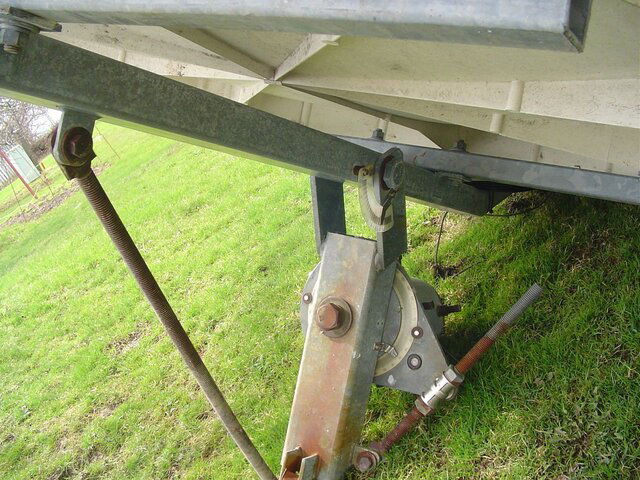
I have the opportunity to buy 1.8 meter dish that was used in a investment company business I'm told, and taken down from the roof there, I researched it and its a prodelin i believe from the pdf install manual I found on the internet. I only saw it once for like 4 minutes and couldnt find any IDer on it as it was fully assembled but lieing on its side off the pole. It has a monster of a lnb feedhorn lnb on it like 9inches across and 16 inch long guessimating. finned to death looks like for heat dissipation. I assume its a send and receive dish with a lnb that size. and it being a brokage house business use thats my assumption. Seems all the dish are classed as Rx,TX, ku, C, x , L. How can you id one from the other? looks like is a prodelin but they all look the same.
dish is the thermoplastic resin fiberglass , 8 bolts hold reflector to back structure.
I believe its a prodelin 1184 because it has a elivation scale on it or it could be a 1182 or it could be strictly x band or ku band, has the heavy duty arm on it, will take 30 lb lnb or more
I want it for c band. What can I measure to find out if it will do C band as I dont have any identifier on the dish to tell me.
it measures 71 by 76 1/2 inches, will the depth f/d ratio tell me something if it will do C band. With a string what will tell me if its C band capable.
I already have a 4 footer that I cant do c band on so I dont want to be stuck with another dish hard to hide around the yard from the neighbours. hehehhehehehe
Its a steal for under 50 bucks. in excellent shape.
Can someone give me some advice on this, without trail and error.
dish is the thermoplastic resin fiberglass , 8 bolts hold reflector to back structure.
I believe its a prodelin 1184 because it has a elivation scale on it or it could be a 1182 or it could be strictly x band or ku band, has the heavy duty arm on it, will take 30 lb lnb or more
I want it for c band. What can I measure to find out if it will do C band as I dont have any identifier on the dish to tell me.
it measures 71 by 76 1/2 inches, will the depth f/d ratio tell me something if it will do C band. With a string what will tell me if its C band capable.
I already have a 4 footer that I cant do c band on so I dont want to be stuck with another dish hard to hide around the yard from the neighbours. hehehhehehehe
Its a steal for under 50 bucks. in excellent shape.
Can someone give me some advice on this, without trail and error.
7 Replies
·
2608 views


TWiT Tech Podcast Network
Time for another AWESOME video from the TWIT Network!
View: https://www.youtube.com/watch?v=Y4Edq2eavsQ
Direct YouTube Link - This Week in Space 232
TWIT's Website
TWIT Live Feed
View: https://www.youtube.com/watch?v=Y4Edq2eavsQ
Direct YouTube Link - This Week in Space 232
TWIT's Website
TWIT Live Feed
0 Replies
·
0 views
TWiT Tech Podcast Network
Time for another AWESOME video from the TWIT Network!
View: https://www.youtube.com/shorts/oRVxjGm0qtE
Direct YouTube Link - Tim Cook, Elton John & King Charles: A Royal Tech Event
TWIT's Website
TWIT Live Feed
View: https://www.youtube.com/shorts/oRVxjGm0qtE
Direct YouTube Link - Tim Cook, Elton John & King Charles: A Royal Tech Event
TWIT's Website
TWIT Live Feed
0 Replies
·
1 views
TFLEV
Time for another AWESOME video from TFL Electric Vehicles!
View: https://www.youtube.com/watch?v=MyF_RH1m0mc
Direct YouTube Link - Watch the New Tesla Roadster Jump, Fly and Barrel-Roll in Mid-Air!
View: https://www.youtube.com/watch?v=MyF_RH1m0mc
Direct YouTube Link - Watch the New Tesla Roadster Jump, Fly and Barrel-Roll in Mid-Air!
0 Replies
·
7 views
TWiT Tech Podcast Network
Time for another AWESOME video from the TWIT Network!
View: https://www.youtube.com/shorts/0k5iT-OlpdE
Direct YouTube Link - The Apple HomeView
TWIT's Website
TWIT Live Feed
View: https://www.youtube.com/shorts/0k5iT-OlpdE
Direct YouTube Link - The Apple HomeView
TWIT's Website
TWIT Live Feed
0 Replies
·
2 views

Pub Member / Supporter
2 Replies
·
56 views


I thought I would come here and find lots of complaints about the update to the dish anywhere mobile app, but am not seeing any. It used to look just like the desktop webpage. Now you can no longer filter by sports channels or movie channels. Plus that they made it look like a big button telephone and you see fewer channels in the screen which requires more scrolling. Yes I realize you can look at sports then select which sport you want to look at, I just liked being able to see all sporting events in the guide with all other channels being filtered out. Am I alone in the wilderness on this?
3 Replies
·
57 views


Anyone else watch this show? Any guesses as to what was in the box Gibbs gave to Abby that was on her desk? It look liked it was glowing.
I also heard that someone was leaving the show at the end of this season. Any guesses as to who thats going to be?
I also heard that someone was leaving the show at the end of this season. Any guesses as to who thats going to be?
2132 Replies
·
214685 views


 Tony is not serious enough for me. Parker is too close to the team and Tim is too young to take over IMO.
Pub Member / Supporter
Lifetime Supporter
Might be worth a watch when it comes out. Looks like typical big corp against the little guy movie BUT....there is a reason this plot type is so oft repeated, it draws audiences.
View: https://www.youtube.com/watch?v=_-f9OGsKHd4
View: https://www.youtube.com/watch?v=_-f9OGsKHd4
1 Replies
·
11 views

Lifetime Supporter
If you're going try to read / listen to the book (can't recommend the audio book enough) before this comes out, I'd avoid trailers.
Trailer below, spoiling it to make sure you read the above bold message first. The book / audio book are fantastic. Go into this blind if you can IMO!
Kind of disappointed at how much they show. A lot still to see, but man, some good reveals in the book that are just served up here.
Trailer below, spoiling it to make sure you read the above bold message first. The book / audio book are fantastic. Go into this blind if you can IMO!
Kind of disappointed at how much they show. A lot still to see, but man, some good reveals in the book that are just served up here.
21 Replies
·
715 views


Lifetime Supporter
Schedule drops tomorrow. Mandatory mini camps in June. Hall of Fame game August 6th.
110 Replies
·
1619 views