

Social Feed

The story on this is that about a year ago I was driving by a house and happened to spot a big 10 foot C-band mesh dish in the backyard that looked (from the road) to be in halfway decent shape, so I stopped and knocked on the door but no one was home. So I left a note in the door basically saying that if they weren't using the dish and wanted to get rid of it to please call me. I stopped a couple more times and left at least one more note but could never catch anyone home, so I forgot about it. To make a long story short, about a week ago I got an unexpected call from a woman who said she was the fiancee of the guy who lived in that house, and she just hated that big ugly dish in his backyard (she really did call it a big ugly dish!), so if I still wanted it I could come and get it. She said he had saved my notes but didn't like to call people on the phone, so that's why she was calling.
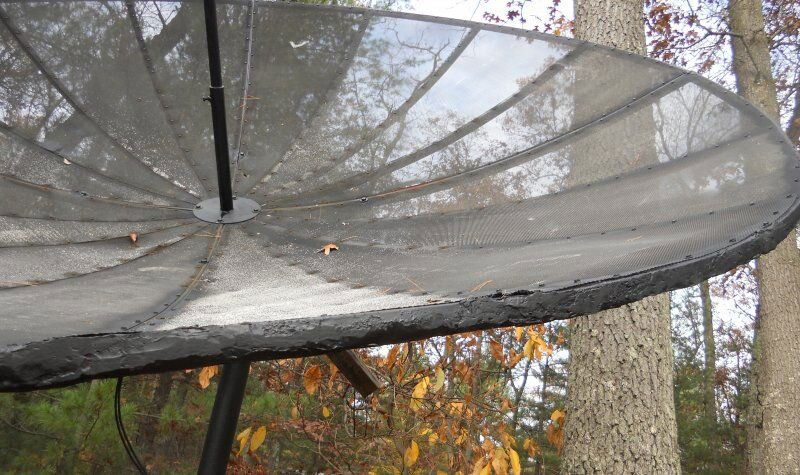
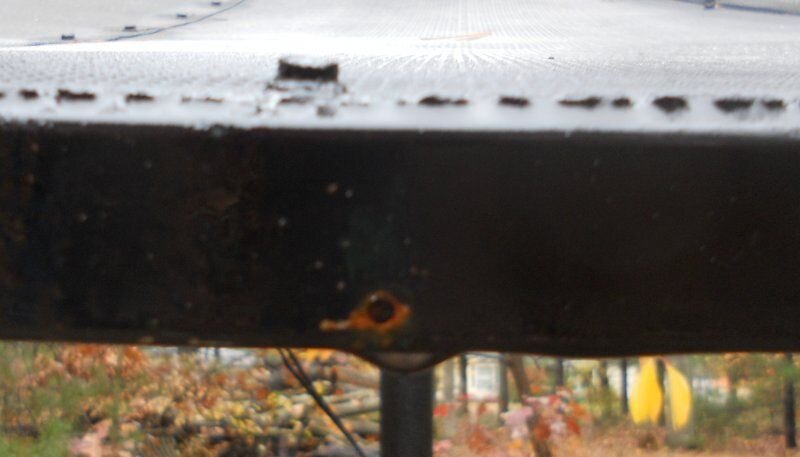
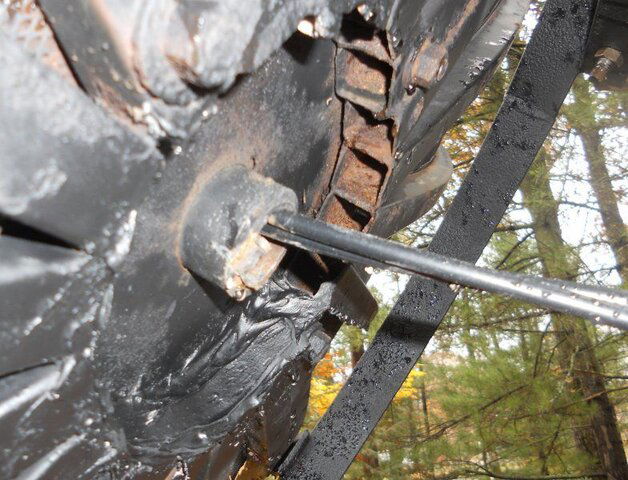
So I went to get it and as soon as I got a good close up look at it I wondered if I had made a mistake. We had a real hard time getting it off the pole for some reason, but while we were working on it the woman came out and again made it clear she just wanted it gone, so we wound up disconnecting the dish from the mount first, then removing the mount from the pole. I figured since we were already there and since she wanted it gone so bad, I might as well take it even if it turned out to be junk (could always reuse the panels to repair another dish, if nothing else). I knew we were in trouble when we were strapping it down to the trailer and the rim actually bent a little. And the reason is because one quarter panel (the one that was closest to the bottom of the dish) has a VERY badly rusted rim. When I got it home I gave the entire rim a quick spray with some rust destroyer paint but even after that it looks like this:
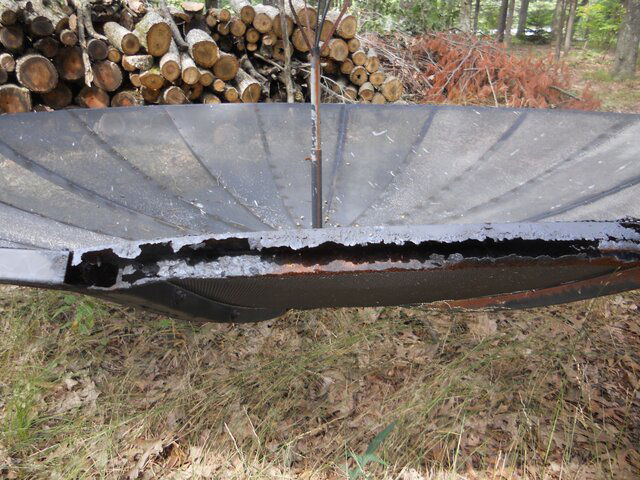
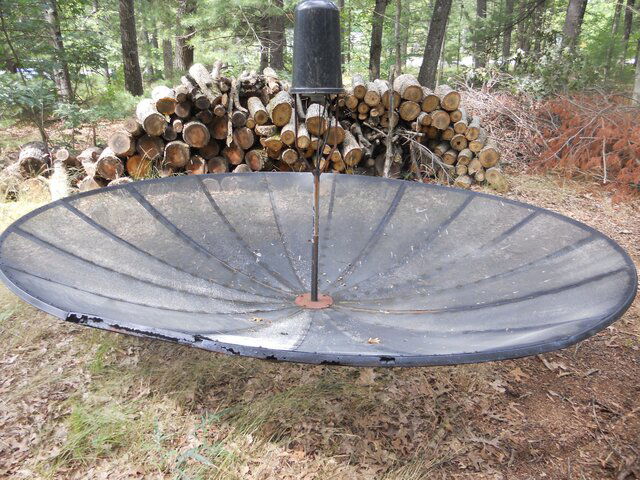
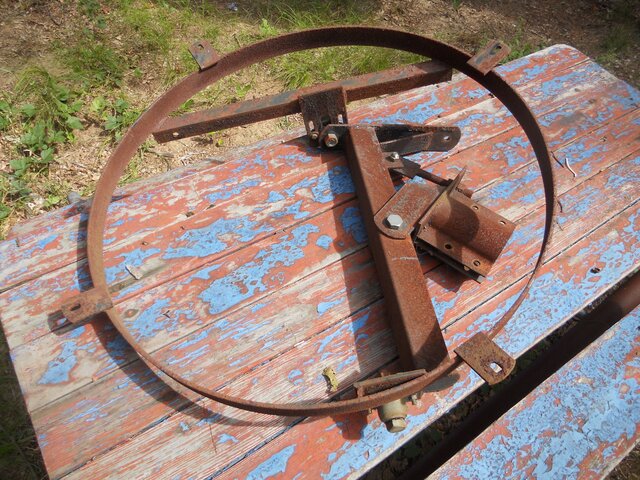
I have two concerns about this dish, first is that with that rim so badly damaged is there any hope it will still hold the parabolic shape? It already looks a bit off to me; and with that rim so badly damaged there's not much to pull on if the dish needs to be pulled back into shape, and the panels already look a little "crumpled" in spots, but not horribly bad to me. And the other is, since I had to take the dish off the mount anyway I was going to flip it upside down so that the strongest part is at the bottom, where the snow will collect, but is there any way to repair that badly rusted rim first that does not involve serious metalworking skills? I don't have access to a welder or a machine shop or anything like that; I have basic homeowner tools like a drill and various types of saws but no way to form a new rim that I know of. I just wondered if anyone else might have encountered this and would have any suggestions on how to at least strengthen that rusty rim, if not get it into perfect shape, without spending much money. Or do you think this dish is so far gone that it will never work well enough to be worth trying to save? I was originally thinking of replacing my G16 dish, which is only 7½ feet in diameter, but considering the amount of rust and the possible deformed shape I'm concerned that it won't actually give me any additional signal strength. I don't know how far off from a perfect parabolic shape a C-band dish can be and still be usable.
I also wonder why just that bottom quarter panel is so badly rusted when the rest of the rim was in nowhere near that bad shape, but I guess that's one of those questions that will forever remain a mystery. It's almost as if that one quarter panel was originally pained with a different, inferior paint or something.
So I went to get it and as soon as I got a good close up look at it I wondered if I had made a mistake. We had a real hard time getting it off the pole for some reason, but while we were working on it the woman came out and again made it clear she just wanted it gone, so we wound up disconnecting the dish from the mount first, then removing the mount from the pole. I figured since we were already there and since she wanted it gone so bad, I might as well take it even if it turned out to be junk (could always reuse the panels to repair another dish, if nothing else). I knew we were in trouble when we were strapping it down to the trailer and the rim actually bent a little. And the reason is because one quarter panel (the one that was closest to the bottom of the dish) has a VERY badly rusted rim. When I got it home I gave the entire rim a quick spray with some rust destroyer paint but even after that it looks like this:
I have two concerns about this dish, first is that with that rim so badly damaged is there any hope it will still hold the parabolic shape? It already looks a bit off to me; and with that rim so badly damaged there's not much to pull on if the dish needs to be pulled back into shape, and the panels already look a little "crumpled" in spots, but not horribly bad to me. And the other is, since I had to take the dish off the mount anyway I was going to flip it upside down so that the strongest part is at the bottom, where the snow will collect, but is there any way to repair that badly rusted rim first that does not involve serious metalworking skills? I don't have access to a welder or a machine shop or anything like that; I have basic homeowner tools like a drill and various types of saws but no way to form a new rim that I know of. I just wondered if anyone else might have encountered this and would have any suggestions on how to at least strengthen that rusty rim, if not get it into perfect shape, without spending much money. Or do you think this dish is so far gone that it will never work well enough to be worth trying to save? I was originally thinking of replacing my G16 dish, which is only 7½ feet in diameter, but considering the amount of rust and the possible deformed shape I'm concerned that it won't actually give me any additional signal strength. I don't know how far off from a perfect parabolic shape a C-band dish can be and still be usable.
I also wonder why just that bottom quarter panel is so badly rusted when the rest of the rim was in nowhere near that bad shape, but I guess that's one of those questions that will forever remain a mystery. It's almost as if that one quarter panel was originally pained with a different, inferior paint or something.
10 Replies
·
1923 views





Supporting Founder
Pub Member / Supporter
Lifetime Supporter
Apple has finally released their Apple TV 4K with built-in Siri and a microphone so it can respond to your queries even if you don't have the remote. It also increases in price, to $299. I had been planning on updating my current Apple TV 4K streamers, but that's $600 for the two of them, and that's a pass at this point.
At $299, it had better come with 256 GB of Storage, Gigabit (or better) Ethernet, the latest HDMI tech and standards, and one year of free Apple One. But it probably won't…

At $299, it had better come with 256 GB of Storage, Gigabit (or better) Ethernet, the latest HDMI tech and standards, and one year of free Apple One. But it probably won't…
Apple TV 4K
Apple TV 4K. New Siri AI and hands-free control. Stunning picture and immersive HomePod surround sound. Works with your Apple and smart home devices.
www.apple.com
14 Replies
·
168 views


 . apple's been making money off of software and not hardware for a while


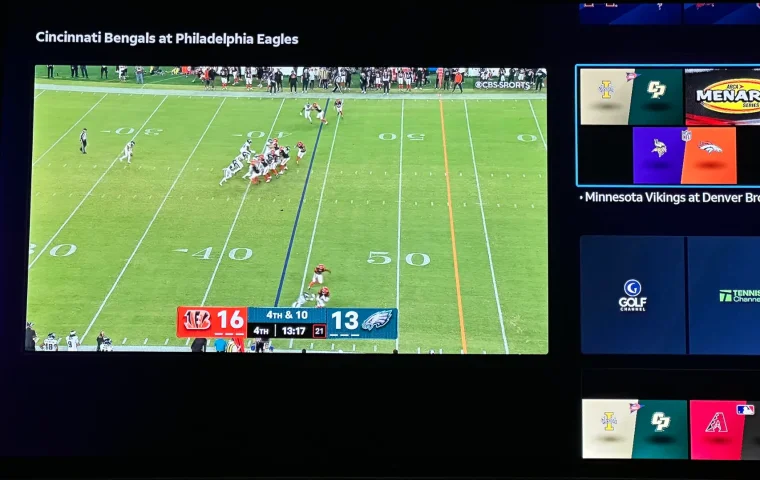
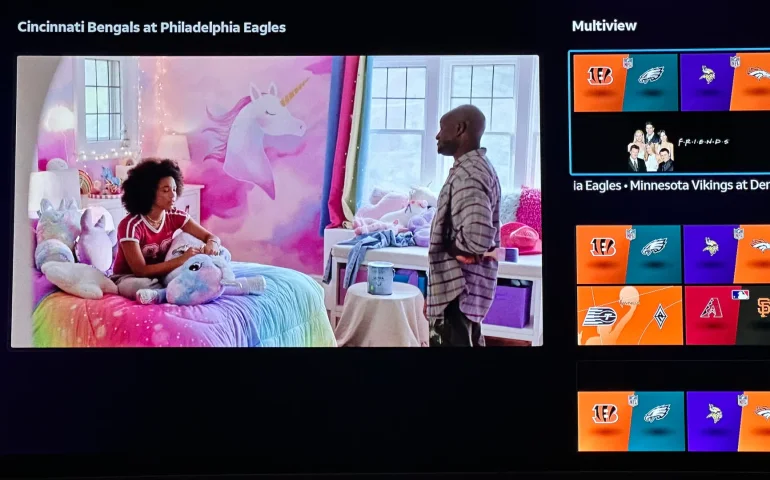
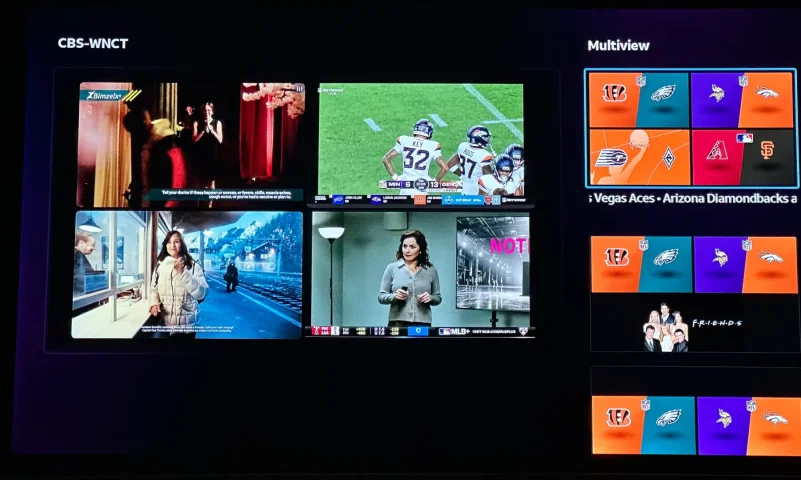
The new curated multiview is now live.
While on many of the sports channels and non sports channels there is a multi view option button. It will pull up a side bar with many different multi view options.
While on many of the sports channels and non sports channels there is a multi view option button. It will pull up a side bar with many different multi view options.
3 Replies
·
152 views


Supporting Founder
Really excited for this season with Kentucky having a new coach and some really exciting recruits. Probably won't last long, but here's hoping this season is great.
141 Replies
·
1340 views


Supporting Founder
Lifetime Supporter
This thread is a place to discuss the 4K events that appear on channel 540. We are getting, at this point, one college football game a week. Let's hope there is more coming.
1931 Replies
·
298840 views

TWiT Tech Podcast Network
Time for another AWESOME video from the TWIT Network!
View: https://www.youtube.com/watch?v=87N42NxLPC0
Direct YouTube Link - 8 U.S. States Sue OpenAI Over Safety Concerns With Younger Users
TWIT's Website
TWIT Live Feed
View: https://www.youtube.com/watch?v=87N42NxLPC0
Direct YouTube Link - 8 U.S. States Sue OpenAI Over Safety Concerns With Younger Users
TWIT's Website
TWIT Live Feed
0 Replies
·
7 views

Pub Member / Supporter
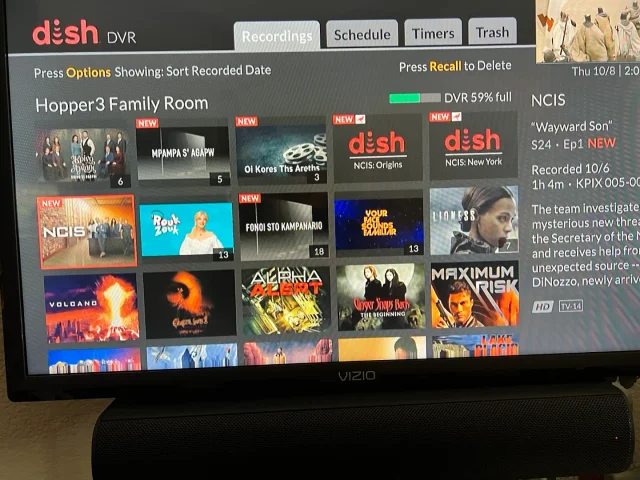
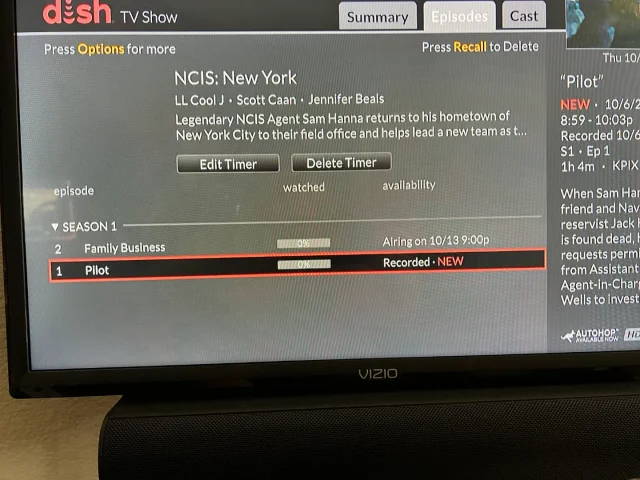
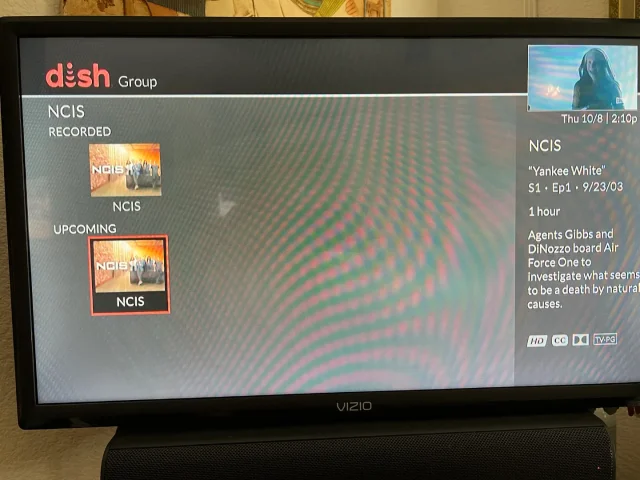
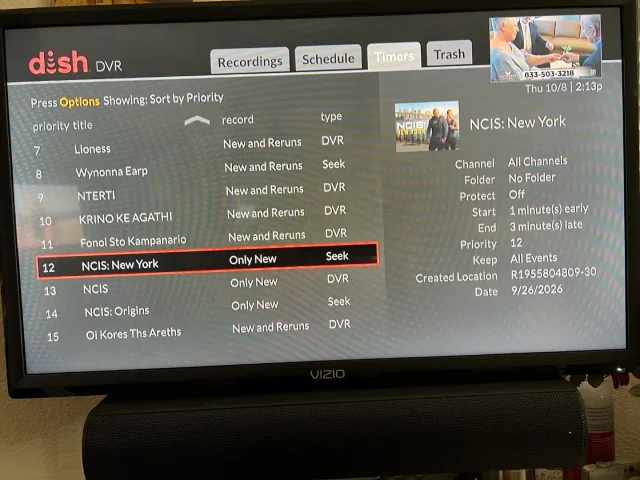
On Tuesday, I recorded the first episodes of the new season's NCIS shows on CBS (Dish provided, not OTA). The new New York series and Origins will both do Auto Skip, but the original, now season 24 does not. What's stranger, when I do a search for NCIS, Origins and New York show the current recording and the next episode it will record, but the original show only shows the current recording and some other channel showing the very first episode of season one. It makes no sense. When I set up the timers, I was able to use search for Origins and New York, but for the original, I had to scroll ahead in the guide until last Tuesday when the show was airing. Then set the timer from there. You can see its timer type is DVR where the other two are Seek. What am I missing?
Thanks!
Thanks!
20 Replies
·
385 views


Pub Member / Supporter
Cutting Edge
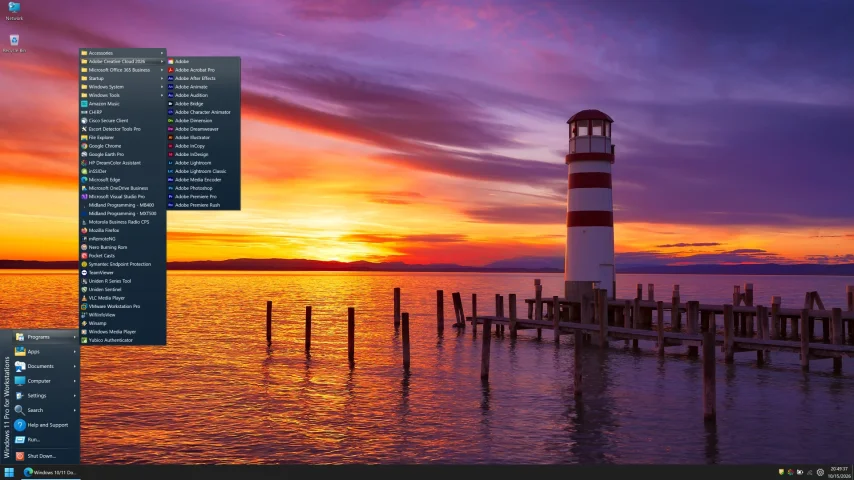
I created this thread on the original Edgecutter Cutting Edge Forums site. It's simply a place for those to review the latest software available for those using Windows 10 and Windows 11. To date it has received 112,559 views. I have been asked by staff to continue this thread here.
520 Replies
·
47170 views



Staff member
HERE TO HELP YOU!
Hard getting used to the new younger Gibbs, Mark Harmons son had the right look but I understand he didn't want the role.
Still I'm enjoying, pretty good job with Franks.
Still I'm enjoying, pretty good job with Franks.
66 Replies
·
4210 views

Pub Member / Supporter
0 Replies
·
17 views