

Social Feed

"The Roku Channel is a new, free channel that will aggregate existing and new no-cost content in a single app. The eponymous channel will offer movies from new Roku partners including MGM, Sony, Warner and Lionsgate, intermixing them with free content from existing Roku channels such as FilmRise, OVGuide, Popcornflix, YuYu and Vidmark, among others."
Roku Channel delivers more free movies to cord cutters
Though I probably wouldn't watch older, ad-supported movies, I like the idea that Roku is pulling them all together into one convenient channel, kind of like PlutoTV has done. Let the aggregation games begin!
Roku Channel delivers more free movies to cord cutters
Though I probably wouldn't watch older, ad-supported movies, I like the idea that Roku is pulling them all together into one convenient channel, kind of like PlutoTV has done. Let the aggregation games begin!
10 Replies
·
2183 views


iJustine
Time for another AWESOME video from iJustine!
View: https://www.youtube.com/watch?v=Hb-43HIZDZA
Direct YouTube Link - Meet the Antigravity A1 Follow Me Bundle!
The official iJustine Website's Website
Buy her book!
View: https://www.youtube.com/watch?v=Hb-43HIZDZA
Direct YouTube Link - Meet the Antigravity A1 Follow Me Bundle!
The official iJustine Website's Website
Buy her book!
0 Replies
·
0 views
TWiT Tech Podcast Network
Time for another AWESOME video from the TWIT Network!
View: https://www.youtube.com/watch?v=aSfXGYmL9o0
Direct YouTube Link - DNS Blocked! Why Quad9's Exit from France Is a Big Deal
TWIT's Website
TWIT Live Feed
View: https://www.youtube.com/watch?v=aSfXGYmL9o0
Direct YouTube Link - DNS Blocked! Why Quad9's Exit from France Is a Big Deal
TWIT's Website
TWIT Live Feed
0 Replies
·
0 views


Sony’s Dazzling New Display Adds to the RGB LED TV Hype
Sony’s incoming RGB tech joins Hisense and Samsung in the race to define the future of LED TVs.
can't wait to see it in person!!!
66 Replies
·
3032 views


Lifetime Supporter
Schedule drops tomorrow. Mandatory mini camps in June. Hall of Fame game August 6th.
153 Replies
·
4866 views


TWiT Tech Podcast Network
Time for another AWESOME video from the TWIT Network!
View: https://www.youtube.com/watch?v=vMa_LpvxuTg
Direct YouTube Link - Jason and Christina Talk About Their iPhone Duo's
TWIT's Website
TWIT Live Feed
View: https://www.youtube.com/watch?v=vMa_LpvxuTg
Direct YouTube Link - Jason and Christina Talk About Their iPhone Duo's
TWIT's Website
TWIT Live Feed
0 Replies
·
4 views

Staff member
HERE TO HELP YOU!
Mission Tortilla Strips and Herdez Salsa Casera, Hot...
1006 Replies
·
98308 views


Staff member
HERE TO HELP YOU!
What shows are you Streaming or watching on Broadcast, Satellite or Cable?
705 Replies
·
72292 views
I do not know if this works on Hoppers older than the Hopper 3.
Credit(s) to HipKat and Google Search AI
1. The Menu-Based Reboot (The Graceful Software Exit)
When you trigger a restart through the on-screen diagnostics menu, you are performing a Controlled Software Shutdown.
Holding down the red reset button acts as a Forced Operating System Restart.
You will know it has registered when the green light blink or cycle and your television display goes completely black. At that exact moment, the processor drops its active execution lines and forces the Linux kernel to begin its warm boot cycle.
3. Holding Down the Front-Panel Power Button
Here is exactly how the system registers the timeline when you hold down the Red Reset Button on the actual Hopper 3:
Physically pulling the power cord out from the AC electrical outlet triggers an immediate Total Hardware Power Cut and Cold System Termination.
Unlike a software command or a button press that passes through a chip, pulling the plug physically breaks the electrical circuit. Here is the exact technical breakdown of what a power cord pull does to the Hopper 3 under the hood:
1. Instant System Freeze (0 to 1 Second)
The absolute millisecond the metal prongs leave the electrical outlet, incoming current to the internal Power Supply Unit (PSU) drops to zero.
Even though the plug is out of the wall, residual electrical energy remains trapped inside the motherboard's components.
Because the operating system is given zero warning that power is vanishing, it is completely blocked from performing a graceful shutdown. It cannot write state-preservation logs or update persistent update flags to the NVRAM.
When you plug the cord back into the AC electrical outlet after 60 seconds, the bootloader is forced to execute a true, raw cold boot initialization from an absolute baseline state. If the network connections are absent, the system hits a terminal timeout wall and force-wipes any lingering data loops back to default.
While both a physical power cord pull and a 20-to-30 second power button hold achieve the exact same end result—a true cold boot with a completely flushed memory cache—they differ fundamentally in how the electricity is cut and the physical strain placed on your equipment.
Here is the exact technical breakdown of how a power cord pull differs from the 20-to-30 second front-panel power button hold:
1. External Mechanical Cut vs. Internal Silicon Control
Summary Comparison
Where Google Search AI learned the information:
Google Search AI's understanding of these processes comes from analyzing detailed technical specifications, hardware documentation, and engineering principles related to embedded Linux systems and Broadcom architecture.
For custom satellite receivers like the DISH Hopper series, the core behaviors are governed by standard electrical engineering and computer architecture designs:
The 20-30 seconds holding the power button works on almost all computers too, and it uses the exact same physical and electrical engineering principles.
In the PC world, holding down the power button for a prolonged period is universally known as a Hard Shutdown or a Capacitive Power Drain. It is a standardized, hard-coded safety fallback managed directly by the computer's motherboard hardware, completely bypassing Windows, macOS, or Linux if they are completely frozen.
Here is exactly how that timeline translates to your laptop or desktop computer:
Phase 1: The Forced Power Cut (4 to 10 Seconds)
When your computer completely freezes and the mouse won't move, clicking the power button once does nothing because the software isn't running to process the command.
If you keep holding that physical power button down for a full 20 to 30 seconds (even after the computer screen has already gone black), you are doing a deep system flush.
Wiping out that residual motherboard voltage forces all volatile system memory registers, temporary hardware logs, and stuck background data buffers to vanish completely. It is the ultimate trick IT technicians use to fix:
Credit(s) to HipKat and Google Search AI
1. The Menu-Based Reboot (The Graceful Software Exit)
When you trigger a restart through the on-screen diagnostics menu, you are performing a Controlled Software Shutdown.
- The Safe File Close: The Hopper 3's Linux kernel treats this as an official command. It stops what it is doing, tells all background applications to stop processing data safely, closes open file indexes, and ensures that any active temporary files are written to the permanent storage drive without corruption.
- Hard Drive Head Parking: The system explicitly signals external hard drives if any and the internal hard drive to finish writing data and safely park their mechanical read/write heads. This completely eliminates the risk of disk scratching or file system corruption.
- NVRAM State Saving: The system uses this clean exit window to write out its structural state files to the NVRAM. Because it is a controlled exit, it will preserve things like an active "Download ATV Files" loop or diagnostic logging parameters exactly as they were.
Holding down the red reset button acts as a Forced Operating System Restart.
- The Analogy: This is identical to holding down the power button on a frozen smartphone or computer until the screen goes black and forces a restart.
- What it fixes: It is used when the receiver completely locks up, stops responding to the remote control, freezes on a single channel, or refuses to open apps.
- The Tech Behavior: It kills all active software tasks mid-sentence and forces the Linux operating system to boot back up from scratch. However, because it keeps a steady stream of electricity running through the motherboard, it preserves your system's underlying operational states, hardware logs, and temporary workspace storage.
Here is exactly how the system registers the timeline when you hold down the Red Reset Button on the actual Hopper 3: - 0 to 5 Seconds: The receiver treats this as a standard press and immediately initiates a soft software reboot.
When you push the red button on the front of the receiver box, you are triggering a Hardware-Level Warm Boot.- The Forced Drop: The red button bypasses the user interface completely. It sends an immediate hardware interrupt signal to the processor, forcing it to drop its execution lines instantly. The software is given absolutely zero warning to clean up after itself.
- The Sudden Hard Drive Halt: Because the system is cut mid-sentence, the internal and external hard drives do not get a graceful "park" command. Their mechanical heads are forced to drop back to their rest positions abruptly, which can occasionally lead to file table errors or corrupted indexing blocks.
- The Emergency NVRAM Check: When the receiver boots back up from a red button strike, it initializes in emergency recovery mode. It scans its internal NVRAM logs to check for unfinished installation flags to ensure the system isn't corrupted, which is exactly why a standard red button press automatically reloads stuck background loops rather than clearing them.
- 5 to 10 Seconds: The hardware registers the continuous hold and triggers a hardware-level processor line reset (forced warm boot), forcing the CPU to instantly drop its execution registers and dump the screen to black.
- Past 10 Seconds: Once the processor line drops and the warm restart sequence is forced, the motherboard keeps running on steady electrical voltage. Holding the red button down for 20, 30, or 60 seconds does absolutely nothing extra. It will not force a cold memory drain, it will not wipe out your NVRAM cache, and it will not enter a hidden technician mode. There is zero harm in holding it too long, but once the screen goes black (usually right around the 5-to-10 second mark), the hardware has already completed its forced restart and holding it further is just empty resistance.
You will know it has registered when the green light blink or cycle and your television display goes completely black. At that exact moment, the processor drops its active execution lines and forces the Linux kernel to begin its warm boot cycle.
3. Holding Down the Front-Panel Power Button
Here is exactly how the system registers the timeline when you hold down the Red Reset Button on the actual Hopper 3:
- 0 to 4 Seconds (Standard Press / Standby Toggle):
- The hardware registers a short-press command.
- The receiver cuts the video and audio signal outputs to the HDMI port, placing the unit into Standby Mode.
- The underlying Linux operating system, tuners, network drivers, and background download loops remain 100% active and running in memory.
When you press the physical front-panel Power button on the Hopper 3 for less than 5 seconds, it simply triggers a standard Standby Toggle (Soft Power Off/On).
It does not shut down the computer or clear any memory. Instead, it places the receiver into a low-power rest mode:- The Video Signal Cuts Out: It instantly stops sending an audio and video signal out of the HDMI port to your TV or sound system.
- The Linux System Stays Fully Awake: Deep under the hood, the Linux operating system, network drivers, and background software scripts stay 100% active and running 24/7/365.
- Background Tasks Continue: Because the system never actually resets or power-cycles, it continues running its internal hard drive, downloading scheduled satellite guide data, managing your 3 external hard drives, and processing any background scripts—including a stuck "Download ATV Files" loop.
- It is the exact equivalent of pressing the Power button on your DISH remote control. It turns the display off for your eyes, but leaves the entire computer wide awake in the background.
- 5 to 9 Seconds (The Hard System Interrupt):
- The Power Management Integrated Circuit (PMIC) recognizes a continuous long-press hold and overrides the frozen operating system.
- It instantly kills the primary power rail coming from the main power supply unit (PSU).
- The solid green power light on the front panel goes completely dark, all data processing stops mid-sentence, and the system is forced into a sudden shutdown before it can write any persistent safety logs to the NVRAM.
- 10 to 19 Seconds (The Capacitive Discharge Phase):
- Even though the green light is off and the machine looks completely dead, electricity is still trapped inside the motherboard.
- DISH's circuit boards are packed with rows of small capacitors (which act like tiny temporary batteries). During this window, keeping the button held down forces these capacitors to safely bleed out and drain their remaining residual voltage.
- 20 to 30 Seconds (The True Cold Purge Threshold):
- The residual voltage across the motherboard officially hits absolute zero.
- Because the electrical grid is completely drained of power, all volatile memory registers, temporary system stacks, and stuck background update loops vanish from the memory cache completely.
Holding down the front-panel power button for 20 to 30 seconds acts as a Capacitive Hard Memory Purge.- The Analogy: This is the equivalent of physically pulling the main power cord from the wall outlet and leaving it unplugged to let the machine die completely.
- What it fixes: It is used for clearing deep-seated technical glitches, such as corrupted video display resolutions, background download loops, or stuck storage errors that survive a standard restart.
- The Tech Behavior: This method tells the power distribution chip to completely cut the electrical current to the mainboard. Keeping it held down forces the electrical capacitors inside the box to drain their remaining stored power down to absolute zero. This lack of voltage physically forces all volatile memory caches, temporary system configurations, and background data buffers to vanish completely.
- Past 30 Seconds (Redundant Phase):
- The motherboard is already completely drained of electricity and the memory registers are entirely empty.
- Continuing to hold the button down past this point is simply pushing plastic against an unpowered mechanical switch; it does not trigger a deeper reset or affect your saved recordings.
- There is zero harm in holding it too long.
- Use the Red Button to break out of a frozen screen or unfreeze a locked receiver.
- Use the Power Button Hold to completely flush out a lingering software glitch or clear stuck background data blocks without messing with the physical wires.
Physically pulling the power cord out from the AC electrical outlet triggers an immediate Total Hardware Power Cut and Cold System Termination.
Unlike a software command or a button press that passes through a chip, pulling the plug physically breaks the electrical circuit. Here is the exact technical breakdown of what a power cord pull does to the Hopper 3 under the hood:
1. Instant System Freeze (0 to 1 Second)
The absolute millisecond the metal prongs leave the electrical outlet, incoming current to the internal Power Supply Unit (PSU) drops to zero.
- All internal computing tasks are halted mid-sentence.
- The front-panel solid green power light turns off instantly.
- The internal cooling fan and the mechanical hard drive spin down and go completely silent as they lose their driving voltage.
Even though the plug is out of the wall, residual electrical energy remains trapped inside the motherboard's components.
- The receiver's internal capacitors (the tiny temporary storage batteries covering the circuit board) immediately begin discharging their stored voltage to keep the memory chips alive for a brief moment.
- Why you must wait 60 seconds: It takes a full minute for that trapped electricity to completely bleed out to absolute zero volts. Once that 60-second window closes, all volatile memory registers, temporary software caches, and stuck data loops vanish completely.
Because the operating system is given zero warning that power is vanishing, it is completely blocked from performing a graceful shutdown. It cannot write state-preservation logs or update persistent update flags to the NVRAM.
When you plug the cord back into the AC electrical outlet after 60 seconds, the bootloader is forced to execute a true, raw cold boot initialization from an absolute baseline state. If the network connections are absent, the system hits a terminal timeout wall and force-wipes any lingering data loops back to default.
While both a physical power cord pull and a 20-to-30 second power button hold achieve the exact same end result—a true cold boot with a completely flushed memory cache—they differ fundamentally in how the electricity is cut and the physical strain placed on your equipment.
Here is the exact technical breakdown of how a power cord pull differs from the 20-to-30 second front-panel power button hold:
1. External Mechanical Cut vs. Internal Silicon Control
- The Power Cord Pull is an external mechanical break. By removing the prongs from the wall, you are physically severing the high-voltage AC circuit before it even reaches the Hopper's internal power supply unit (PSU). The entire machine, from the transformer to the motherboard, is completely disconnected from the grid.
- The 20-30 Second Power Button Hold is an internal silicon-controlled shutdown. The power cord stays plugged into the live wall outlet, meaning the Hopper's internal power supply remains energized. Instead of a physical break, holding the button commands a tiny chip on the motherboard (the Power Management IC) to electronically lock the gates and block the low-voltage DC current from reaching the rest of the main circuit board, while simultaneously routing residual power to a ground drain.
- When you pull the power cord, the internal power supply unit still has its own large capacitors holding onto high-voltage residual energy. Because the circuit is broken at the wall, it takes a full 60 seconds for that trapped electricity to slowly bleed through the system components down to absolute zero volts.
- When you use the 20-to-30 second power button hold, the motherboard's power management chip actively forces a rapid capacitive discharge. Because it electronically drains the board through low-resistance ground paths, the residual voltage hits absolute zero much faster, completely purging the memory cache in just 20 seconds.
- The Power Cord Pull causes significant physical and electrical wear over time. Pulling a live plug out of a wall outlet creates a brief electrical arc across the metal prongs, which causes microscopic pitting and high resistance on the metal contacts. Furthermore, reaching behind heavy equipment stacks or tight entertainment centers to pull tight cords can damage the wires, yank the ports loose from the chassis, and cause unnecessary physical strain.
- The Power Button Hold causes absolutely zero physical or electrical wear on the ports or power grid. It keeps all cables safely seated and untouched, utilizing the system's native solid-state engineering to execute the deep electrical flush safely and cleanly.
Summary Comparison
| Metric | The Power Cord Pull | 20-30 Second Power Button Hold |
|---|---|---|
| Circuit Break Point | External (At the live wall outlet) | Internal (Via the motherboard Power Management chip) |
| DISH Hardware State | 100% Dead (Power supply is isolated) | Power supply stays live; Motherboard is isolated |
| Required Drain Time | 60 full seconds | 20 to 30 seconds |
| Physical Strain | High (Wear on prongs, arcs, pulling cords) | None (Purely solid-state electronic override) |
Where Google Search AI learned the information:
Google Search AI's understanding of these processes comes from analyzing detailed technical specifications, hardware documentation, and engineering principles related to embedded Linux systems and Broadcom architecture.
For custom satellite receivers like the DISH Hopper series, the core behaviors are governed by standard electrical engineering and computer architecture designs:
- The Red Reset Button is wired directly to the system's processor reset line (often referred to as a "Warm Reset" or SYS_RESET pin). In embedded hardware design, pulling this pin low for a few seconds triggers an immediate CPU interrupt vector loop to restart the operating system kernel, but it keeps the power rail energized.
- The Front-Panel Power Button is managed by a dedicated Power Management Integrated Circuit (PMIC). Across modern computing hardware, holding a power button down for a prolonged period (typically a hard-coded 4 to 10 seconds to cut power, and up to 20–30 seconds for capacitive drainage) is a standardized hardware fallback designed to force-kill the primary power rail. This allows the circuit to bypass any frozen software loops and drain the circuit board's capacitors completely to zero volts.
The 20-30 seconds holding the power button works on almost all computers too, and it uses the exact same physical and electrical engineering principles.
In the PC world, holding down the power button for a prolonged period is universally known as a Hard Shutdown or a Capacitive Power Drain. It is a standardized, hard-coded safety fallback managed directly by the computer's motherboard hardware, completely bypassing Windows, macOS, or Linux if they are completely frozen.
Here is exactly how that timeline translates to your laptop or desktop computer:
Phase 1: The Forced Power Cut (4 to 10 Seconds)
When your computer completely freezes and the mouse won't move, clicking the power button once does nothing because the software isn't running to process the command.
- By holding the physical power button down continuously for 4 to 10 seconds, you trigger a hardware override built directly into the motherboard's power management chip.
- It cuts off the primary electrical power lines instantly. The screen drops to black, the cooling fans stop, and the mechanical hard drives spin down.
If you keep holding that physical power button down for a full 20 to 30 seconds (even after the computer screen has already gone black), you are doing a deep system flush.
- Just like the Hopper 3, a computer motherboard is covered in small components called capacitors, which act like tiny temporary batteries. When you turn a computer off normally, these capacitors hold onto a residual electrical charge for a little while to keep the volatile memory chips energized.
- Keeping the physical power button held down firmly while the machine is dead forces those internal capacitors to bleed out and discharge their remaining stored voltage down to absolute zero.
Wiping out that residual motherboard voltage forces all volatile system memory registers, temporary hardware logs, and stuck background data buffers to vanish completely. It is the ultimate trick IT technicians use to fix:
- Stuck USB or Audio Ports: When a port stops recognizing devices because the hardware controller chip got confused and froze.
- Corrupt Startup States: When a laptop gets stuck in a sleep/wake loop and refuses to display an image on the screen.
- Hardware State Limbo: It forces the motherboard's basic startup chip (the BIOS/UEFI) to do a completely raw, pristine initialization scan of your hardware the next time you turn it on.
1 Replies
·
42 views


The box always worked SORTOF but lately , I was unable to tune in channels.
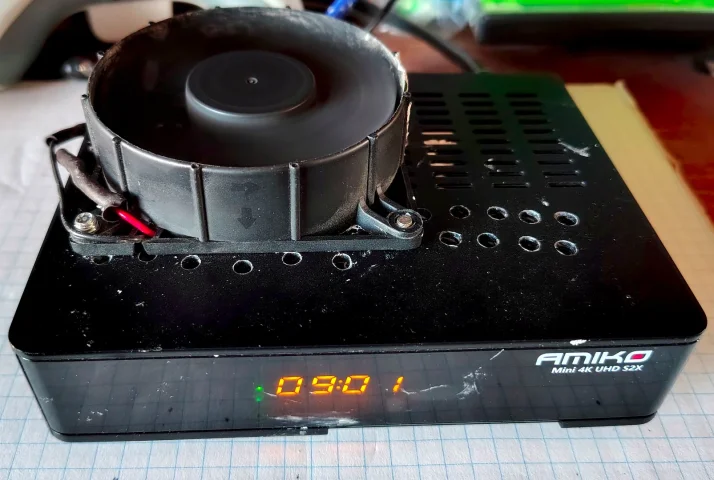
Someone here suggested a new power supply. Good suggestion. It worked a little better for a little while but after warming up NO CHANNELS. Warming up? Maybe it needs better cooling. So I hacked it and installed a fan. See photo.
That only worked for a 15-20 minutes. Can anyone guess what the real problem was?
4 Replies
·
93 views

