

Social Feed
I am in an area that has heavy tree coverage . . . but there are "holes" that could work.
Here's my question. When I point the DishPro 500 to the suggested azimuth and then adjust the skew (by an off-axis rotation of the dish, not the LNBF) does this change the actual "looking angle" as it appears to do? For example, if the suggested azimuth is 236 with a dish skew setting of 135 (Dish's metric, not the true skew angle), the perpendicular angle from the front of the dish appears to change to a different azimuth than at 0 skew. Obviously, this makes a difference as I would have to find the "hole" for the new "true" azimuth (where the dish is actually looking).
My geometry may be off but it appears to me that because the dish is skewed from a point not in the center of the dish then the azimuth angle has to change somewhat with the skew. If this is true, how do I compute this new azimuth?
9 Replies
·
8083 views


Supporting Founder
Lifetime Supporter
I was reading this article

 thehill.com
That said this-
Last summer, for the first time, streaming services like Netflix and Amazon Prime claimed the largest share of the television viewing audience, surpassing both cable and broadcast TV. Streaming captured 34.8 percent of July viewers, according to Nielsen data, compared to 34.4 percent for cable and 21.6 percent for broadcast.
And then, sometime in the second half of 2022, cord-cutters became the majority. The share of cable and satellite television subscribers dipped to 48 percent, according to a report from Samba TV, a television technology company.
Now I do not consider those with YTTV and the likes, Cord Cutters, but they still do not have Traditional Cable/Satellite delivered Live TV, so I decided to do the math.
There are, now, 129 Million Households in the United States.
In 2015, there were 100 Million Cable/Sat Subscribers , no streaming Live TV Service.
Today, there are 66 Million Live TV subscribers, including Cable, Satellite and Streaming.
Roughly, Streaming Live TV has 14 Million subs including all of them.
So that means, Cable/Satellite now has, roughly, 51 Million Households
So in just 8 years, lost 49% of their subscribers and by the end of this year, expected sub count to be, roughly, 45 million households.
That means a total loss of 55% since 2015 at the end of 2023.
But out of 129 Million households, 45 million will mean only 35% will get Cable/Satellite Delivered Live TV by the end of 2023.
Imagine what 2024 will be like.
Cable TV ‘cord-cutters’ became the majority in 2022
The steady decline of cable and broadcast television, and the rise of streaming services, reached a sort of inflection point over the past year. Last summer, for the first time, streaming ser…
thehill.com
That said this-
Last summer, for the first time, streaming services like Netflix and Amazon Prime claimed the largest share of the television viewing audience, surpassing both cable and broadcast TV. Streaming captured 34.8 percent of July viewers, according to Nielsen data, compared to 34.4 percent for cable and 21.6 percent for broadcast.
And then, sometime in the second half of 2022, cord-cutters became the majority. The share of cable and satellite television subscribers dipped to 48 percent, according to a report from Samba TV, a television technology company.
Now I do not consider those with YTTV and the likes, Cord Cutters, but they still do not have Traditional Cable/Satellite delivered Live TV, so I decided to do the math.
There are, now, 129 Million Households in the United States.
In 2015, there were 100 Million Cable/Sat Subscribers , no streaming Live TV Service.
Today, there are 66 Million Live TV subscribers, including Cable, Satellite and Streaming.
Roughly, Streaming Live TV has 14 Million subs including all of them.
So that means, Cable/Satellite now has, roughly, 51 Million Households
So in just 8 years, lost 49% of their subscribers and by the end of this year, expected sub count to be, roughly, 45 million households.
That means a total loss of 55% since 2015 at the end of 2023.
But out of 129 Million households, 45 million will mean only 35% will get Cable/Satellite Delivered Live TV by the end of 2023.
Imagine what 2024 will be like.
917 Replies
·
73217 views


Supporting Founder
Lifetime Supporter
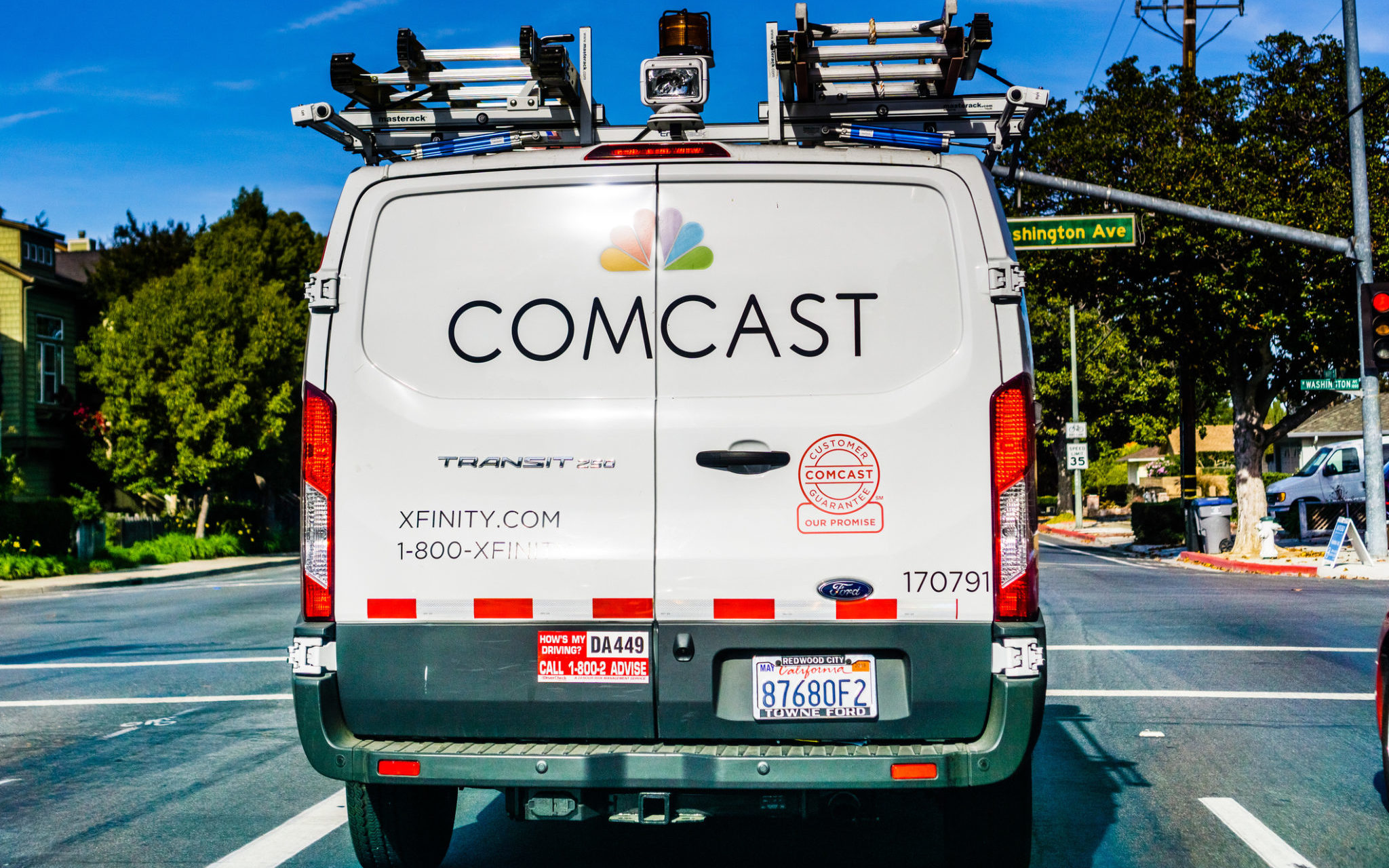
Comcast is the first to report, with a massive 274,000 loss in video subscribers.
In the 3Q of 2016, Comcast had 21.42 million video subscribers and was the #1 provider, now at 10.39 million and is the #3 Provider, YTTV is #2 ( who also surpassed DirecTV-8 Million and Dish-under 5 Million), Charter/Spectrum is #1.
 cordcuttersnews.com
In the 3Q of 2016, Comcast had 21.42 million video subscribers and was the #1 provider, now at 10.39 million and is the #3 Provider, YTTV is #2 ( who also surpassed DirecTV-8 Million and Dish-under 5 Million), Charter/Spectrum is #1.
Comcast Just Lost 274,000 TV Customers & 144,000 Internet Customers In Just Three Months | Cord Cutters News
Comcast Corporation reported its third-quarter 2026 results on October 22, showing continued erosion in its domestic residential broadband internet and video customer bases as competitive pressures intensified across the connectivity market. The company recorded a net loss of 144,000 domestic...
cordcuttersnews.com
39 Replies
·
1291 views


Supporting Founder
Really excited for this season with Kentucky having a new coach and some really exciting recruits. Probably won't last long, but here's hoping this season is great.
196 Replies
·
3744 views


Staff member
HERE TO HELP YOU!
Cutting Edge
Sometimes a thread gets so many posts in it that is can cause issues for the server so that why today we introduce The Song Name Game Part 3!
So let the game continue!
The last song was added by Bobby who posted...
One Meat Ball - Andrews Sisters
CONTINUE ON AND HAVE FUN! WELCOME HOME TO SATELLITEGUYS.US!
Here are the original rules for the game as posted by WebbyDude back in 2006. http://www.satelliteguys.us/threads/68645-Song-Name-Game
Just name a song title and the band who performed it. The next person does the same thing, but needs to list a song title or band name which includes a word from the previous entry. Pick songs from any genre.
Example:
Long Live Rock and Roll -- Rainbow
Rainbow in the Dark -- Dio
Another example:
Ride the Lightning -- Metallica
Lightning Strikes -- Ozzy Osbourne
Get it?
An additional note: we all know that song titles, sometimes, use profane words. Because this is a family friendly website it is advised that you clean up that title up a bit. This is accomplished by using something like sh!t instead of the real word. Thanks....
68792 Replies
·
2688855 views


Lifetime Supporter
Looks like dish is Bankrupt. Filling tomorrow Tuesday June 30th
464 Replies
·
16532 views


Pub Member / Supporter
Lifetime Supporter
Wireless Joey 4. Yesterday, I noticed a little green dot on a small black field in the upper right hand corner of the screen, regardless of channel, recordings, etc. A restart got rid of it, but I am curious as to what It meant and what I did to get it there.
5 Replies
·
132 views


Lifetime Supporter
Schedule drops tomorrow. Mandatory mini camps in June. Hall of Fame game August 6th.
139 Replies
·
3045 views


Pub Member / Supporter
Cutting Edge
HBO Max and Paramount+ to Combine Into One Streaming Platform, Paramount Says HBO Brand Will 'Operate With Independence'
Paramount+ right now is at $13.99 for the ad-free with Showtime content and HBO MAX is now $22.99 for the 4K ad-free plan so together they are $36.98. By the time this goes through the approval process which I am sure will fly right through you would probably looking at $50 per month for the ad-free 4K plan combined.
Paramount+ right now is at $13.99 for the ad-free with Showtime content and HBO MAX is now $22.99 for the 4K ad-free plan so together they are $36.98. By the time this goes through the approval process which I am sure will fly right through you would probably looking at $50 per month for the ad-free 4K plan combined.
59 Replies
·
1666 views


Antenna Man
Time for another AWESOME video from Tyler the Antenna Man!
View: https://www.youtube.com/watch?v=XGc0sC1L390
Direct YouTube Link - SiliconDust HDHomerun Network Tuner and DVR Review
AntennaMan's Website
AntennaMan on Facebook
View: https://www.youtube.com/watch?v=XGc0sC1L390
Direct YouTube Link - SiliconDust HDHomerun Network Tuner and DVR Review
AntennaMan's Website
AntennaMan on Facebook
0 Replies
·
17 views

Staff member
HERE TO HELP YOU!
Stumbled across this ... http://www.gaspricewatch.com/USGas_ZipSearch.asp
I found no local prices, although it did show stations at my location...
Added these to this post...
USA National Gas Temperature Map
State By State Gasoline Taxes
Gas Buddy
Ethanol Free Stations
I found no local prices, although it did show stations at my location...
Added these to this post...
USA National Gas Temperature Map
State By State Gasoline Taxes
Gas Buddy
Ethanol Free Stations
5571 Replies
·
463092 views
