

Social Feed

The PIT channel on 97W 11779 H 3979
It giving me a blazing hot 82%Q on my Direcway dish and Coolsat 5000
Mike's list has it listed at 3/4 but I don't usually see this Quality until the FEC drops to 2/3 or even 1/2
Could any one, with the tools, please take a moment to check what the FEC is of that TP?
It giving me a blazing hot 82%Q on my Direcway dish and Coolsat 5000
Mike's list has it listed at 3/4 but I don't usually see this Quality until the FEC drops to 2/3 or even 1/2
Could any one, with the tools, please take a moment to check what the FEC is of that TP?
25 Replies
·
3117 views
 . I would say you're lucky to have the receiver what could lock with the wrong FEC command.


Staff member
HERE TO HELP YOU!
Cutting Edge
Sometimes a thread gets so many posts in it that is can cause issues for the server so that why today we introduce The Song Name Game Part 3!
So let the game continue!
The last song was added by Bobby who posted...
One Meat Ball - Andrews Sisters
CONTINUE ON AND HAVE FUN! WELCOME HOME TO SATELLITEGUYS.US!
Here are the original rules for the game as posted by WebbyDude back in 2006. http://www.satelliteguys.us/threads/68645-Song-Name-Game
Just name a song title and the band who performed it. The next person does the same thing, but needs to list a song title or band name which includes a word from the previous entry. Pick songs from any genre.
Example:
Long Live Rock and Roll -- Rainbow
Rainbow in the Dark -- Dio
Another example:
Ride the Lightning -- Metallica
Lightning Strikes -- Ozzy Osbourne
Get it?
An additional note: we all know that song titles, sometimes, use profane words. Because this is a family friendly website it is advised that you clean up that title up a bit. This is accomplished by using something like sh!t instead of the real word. Thanks....
68528 Replies
·
2672713 views


Why are ViP922s So rare? like its crazy how ebay has none, i checked everywhere, also, i got a ViP222k now, which is actually activated!
2 Replies
·
27 views


My year was almost up and we got the new bill for a year of service for $ 360.00 insane sat radio is becoming like cable!!! i logged into my acct and hopped onto chat and told the rep that i wanted to cancel. she understood my concern and went quiet for a few minutes. i figured that she was canceling my service. she comes back and said that she seen that i have been a sub since 07 and then offers me the same package for a year for 120.00 with taxes and fee's!!! i grabbed it. after almost having a stroke 
237 Replies
·
10995 views


Staff member
HERE TO HELP YOU!
Stumbled across this ... http://www.gaspricewatch.com/USGas_ZipSearch.asp
I found no local prices, although it did show stations at my location...
Added these to this post...
USA National Gas Temperature Map
State By State Gasoline Taxes
Gas Buddy
Ethanol Free Stations
I found no local prices, although it did show stations at my location...
Added these to this post...
USA National Gas Temperature Map
State By State Gasoline Taxes
Gas Buddy
Ethanol Free Stations
5552 Replies
·
460630 views

Ok, I'm bored .... actually - to be more precise - I'm bored of eating the same rotation of 9 or 10 meals that are currently my "go-to" meals. My wife works the long hours - I work from home as and when i feel like it ... which means i generally do most of the cooking ... and so by default - i also make out the shopping list ...
We cook at home 5 or even 6 nights a week - but we always seem to fall back on the same old tried and tested "quick and easy but tastes ok" meals. Week in week out.
Pot Roast - mash and Peas.
Spaghetti
Chicken Pasta in cheese sauce.
Curry & rice
(these are some of mine)
Now it's not that I'm not adventurous in the kitchen ... I'll try anything once or twice ... but we all do it. Unless your name is Martha Stewart or Rachel Ray .. we all eventually fall back on our 8-10 favorite "meals"
So i thought - if we shared some of our own go-to meals with each other ... we might be able to add a few "new" ones to our own arsenal of meals.
So again - I ask you ...
What's for dinner tonight ?
Please give me something new to add to my rotation ... its our weekly shop tomorrow - so i want to pull together a few idea's and try and eat a meal each day next week that I've never had before .. or at least something that is not on my current "go-to" meal plan.
What meal do you always seem to fall back on in your house ? Maybe its something that I've never tried or not had in a while. I need inspiration !! I've got a blank shopping list in front of me - and nothing sounds good .. HELP !
4332 Replies
·
331174 views


 As for the salmon, I seared them first, then flipped them off to the side not over the coals and brushed on some lemon pepper marinade followed by some salmon seasoning. Threw some hickory chips on the coals and then closed the vents to about 10% airflow. Yum.

Pub Member / Supporter

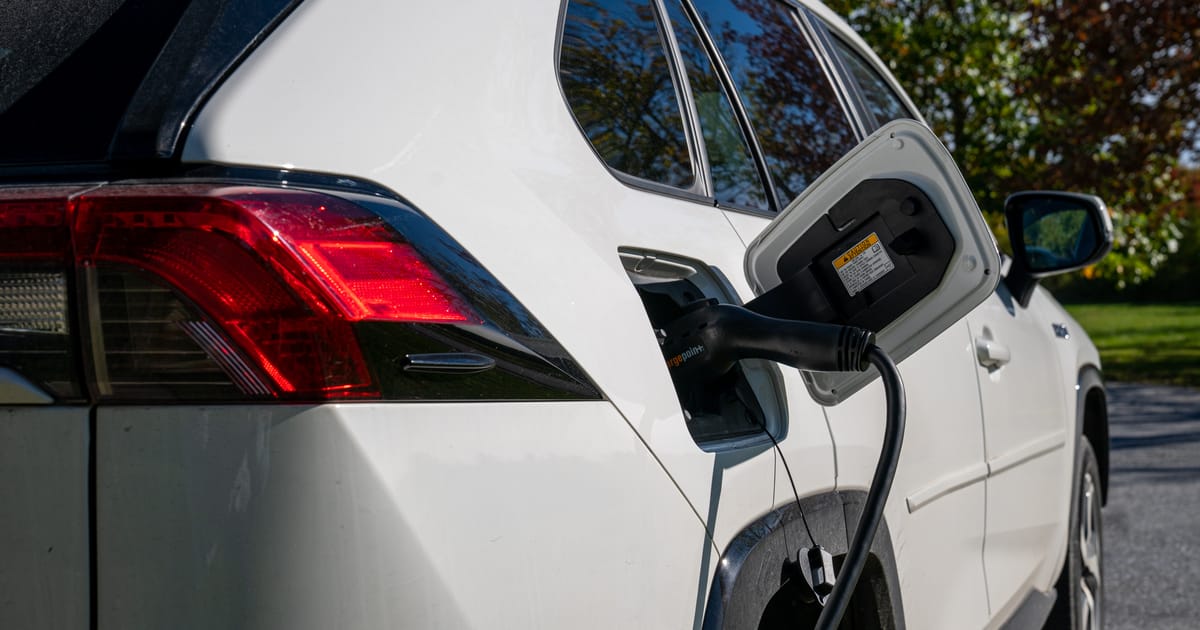
America’s Fastest-Growing EV State Isn’t California—Not by a Long Shot
New data shows electric vehicle adoption is increasingly driven by state policies, electricity prices and charging access—not federal incentives
 www.autoweek.com
The number-one US state for EV growth, according to the June 22 Yardi report?
Oklahoma.

It has no ZEV mandates and "minimal" incentives, Yardi says, but also has cheap electricity, high multi-car household rates (so, for example, a non-Lightning Ford F-150 pulls their trailers), and a consumer base willing to switch.
112 Replies
·
904 views



TWiT Tech Podcast Network
Time for another AWESOME video from the TWIT Network!
View: https://www.youtube.com/watch?v=mO_nW-BTlv4
Direct YouTube Link - Microsoft Defender Arriving on Linux
TWIT's Website
TWIT Live Feed
View: https://www.youtube.com/watch?v=mO_nW-BTlv4
Direct YouTube Link - Microsoft Defender Arriving on Linux
TWIT's Website
TWIT Live Feed
0 Replies
·
24 views
Ham Radio 2.0
Time for another AWESOME video from Ham Radio 2.0!
View: https://www.youtube.com/watch?v=wDeuQ1SLkQU
Direct YouTube Link - LIVE!
Ham Radio 2.0 Website
Ham Radio 2.0 on Facebook
View: https://www.youtube.com/watch?v=wDeuQ1SLkQU
Direct YouTube Link - LIVE!
Ham Radio 2.0 Website
Ham Radio 2.0 on Facebook
0 Replies
·
19 views

Supporting Founder
Really excited for this season with Kentucky having a new coach and some really exciting recruits. Probably won't last long, but here's hoping this season is great.
148 Replies
·
1752 views


