

Social Feed
In an earlier thread (Adventures while dish hunting) I mentioned a dish I had retrieved but had no pics since camera was dead. Here is an update.
The dish is a Kaul-tronics 6.5 foot. This is a bit puzzling, I see all kinds of references to the Kaul 7.5 but not a 6.5.
Some details:
Diameter 78", depth 12", focal distance 31.7", f/D is 0.406
Strings cross perfectly in the middle, no warp
Mesh is Ku compatible
While setting up I was having a hard time since I did not have my lnbf correctly oriented in the scalar ring for vertical polarity. The skew markings on the lnb case were evidently for H polarity. In order to find my south satellite I just swapped a Ku band lnb into the scalar ring and had no problem finding signals at 94% plus. No question this dish will get Ku!
Initial C-Band results good. Somewhat more sensitive to rain fade than the Channel Master 10 foot on the same bird which was expected, but generally pulls in a very decent signal. More experiments later when I have replaced the actuator with a good threaded rod system.


9 Replies
·
3340 views


 : I'll take an educated guess that alot of c band systems were never set up optimally, since analog had room to play. Digital especially with minimal error correction rates don't have that option and will tell you so bigtime. I've seen where even a small adjustment can make a big difference.

Pub Member / Supporter
Lifetime Supporter
I've always been super interested in things space related so this is a pretty cool event coming up. Nov 18, 2026 early in the morning, Voyager 1 will reach the distance of one full light day from Earth. Took almost 50 yrs. I was 13 when it launched.
View: https://www.youtube.com/shorts/gjHK3clOwIw?feature=share
View: https://www.youtube.com/shorts/gjHK3clOwIw?feature=share
6 Replies
·
122 views


Pub Member / Supporter
Lifetime Supporter
Can't help but wonder if a worker overlooked checking the harness. I rarely ride a roller coaster anymore but when I do I check the harness myself pretty aggressively.
Can't imagine what the son is going through.

 www.dailymail.com
Can't imagine what the son is going through.
Dad levitated and bled then fell to his death from coaster
Eyewitnesses have shared fresh details of the horrific accident that happened at Six Flags Over Georgia on Monday afternoon.
26 Replies
·
369 views


Staff member
HERE TO HELP YOU!
Cutting Edge
Sometimes a thread gets so many posts in it that is can cause issues for the server so that why today we introduce The Song Name Game Part 3!
So let the game continue!
The last song was added by Bobby who posted...
One Meat Ball - Andrews Sisters
CONTINUE ON AND HAVE FUN! WELCOME HOME TO SATELLITEGUYS.US!
Here are the original rules for the game as posted by WebbyDude back in 2006. http://www.satelliteguys.us/threads/68645-Song-Name-Game
Just name a song title and the band who performed it. The next person does the same thing, but needs to list a song title or band name which includes a word from the previous entry. Pick songs from any genre.
Example:
Long Live Rock and Roll -- Rainbow
Rainbow in the Dark -- Dio
Another example:
Ride the Lightning -- Metallica
Lightning Strikes -- Ozzy Osbourne
Get it?
An additional note: we all know that song titles, sometimes, use profane words. Because this is a family friendly website it is advised that you clean up that title up a bit. This is accomplished by using something like sh!t instead of the real word. Thanks....
68596 Replies
·
2677246 views


Pub Member / Supporter
Lifetime Supporter
I'm surprised Walmart hasn't banned this guy from all of their stores. He has been on their CASE the past few months.
View: https://www.youtube.com/shorts/f3zr37ekgKM?feature=share
View: https://www.youtube.com/shorts/f3zr37ekgKM?feature=share
72 Replies
·
689 views


Lon.TV
Time for another AWESOME video from Lon Seidman of LON.TV!
View: https://www.youtube.com/watch?v=hvZO7aWrIQU
Direct YouTube Link - This 32GB AMD GPU Runs AI Text, Images AND Video
The Official LON.TV Website
Lon on Facebook
View: https://www.youtube.com/watch?v=hvZO7aWrIQU
Direct YouTube Link - This 32GB AMD GPU Runs AI Text, Images AND Video
The Official LON.TV Website
Lon on Facebook
0 Replies
·
4 views
Pub Member / Supporter
Lifetime Supporter
Didn't see a thread like this so I figured why not start one. This is about natural supplements. If you aren't into supplements, fine, but please let those of us who do want to discuss this discuss it.
The first one I wanted to mention has been a real life changer. I'm 62 and still do all of my own install work at my business....also do all the yard work at the house. A few years ago I started noticing that I was losing my range of movement, it was even getting hard to bend over and lace up my boots. Almost got stuck in an attic because I couldn't get turned around once the work was done. Didn't think much of it and figured with age comes stiffness that was only going to get worse as time went on.
It was then that I stumbled across a video which was discussing rotator cuff tears and why they were to prevalent these days. Turns out, the culprit is a simple deficiency in MANGANESE which is key in keeping your tendons flexible. Most anti-biotics strip your body of any manganese it might have had which is why certain anti-biotics, especially those in the Cipro family. I actually knew a man who had two tendons tear while on that stuff.
Went to Amazon and ordered some manganese. Now it took a while, it wasn't instant, but gradually I have regained all of my flexibility. I can bend over and touch my toes while standing with no pain and putting on my boots is no longer a chore.
Pretty cheap too. The bottle I ordered was a 200 ct for under $13. They said to take double the normal dose for the first month because most people are severely lacking, then go to one a day.
1 Replies
·
34 views
IS Amiko MIRA 3 any good ???
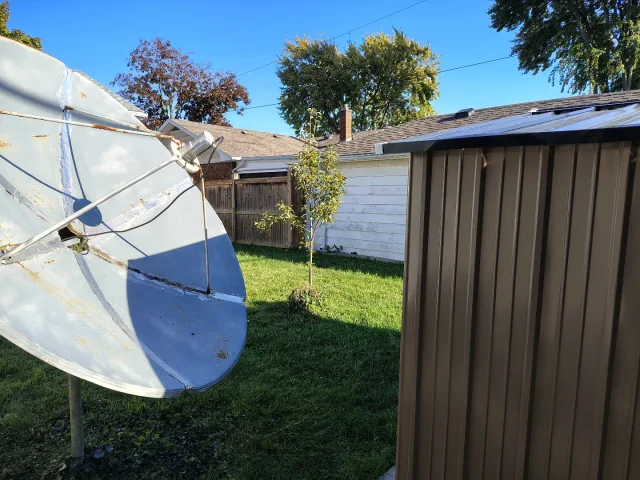
Can you recommend the best to cover all bases. NO BEEPS on certain channels 101w (NEWSMAX ,NEWS NATION), a clock that keeps working STEADY for timed recording ,solid unit with good lifespan. My Amiko died AND my Linkbox has NO Favorites Button and BEEPS on many channels. Picking up 105 west with a NEW SHED IN THE Way with 6 foot Cband ..95 percent quality ...unbelievable.
Can you recommend the best to cover all bases. NO BEEPS on certain channels 101w (NEWSMAX ,NEWS NATION), a clock that keeps working STEADY for timed recording ,solid unit with good lifespan. My Amiko died AND my Linkbox has NO Favorites Button and BEEPS on many channels. Picking up 105 west with a NEW SHED IN THE Way with 6 foot Cband ..95 percent quality ...unbelievable.
2 Replies
·
59 views

TWiT Tech Podcast Network
Time for another AWESOME video from the TWIT Network!
View: https://www.youtube.com/watch?v=b1hqdVSueHk
Direct YouTube Link - Untitled Linux Show 276
TWIT's Website
TWIT Live Feed
View: https://www.youtube.com/watch?v=b1hqdVSueHk
Direct YouTube Link - Untitled Linux Show 276
TWIT's Website
TWIT Live Feed
0 Replies
·
5 views

Pub Member / Supporter

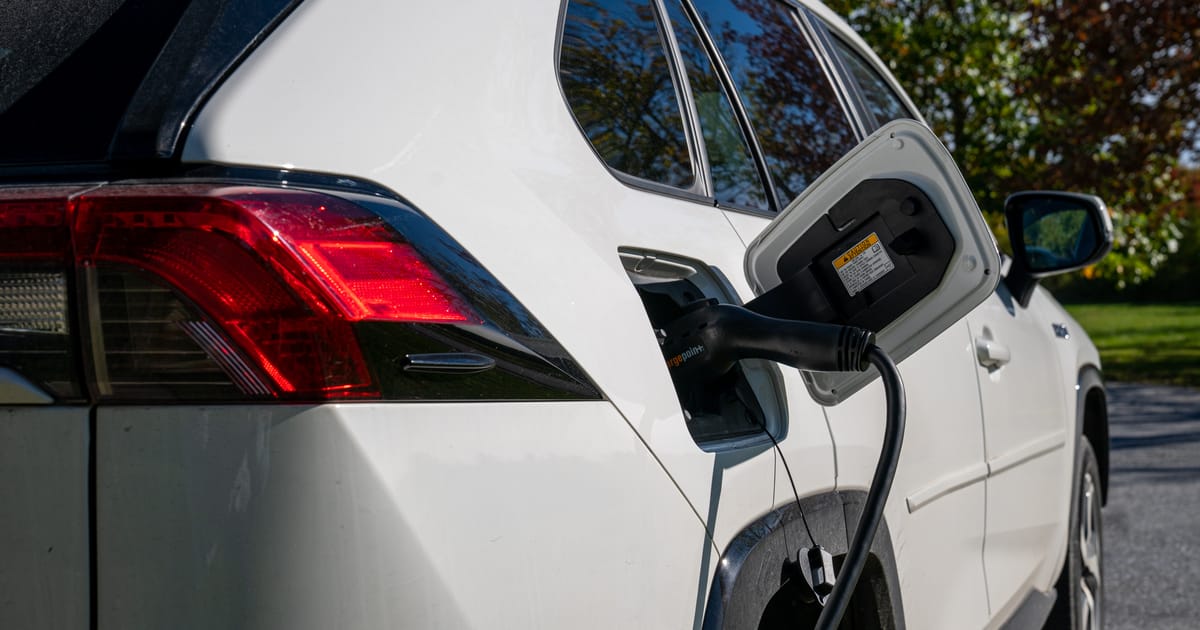
America’s Fastest-Growing EV State Isn’t California—Not by a Long Shot
New data shows electric vehicle adoption is increasingly driven by state policies, electricity prices and charging access—not federal incentives
 www.autoweek.com
The number-one US state for EV growth, according to the June 22 Yardi report?
Oklahoma.

It has no ZEV mandates and "minimal" incentives, Yardi says, but also has cheap electricity, high multi-car household rates (so, for example, a non-Lightning Ford F-150 pulls their trailers), and a consumer base willing to switch.
114 Replies
·
1008 views


Pub Member / Supporter
Lifetime Supporter
Just finished S2. Watching Gary Oldman as deshvilved, dejected MI-6 agent, Jackson Lamb, is one of the best things streaming right now. Already 2 more seasons in the works. HIGHLY recommended. And yes, Mick Jagger sings the theme.
67 Replies
·
6797 views