

Social Feed
Ok so right now (remember c-band newbie) I am parked on 87°. I have the actuator hooked to the old Uniden analog stb. I can press east or west on the remote once and it will move just a little bit or I can hold it and it will keep moving. When I push east or west once, and it moves a little, is that movement 1°? Am I telling it, 91°, 90°, 89°, 88°, 87°? Or is it just moving one rotation of the screw inside and it doesnt correspond to anything, just hoping I hit a bird?
Now that being said, if I get an ASC1, can I be on 91° and want to go to 103° and tell it to move to 103° and it bring me right to 103°, or do I need to bump it over until I'm in the right area, then fine tune by pushing east / west?
Also, the skew. I'm now running the voltage controlled geosat pro c-2 LNB. I don't need to do anything like turn the lnb by hand when moving it right? The skew change is in sync with the movement of the dish in relation to the angle of the dish to the horizon? Just like with a offset ku dish on a motor, correct? I remember talk many years back of the skew of I want to say 103° being crazy off. One of the main reasons I got the c-band is infowars on 103° so if I can't tune that one cuz of skew, before I beat my head against against the wall, it'd be nice to know if that is still an issue. Thanks guys.
Now that being said, if I get an ASC1, can I be on 91° and want to go to 103° and tell it to move to 103° and it bring me right to 103°, or do I need to bump it over until I'm in the right area, then fine tune by pushing east / west?
Also, the skew. I'm now running the voltage controlled geosat pro c-2 LNB. I don't need to do anything like turn the lnb by hand when moving it right? The skew change is in sync with the movement of the dish in relation to the angle of the dish to the horizon? Just like with a offset ku dish on a motor, correct? I remember talk many years back of the skew of I want to say 103° being crazy off. One of the main reasons I got the c-band is infowars on 103° so if I can't tune that one cuz of skew, before I beat my head against against the wall, it'd be nice to know if that is still an issue. Thanks guys.
6 Replies
·
1743 views


Supporting Founder
Really excited for this season with Kentucky having a new coach and some really exciting recruits. Probably won't last long, but here's hoping this season is great.
140 Replies
·
1329 views


TWiT Tech Podcast Network
Time for another AWESOME video from the TWIT Network!
View: https://www.youtube.com/watch?v=87N42NxLPC0
Direct YouTube Link - 8 U.S. States Sue OpenAI Over Safety Concerns With Younger Users
TWIT's Website
TWIT Live Feed
View: https://www.youtube.com/watch?v=87N42NxLPC0
Direct YouTube Link - 8 U.S. States Sue OpenAI Over Safety Concerns With Younger Users
TWIT's Website
TWIT Live Feed
0 Replies
·
3 views

Pub Member / Supporter
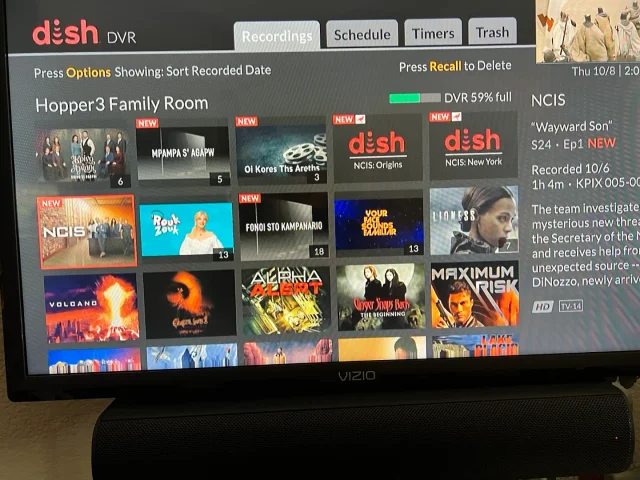
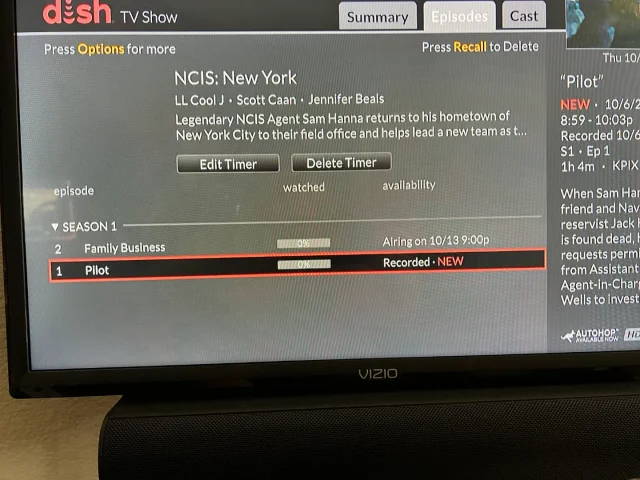
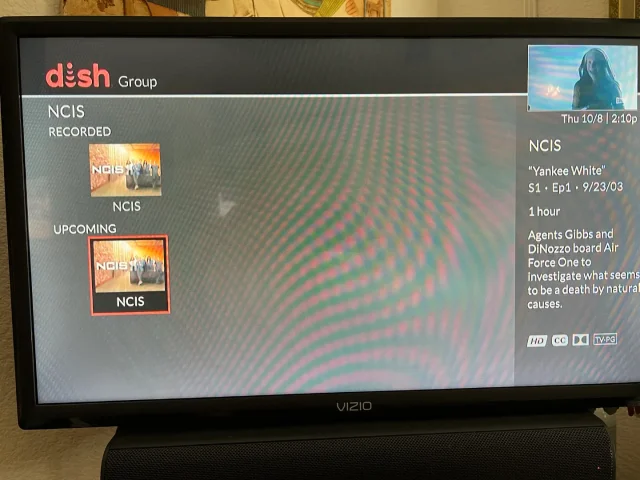
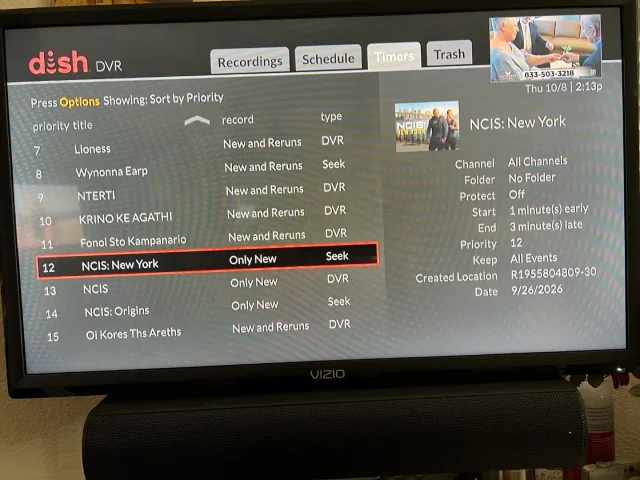
On Tuesday, I recorded the first episodes of the new season's NCIS shows on CBS (Dish provided, not OTA). The new New York series and Origins will both do Auto Skip, but the original, now season 24 does not. What's stranger, when I do a search for NCIS, Origins and New York show the current recording and the next episode it will record, but the original show only shows the current recording and some other channel showing the very first episode of season one. It makes no sense. When I set up the timers, I was able to use search for Origins and New York, but for the original, I had to scroll ahead in the guide until last Tuesday when the show was airing. Then set the timer from there. You can see its timer type is DVR where the other two are Seek. What am I missing?
Thanks!
Thanks!
20 Replies
·
374 views


Pub Member / Supporter
Cutting Edge
I created this thread on the original Edgecutter Cutting Edge Forums site. It's simply a place for those to review the latest software available for those using Windows 10 and Windows 11. To date it has received 112,559 views. I have been asked by staff to continue this thread here.
520 Replies
·
47153 views



Staff member
HERE TO HELP YOU!
Hard getting used to the new younger Gibbs, Mark Harmons son had the right look but I understand he didn't want the role.
Still I'm enjoying, pretty good job with Franks.
Still I'm enjoying, pretty good job with Franks.
66 Replies
·
4203 views

Pub Member / Supporter
0 Replies
·
12 views

Staff member
HERE TO HELP YOU!
Cutting Edge
Sometimes a thread gets so many posts in it that is can cause issues for the server so that why today we introduce The Song Name Game Part 3!
So let the game continue!
The last song was added by Bobby who posted...
One Meat Ball - Andrews Sisters
CONTINUE ON AND HAVE FUN! WELCOME HOME TO SATELLITEGUYS.US!
Here are the original rules for the game as posted by WebbyDude back in 2006. http://www.satelliteguys.us/threads/68645-Song-Name-Game
Just name a song title and the band who performed it. The next person does the same thing, but needs to list a song title or band name which includes a word from the previous entry. Pick songs from any genre.
Example:
Long Live Rock and Roll -- Rainbow
Rainbow in the Dark -- Dio
Another example:
Ride the Lightning -- Metallica
Lightning Strikes -- Ozzy Osbourne
Get it?
An additional note: we all know that song titles, sometimes, use profane words. Because this is a family friendly website it is advised that you clean up that title up a bit. This is accomplished by using something like sh!t instead of the real word. Thanks....
So let the game continue!
The last song was added by Bobby who posted...
One Meat Ball - Andrews Sisters
CONTINUE ON AND HAVE FUN! WELCOME HOME TO SATELLITEGUYS.US!
Here are the original rules for the game as posted by WebbyDude back in 2006. http://www.satelliteguys.us/threads/68645-Song-Name-Game
Just name a song title and the band who performed it. The next person does the same thing, but needs to list a song title or band name which includes a word from the previous entry. Pick songs from any genre.
Example:
Long Live Rock and Roll -- Rainbow
Rainbow in the Dark -- Dio
Another example:
Ride the Lightning -- Metallica
Lightning Strikes -- Ozzy Osbourne
Get it?
An additional note: we all know that song titles, sometimes, use profane words. Because this is a family friendly website it is advised that you clean up that title up a bit. This is accomplished by using something like sh!t instead of the real word. Thanks....
68494 Replies
·
2670358 views


Pub Member / Supporter
Lifetime Supporter
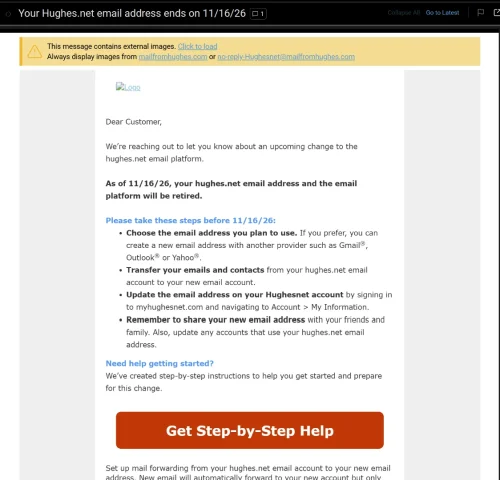
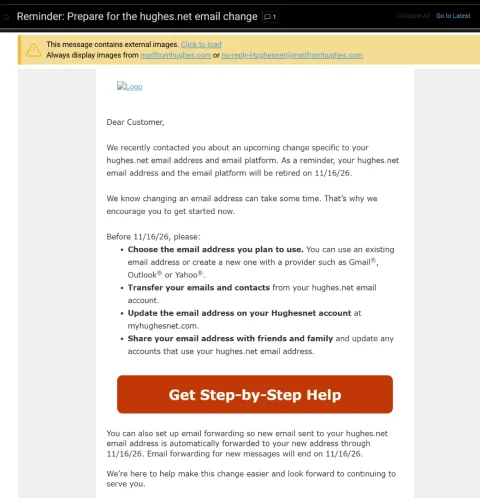
Wasn't exactly sure where to post this. Just had a customer come in inquiring about internet. He has HughesNet and had heard good things about mine. He asked if we provided email addresses and it kinda caught me off guard. I said he should be able to keep whatever email he had been using....my sister in law is still using a BellSouth email addy and they haven't been around here for many years. He said he had gotten a letter from HughesNet stating that they had until Nov 16th to save, move, forward, whatever, their Hughesnet emails because they would lose them after that date.
I have never heard of a company simply mass-deleting email accounts (the customer still has his HughesNet service). From what I understand, in the past, the company who was ditching their email service simply sold the customer base to a company like Google.
Anyone else getting this letter. He said he would show it to me tomorrow when I go out there and set up his internet.
I have never heard of a company simply mass-deleting email accounts (the customer still has his HughesNet service). From what I understand, in the past, the company who was ditching their email service simply sold the customer base to a company like Google.
Anyone else getting this letter. He said he would show it to me tomorrow when I go out there and set up his internet.
7 Replies
·
119 views



Lifetime Supporter
Starting a thread klang !
After an amazing first 2 seasons and an 8 episode 3rd season still coming this year, season 4 has now been greenlit.

After an amazing first 2 seasons and an 8 episode 3rd season still coming this year, season 4 has now been greenlit.
9 Replies
·
932 views


Supporting Founder
Lifetime Supporter
This thread is a place to discuss the 4K events that appear on channel 540. We are getting, at this point, one college football game a week. Let's hope there is more coming.
1930 Replies
·
298821 views


